Tehi-Tegi and the Pictish Stones

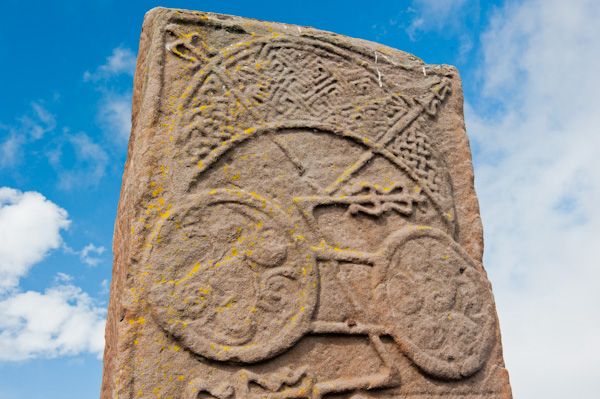
Symbols found on Pictish' stones. Are they related to the Manx 'Tehi-Tegi', Irish Cliodhna, and other 'mermaid' traditions?

Symbols found on Pictish’ stones. Are they related to the Manx ‘Tehi-Tegi’, Irish Cliodhna, and other ‘mermaid’ traditions?

The curious rock-carvings found on the ‘Pictish’ stones of the eastern and lowland parts of Scotland have long excited curiousity and conjecture as to their meaning and symbolism. Having studied the ‘Otherworld’ traditions and legends of the ancient Atlantic Europeans, I am starting to understand the significance behind some of these symbols and would like to share a few of my thoughts on them.

It is my belief that the symbols represent aspects of the processes involved in the passage of the dead to the otherworld, and in the regeneration and reincarnation cycles of nature, as previously discussed in the Blog. Here are a selection of my interpretations based on these theories:

1. The ‘Beast’ = A ‘Water-Horse’ or Porpoise-Horse hybrid. The steed of the ‘Fair Chooser’ which transforms when it dives into water conveying the soul(s) of the dead to the Otherworld ‘beneath the waves’ or ‘beyond the setting sun’.

2. Mirror and Comb: The attributes of the ‘Mermaid’ still used in modern depictions of this archetype. The mermaid represents the ‘Fair Chooser’ herself, and the comb and mirror represent her love of beauty as well as the following: The Mirror represents the inverted state of Otherworld-being and so is a metaphor for this world. The Comb represents a metaphor of the un-knotting of the tangles of life’s threads, in preparation for their refashioning in the otherworld. Scandinavian, Scots and Manx folklore contains many traditions about knots – in particular they were avoided about the person of a dead body, lest they return to haunt the living!

3. Crescent and V-Rod: The crescent represents a rising wave, as well as the Moon which propels the tides – various permutations of it contain swirl-patterns suggesting waves. The V-Rod geometrically represents a state of reflectional-symmetry in its gross appearance, but each arm looks different, representing the otherworld reflection and transformation. My conjecture is that this symbol represents the great wave which swallows the dead and therefore the transition to the otherworld.

4. Serpent and Z-Rod: This symbol expresses rotational symmetry of its geometric forms. This expresses a principle of repeat through cyclicity, rather than repeat through reflection, and introduces the idea of eventual reincarnation. The serpent is  an ancient symbol of rebirth, based on empirical observation of its skin-shedding, its tendency to make coiled and undulating shapes with its body mimicking the cycles of the stars, planets and satellites of the sky perceived to influence nature through the tides, seasons etc.

5. Double Disc and Z-Rod: This is an expression of the cyclicity of the sun and moon in particular – possibly a comment on their inverted otherworld-relationship. The discs are bound together by a tie upon which the Z-Rod is centred. The rod is often decorated at each ends with plant-like elements.

Aberlemno-9946

tbc

Tehi Tegi

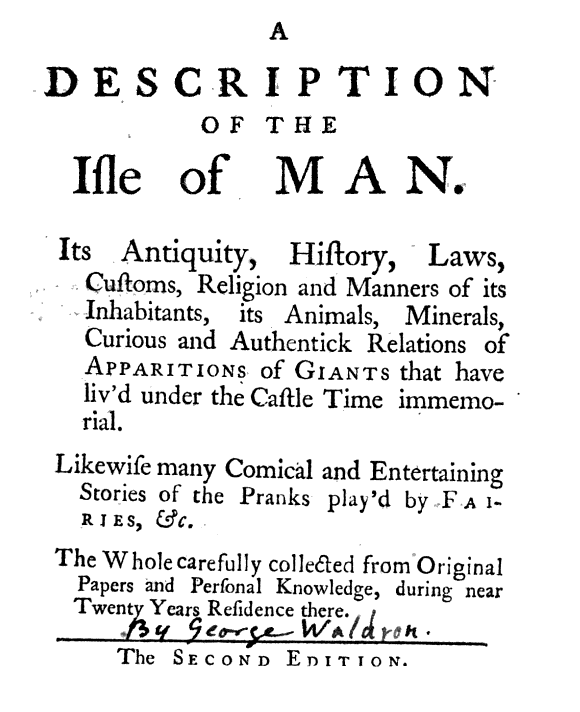
Some time between 1720 and 1730, a young Englishman by the name of George Waldron was living in the Isle of Man, employed as a trade commissioner for the British government who were trying to supress smuggling in the Irish Sea region. Fascinated by the strange history and wild ancient beliefs of the islanders he began compiling a book – ‘A Description of the Isle of Man’ – which provided one of the earliest pieces of indigenous ethnography and folklore writing from Britain and Ireland. This was published shortly after his untimely death in 1731:
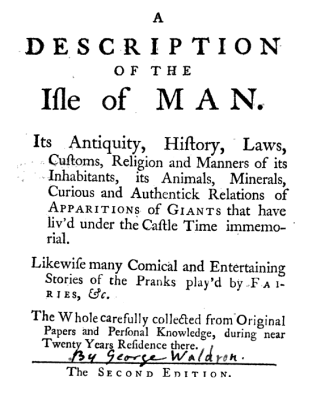
WaldronIOMCoverThe book was famously used as source material by romantic authors of the next century, most notably Sir Walter Scott, who employed some of the Island’s fairy tales and legends to embellish historical stories such as Peveril of the Peak. In the book, Waldron related one particular popular local tale of the Manx taken from the popular pseudo-historical narrative tradition:

(pp.143-152)

A person at his first coming to this Island, would be strangely amazed at the little complaisance they pay to the: weaker sex: the men riding always to market on horseback with their creels on each side their horses full of fowls, butter, eggs, or whatever they bring thither to dispose of, and the women following them on foot over rocks, mountains, bogs, sloughs,   and thro’ very deep rivers, and all this without either shoes or stockings’ carrying, these superfluous coverings, as they term them, under their arms till they come near the market-town; then they sit down all together on the side of a hill,   and put them on for fashion sake, and let down their petticoats also, which before were tucked up higher than their knees’   for the convenience of wading thro’ the rivers, and to preserve them from the mire of the bogs and sloughs.

But the reason for obliging the females to this hardship, is a very whimsical one, and such a one, as I believe, cannot but afford some diversion to my curious reader, I shall therefore insert it in the manner it was told me by an old native, to whom it had been handed down from many generations as an undoubted verity.

He told me that a famous enchantress sojourning in this Island, but in what year he was ignorant, had, by her diabolical arts, made herself appear so lovely in the eyes of men, that she ensnared the hearts of as many as beheld her. The passion they had for her so took up all their hearts that they entirely neglected their usual occupations; they neither Flowed nor sowed; neither built houses nor repaired them; their gardens were all overgrown with weeds, and their once fertile fields were covered with stones; their cattle died for want of pasture, their turf lay in the Bowels of the earth undug for; and every thing had the appearance of an utter desolation: even propagation ceased, for no man could have the least inclination for any woman but this universal charmer, who smiled on them, permitted them to follow and admire her, and gave every one leave to hope himself would be at last the happy he.

When she had thus allured the male part of the Island, she pretended one day to go a progress through the provinces, and being attended by all her adorers on foot, while she rode on a milk-white palfrey, in a kind of triumph at the head of them: she led them into a deep river, which by her art she made seem passable; and when they were all come a good way in it, she caused a sudden wind to rise, which driving the waters in such abundance to one place, swallowed up the poor lovers to the number of six hundred in their tumultuous waves. After which, the sorceress was seen by some persons who stood on the shore to convert herself into a bat, and fly through the air till she was out of sight; as did her palfrey into a sea-hog or porpoise, and instantly plunged itself to the bottom of the stream.

To prevent any such like accident for the future, these wise people have ordained their women to go on foot, and follow wheresoever their lords the men shall lead; and this custom is so religiously observed, as indeed all their traditions are, that if by chance a woman is before, whoever sees her, cries out immediately, Tehi-Tegi! Tehi-Tegi ! which, it seems, was the name of that enchantress which occasioned this law among them.

The essence of the legend of ‘Tehi-Tegi’ is of a magical female in times past (the usual narrative subtext for a pagan goddess) whose beauty leads an enslaved army of Manx men on a procession ‘through the provinces’ and then to a river or to the sea (the legend has a certain plasticity) where they are drowned and taken by the waters. The tale contains strong elements of the old Scots legends of Kelpies and the related Scando-Germanic Nixies or Necks – usually portrayed as beautiful women who transform into horses and drown men in rivers or in the ocean. The root word of Nix apparently means ‘wash’, and this probably relates to the fairy washer-women who pepper folk-tales in the Isle of Man, Scotland and Ireland as well as further afield. It is also related to the Mermaid traditions, of which the Isle of Man has a rich share. The theme is of a transforming feminine force, related somehow to horses, which steals men’s lives by conveying them into water. The Manx also call their own local Kelpie the Cabbal Ushtey or Water Horse, or the Glashtyn – ‘Grey One’. There is even a pool on the Island called Nikkesons showing the Viking input to the legendary heritage of the place.

However, ‘Tehi-Tegi’ is also a tale bearing strong similarities to that of Nerthus in Tacitus’ Germania from the 1stC CE. In Waldron’s tale, the ‘Enchantress’ rides a white horse rather than travelling in a wain or waggon, but the parallels are striking: The procession ‘through the provinces’ led by a potent ancient ‘magical’ female, and the drowning of the enslaved at the conclusion of the account… There are also echoes in the medieval story of the Ratcatcher or Piper of Hamelin in Germany. It therefore appears that it might represent a little fragment of pagan belief cast in legend!

The name ‘Tehi-Tegi’ means ‘Fair Chooser’ (Tei is the Manx verb ‘to pick, gather, collect’, Teg is a Brythonic Gaelic word meaning ‘fair’ or ‘beautiful’, placing the origin of the name in the island far back in time). The meaning of the name ‘Tehi-Tegi’ and the description of her as an enchantress mark her as a pagan deitypreserved in a fairy tale. Curious details include her final transformation into a flying creature bring to mind an otherworld-transition; She becomes a bat in Waldron’s version, and but more usually a wren in other local versions, linking ‘Tehi-Tegi’ firmly to the annual Wren Hunt held on St Stephen’s Day (Dec. 26th) on the Island and in former times, elsewhere. Here are some examples of this:

Legends of the north, or The feudal Christmas; a poem By Henry Rolls (mrs.), Pub Simpkin & Marshall London 1825, pp.269-270

The wren is still regarded by the Manx people as possessing supernatural intelligence. They say that when St Maghull (Ed: Maughold – the Manx ‘Saint’) came to the island and converted it to Christianity he banished all the fairies but their queen who assumed the form of a wren in which she at times still appears and that if in that shape she can be killed her power will cease for ever. They hate this bird but fear to destroy it as some dire calamity will befall the person and all his family who effects the destruction of the reign of the fairies in Man.

AND

From: History of the Isle of Man, by Hannah Bullock; Pub. Longman, London, 1819. (Chapter 19):

….one of the most curious ceremonies, and which, I believe, is peculiar to the Isle of Man, is, that of hunting the wren, founded on a tradition, that in former times, a fairy of uncommon beauty exerted such undue influence over the male population, that she at various times seduced numbers to follow her footsteps, till, by degrees, she led them into the sea, where they perished. This barbarous exercise of power had continued for a great length of time, till it was apprehended the island would be exhausted of its defenders, when a knight-errant sprung up, who discovered some means of countervailing the charms used by this syren, and even laid a plot for her destruction, which she only escaped at the moment of extreme hazard, by taking the form of a wren; but though she evaded instant annihilation, a spell was cast upon her, by which she was condemned on every succeeding New Year’s Day, to reanimate the same form, with the definitive sentence, that she must ultimately perish by a human hand. In consequence of this well authenticated legend, on the specified anniversary, every man and boy in the island (except those who have thrown off the trammels of superstition), devote the hours between sun-rise and sun-set, to the hope of extirpating the fairy…

Tehi-Tegi’s white horse (possibly representing the moon which controls the tides) becomes a porpoise and swims away at the end of Waldron’s version of the tale – redolent of the scene in the Voyage of Bran when Manannan introduces the transition to the otherworld and the horses galloping alongside him appear as fish!

The tale probably survived in its traditional form because it also acted as a metaphor where Tehi-Tegi IS the sea – drawing the Manxmen away from agriculture and into the trades of the sea: fishing, commerce and piracy! The Manx rural economy as far back as records go has been supported by its menfolk going to sea during the herring fishing season in order to increase food stocks of winter food and provide cash money to supplement the income from agricultural surplus. It was a dangerous trade, and a law of 1610 limited the fishery to operate only between midsummer and the end of December, meaning that the start of harvest crossed over with that of the fishery, offering some Manxmen a quandary between going to sea and working the land. Either way the womenfolk must have been anxious – both about the danger, and the lack of male help on the farmstead close to harvest… This perhaps provides a social aspect to the legend as told to Waldron, crackling as it is with gender politics.

So who might this ‘enchantress’ or ‘Fair Chooser’ have been? She appears in the legend and by her name to operate as a psychopomp or conductor of souls of the dead. She also represents the ‘otherworld attractor’ qualities of Love and Beauty that typifies fairy legends. She also has a particular association with the rivers and the ocean, and with horses, marine life and flying creatures. The Manx tales state ‘Tehi-Tegi’ was Queen of the Fairies, and there is a similar account from Ireland, naming the Fairy Queen Cliodhna as the protagonist who is annually transformed into a Wren. She is more usually associated with the Tonn Cliodhna – a powerful tidal surge in the neck of Glandore Harbour, Co.Cork. Local legends held her to be a daughter of ‘Manannnan’s druid’. Manannan is also associated with the Tonn Banks off Co. Donegal, which also have Cailleach legends associated with them.

That some of these attributes could be associated with the Scandinavian Vanir goddess Freyja (and her Father:Mother (N)Jörð) is perhaps unsurprising as the Islanders are a genetic combination of Viking and Celtic settlers whose folklore preserves many of the old pagan ideas. Freyja was described in Snorri‘s 13thC Icelandic ‘Prose Edda’ tale – Gylfaginning as having the choice of ‘half of the slain’ in battle, the other half going to Odin. He uses the kenning Valfreyja – ‘Lady of the Fallen’ – a function certainly being carried out by Tehi-Tegi. One of the other kenning-names used by Snorri was Mardöll, possibly meaning ‘Image of the Sea’ (Mar and a contraction of the Lat in/Greek word (e)idola, which entered Germanic languages and Manx at an early stage).

Freyja was supposed to have had a ‘cloak of feathers’ which could transform the wearer into a bird, much in the manner of the jǫtunn Þjazi, to whom some legends have her being grand-daughter. Apart from the connection of Tehi-Tegi with the bat or wren, another Manx legend – of a giant magical female called Caillagh ny Groamagh who comes from the sea in the form of a bird on February 1st (or March 25th – the tradition is confused) to search for firewood/build her nest back on land. The dating of ‘Caillagh ny Groamagh’s Day’ coincides with that of the day of St Bridget, which is also the Celtic/Atlantic festival of Imbolc. The similarity between the Manx name for Bridget: Vreeshey or Breeshey (the terminal -ey in Manx is pronounced ‘-a’, as Vreesha‘) and the name Freyja is very intriguing. One wonders if they might be related? And is the Manx name for the Isle of Man – Vannin or Mannin – related to the tribe of the Vanir? We know that many of the Scandinavians who settled Iceland and who preserved many of the old Eddaic legends were connected strongly to the Viking kingdoms of Dublin and the Isle of Man.

It is possible that regional alliance and cultural and population mobility between the northern European peoples during the Iron Age led to a syncresis between Western and Eastern forms of paganism which led to the combined Aesir and Vanir traditions recorded and described by the (Christian) Icelanders during the 13thC. Alternatively, the Scandinavian and Germanic religions may be the survival of un-Romanised, un-Christianised Celtic paganism, albeit altered through a prolonged interaction with these cultures before the final Christianisation began in the 10th and 11th centuries.

tbc


Nerthus

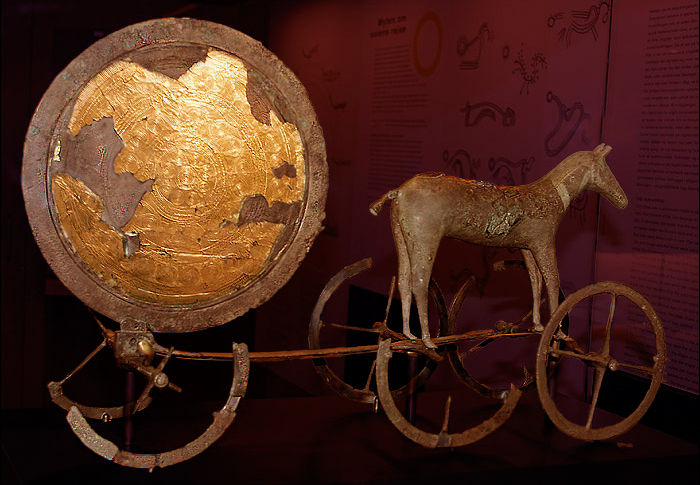
The Trundholm Sun Chariot - a possible representation of Nerthus? The Sun is personified as the feminine Sól in Scandinavian legend.

The Trundholm Sun Chariot – a possible representation of Nerthus? The Sun is personified as the feminine Sól in Scandinavian legend.

Publius Gaius Cornelius Tacitus (Roman Historian and Propagandist of the 1stC CE) – Germania (Translated by J.B. Rives)

Chapter 40

The Langobardi, by contrast, are distinguished by the fewness of their numbers. Ringed round as they are by many mighty peoples, they find safety not in obsequiousness but in battle and its perils. After them come the Reudingi, Aviones, Anglii, Varini, Eudoses, Suarini and Nuitones, behind their ramparts of rivers and woods. There is nothing noteworthy about these peoples individually, but they are distinguished by a common worship of Nerthus, or Mother Earth. They believe that she interests herself in human affairs and rides among their peoples. In an island of the Ocean stands a sacred grove, and in the grove a consecrated cart, draped with cloth, which none but the priest may touch. The priest perceives the presence of the goddess in this holy of holies and attends her, in deepest reverence, as her cart is drawn by heifers. Then follow days of rejoicing and merry-making in every place that she designs to visit and be entertained. No one goes to war, no one takes up arms; every object of iron is locked away; then, and only then, are peace and quiet known and loved, until the priest again restores the goddess to her temple, when she has had her fill of human company. After that the cart, the cloth and, if you care to believe it, the goddess herself are washed in clean in a secluded lake. This service is performed by slaves who are immediately afterwards drowned in the lake. Thus mystery begets terror and pious reluctance to ask what the sight can be that only those doomed to die may see…

The account is obviously second or third-hand and apart from its broad observations, the details should be treated with caution. The description of a peregrination through the provinces, and the sanctuary associated with water and the sea all fit with the descriptions of the later Norse god Njörðr, yet modern scholars have remained confused by the masculine aspect of Njörðr, perhaps misunderstanding the ‘otherworld inversion principle’. Tacitus’ picture is actually one combining the opposing twin principles Njörðr and Jörð – sea and earth.

So what about the drwoned slaves? We shall turn West again to a legend from a land in which a syncretism between Norse and Celtic culture produced the following legend…

The Atlantean Sea God

Plato, speaking in ca.360BCE of a supposedly historic lost western island-civilisation he called ‘Atlantis’, placed the worship of their founder, the Greek sea god Poseidon (Neptune to the Romans), at the centre of this culture. His accounts have no historical or geographical merit, except that they talk of a potent civilisation of united kingdoms founded on a shared spiritual vision, existing beyond the ‘Pillars of Herakles’. Setting aside the contemporary ‘Clash of the Titans’ style Ancient Greek colouring of Plato’s telling (he was seeking to link the supposed glory of Atlantis with his own state of Athens), the geographically-closest essential match we can find that has any kind of vague archaeological symmetry with Plato’s fable is that of the Atlantic European civilisation of the Neolithic and Bronze Age, which placed its imprint on the landscape from Portugal up to Scandinavia. In Plato’s day it would have been inconceivable to Athenians that the legend of Atlantis might relate to the culture of those hairy uncouth illiterate barbarians to the North and West!

Many modern scholars have dismissed the discussion of Atlantis in the dialogues of Critias and Timaeus as pure invention, devoid of anything but metaphysical truths and object lessons. After all, there is no geographical evidence of such a place as Atlantis, and the theories relating to cataclysmic Mediterranean volcanic eruptions do not fit with the Atlantic specification of the Platonic tale. In fact, the same criticism might be levelled at any other oral tradition handed down, and Plato admits that it is an oral tradition he is conveying. The codification of truth in oral tradition is in fact a more complex discipline to understand, and none of the academic rejections of the historicity of Plato’s Atlantis fable argue from the point of view of this discipline.

I have already discussed in previous blog entries how there is a legendary association between the sea and the world of the dead in many Atlantic European traditions, and how the disappearance of the sun into the ocean in the west and its rising again in the land to the East has probably influenced the fundamental belief in reincarnation as mentioned by 2000 year old Roman and Greek sources about Atlantic European religion, and supported by elements in later local folklore. The idea of a key ‘Sea God’ (rather than an Olympian or Semitic mountain god) is therefore a potent one that must be one of the ‘truths’ woven into Plato’s Atlantis oral tradition. We shall therefore examine this Atlantic ‘Sea God’ in greater detail:

The most definite character surviving in the pagan legends from before the invasion of the Roman and Middle Eastern Religions (Christianity, Catharism, Judaism, Islam) is that of Manannán mac Lir, who is remembered in the legends of Ireland, Wales (as Manawydan fab Lir), Scotland and the Isle of Man (where he is still is portrayed as the principle ancestor-god!). His extent or identity is therefore limited to the ‘Celtic’ Northwest of Europe – the chief god of the more eastern Scandinavian peoples, appears from medieval literary sources to have been Óðinn (Odin), who was known to the more southerly Germanic peoples as Woden or Wodan, and does not appear on superficial inspection of the evidence to have a particular connection with the oceans – moreso the wilds and forests of the East. I shall examine the truth (or otherwise) of this later.

Manannán is represented in the various ancient Irish tales as a Lord of the Otherworld with connections to the sea, as can be expected from an Atlantic theology. This is most strong in the aforementioned Voyage of Bran, and in the Ulster Cycle tale of Serglige Con Culainn (The Sickbed/Wasting Sickness of Cú Chulainn) he is again portrayed as the Lord of Mag Mell. Where he appears in Irish tales, it is usually as otherworld Lord and donor of magical gifts and appears to share an identity with many of the characters of Irish literary legend such as the Dagda, Elatha, Ogma, Lugh and of Aengus Óg (who may represent his youthful aspect). Christian tellers of tales and scribal authors in the middle ages appear to have used the Greco-Roman style of the ‘exploded pantheon’ to explain Irish pagan history, which folklore evidence seems at somewhat at odds with. A prime example of the obfuscation of Manannan comes from his identity as it evolved in the Isle of Man:

In the Isle of Man, folk tradition (including an old ballad possibly dating back to 1507, called Mannanan Beg Mac y Leirr) hales him as the proto-ancestor of the Manx to whom they once paid homage by an annual tithe, still enacted nowadays as part of the annual midsummer Tynwald festival. Manx ideas about Manannan echo medieval Irish descriptions (eg – Cormac’s Glossary) which portray him in a ‘euhemerised’ fashion as a great seafarer/pirate/magician who once resided in and ruled over the Island. To the Manx he appears to have taken the mantle of a Mountain God who lived atop the great fortress hill of South Barrule – more akin to Jehovah than a sea lord, possibly the result of attempts by local Christian clergy and laity to portray him as an earthly alternative to the more feminine land-goddess apparently once venerated by Atlantic pagans! (George MacQuarrie’s ‘Waves of Manannan’ is worth a read as he expands this theory). The Manx Manannan is definitely at odds with the otherworldy one of ancient Irish legends, and the absence of many land features in the Isle of Man named after him, compared to those named after the pagan goddess give testament to this. However this does not detract from the fact that many Manx people today will reply ‘Manannan’ when you ask who the god of the Island is! What other European nation still has a popular pagan god? 😉 There is even a fisherman’s prayer to Manannan that was collected by folklorist Sophia Morrison and published in Volume 1 of the Proceedings of the Isle of Man Natural History and Antiquarian Society (1906-1915):

Mannan beg Mac-y-Lir, fer vannee yn   Ellan,   

Dy bannee shin as nyn moatey.   

Mie goll nagh as ny share chiet stiagh,   

As bio as marroo ‘sy vaatey.  

“Mannan beg Mac-y-Lir,

who blessed the Island,      

Bless us and our boats,   

Good going out, and better coming in,   

With live and with dead in the boat.”

Although echoing a similar prayer to St Patrick it stands alone as an example of pagan or perhaps nationalist devotion, Morrison claimed it to be from a Peel (the island’s western fishing port) woman who was nearly 100 years old who had claimed it to have been used by her grandfather! Note the Manx use of ‘Mannan’ or ‘Mannin’ is interchangeable with ‘Manannan’, ‘Mannin’ being the name of the Island which was supposed to have been named after the God. Some Norwegian fishermen were still apparently offering up prayers to ‘Njor the Merman’* during the 18th and 19th centuries – a late reference to belief in the Vanir god Njörðr and evidence that people in dangerous marginal professions spread their luck among many baskets, and don’t place their faith in the usual socially-accepted agencies. (*Collected by Halldar O. Opedal in Odda, Hordaland, Norway during the 19thC – related by Georges Dumézil in ‘Gods of the Ancient Northmen’, 1973).

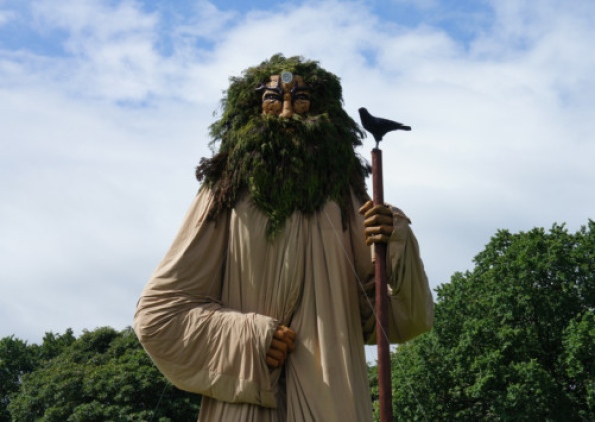
A contemporary Manx sculpture of Manannan displayed at a local music festival

A contemporary Manx sculpture of Manannan

Njörðr is possibly the same deity as the ‘Nerthus’ mentioned by the Roman historian Tacitus (responsible for the second or third-hand literary account of the defeat of the Druids on the Island of Mona in the 1stC AD) –  Njörð is pronounced ‘Nyerth’ or ‘Nerth’. Tacitus’ Nerthus is described as a goddess of the Atlantic or Baltic Germanic tribes, whose cult image was annually taken from its sea-island sanctuary in procession among the peoples on a wain drawn by heifers during a certain festival period at which iron objects were locked away and no warfare was carried out. At the end of this according to Tacitus’ (again, second or third-hand account), the wain and the image of the goddess was immersed in a lake and its male attendants died.  Jörð was the feminised portrayal of the Earth (it is the origin of that word in English) in later Germanic and Scandinavian legends – Tacitus refers to Nerthus as ‘Terram matrem’ (mother earth).

Njörðr has a reasonably strong legendary association with the sea and was said (in the Prose Edda text Gylfaginning) to live in a heavenly place called Nóatún, meaning ‘ship enclosure’. In the Poetic Edda  poem Vafþrúðnismál, it is stated that he will survive Raganorok and be reunited with the Vanir, suggesting an afterlife existence in the Scandinavian religious schema. He is associated with wealth, fertility, benignity – much like his son Freyr – and in one tale he was married to the mountain giantess Skaði – a daughter of the jötunn (giant) Þjazi whose attributes included the ability to take the shape of giant eagle. (Skaði and Njörðr’s daughter Freyja’s feathered cloak appears in other tales and gives the ability to shape-shift into the form of a bird!). After the Aesir kill her father, Skaði is allowed to choose Njörðr as a husband, apparently deciding on account of his beautiful feet (presumably being a sea-loving god they are clean and smooth), but they disagree about their favourite place to live –  Njörð wishes to stay near to the sea and Skaði longs for her father’s mountainous province of Þrymheimr.

In the Poetic and Prose Eddas, Njörðr is recorded as being the father of the male and female twins Freyr and Freya (literally ‘Lord’ and ‘Lady’) – described as leaders of the race of gods known as ‘Vanir’, who originate in ‘Vanaheim’. Although it is never stated that Skaði is their mother, it is strongly implied. As we shall explore later, the theme of an estranged otherworld sea-god and his female earthly-mountainous consort was a key theme in Atlantic Paganism further West, and the Vanir tradition of Scandinavian paganism ultimately derives from this.

In the Lokasenna poem of the ‘Poetic Edda’ texts, Loki states that Njörðr came to live as a hostage among the Aesir race of gods from the west (stanza 34) after the first ‘Aesir-Vanir War’ (an account of which occurs in the Völuspá). The mixing of the ‘Aesir’ and ‘Vanir’ in Norse legends is a curious aspect of late Scandinavian Atlantic Paganism, and we need to consider how theirSea God’ Njörðr relates to Manannán Mac Lir. Are they the related to the gods of the Western Atlanteans? I’ll do this in another post to follow….

tbc

Barry Cunliffe

Anyone familiar with the work of respected British archaeologist and author Barry Cunliffe will be familiar with his theory of a historic unifying Atlantic Cultural zone.

If unfamiliar with his books, it is highly recommended to start by reading his 2001 book ‘Facing The Ocean: The Atlantic and Its Peoples 8000 BC-AD 1500’ and discover how he uses archaeological evidence to demonstrate how this culture evolved in situ over a very long period of time, transcending labels such as ‘Celts’, ‘Europeans’, ‘Gaul’, ‘Briton’ and ‘Scandinavian’ etc. He expands and refines the observations in subsequent publications.

Atlantic European (what I call ‘Atlantean’) Culture is a regional culture which, although it evolved from the Mesolithic, through the Neolithic, Bronze Age and Iron Age periods, kept in touch with its roots in the landscape which ultimately formed and informed it: the Atlantic seaboard of Europe.

NOTE: I hope soon (late 2014) to be posting a review of Barry Cunliffe and John T. Koch’s ‘Celtic From the West’ – watch this space…

The Ness of Brodgar

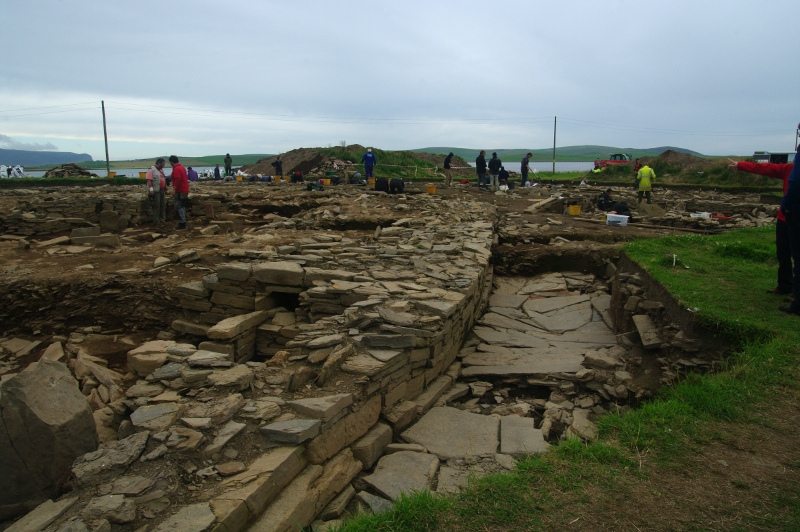
Archaeologists expose the sophisticated stone masonry of the 5000 year old Ness of Brodgar temple complex in Orkney

Archaeologists expose the sophisticated stone masonry of the 5000 year old Ness of Brodgar temple complex in Orkney

In 2008, archaeologists working within sight of the striking stone circle known as the Ring of Brodgar discovered what appears to be a massive and very important stone-built temple complex on the Ness of Brodgar. This ‘temple’ or palace contains evidence of painted masonry and among its remains have been found carved stones (including a carved stone ball), and statuary items made of red clay (and I think here of the ‘idol’ once venerated on Inniskea). The temple is associated with a massive rampart wall some 4 metres thick that runs along the edge of the Ness.

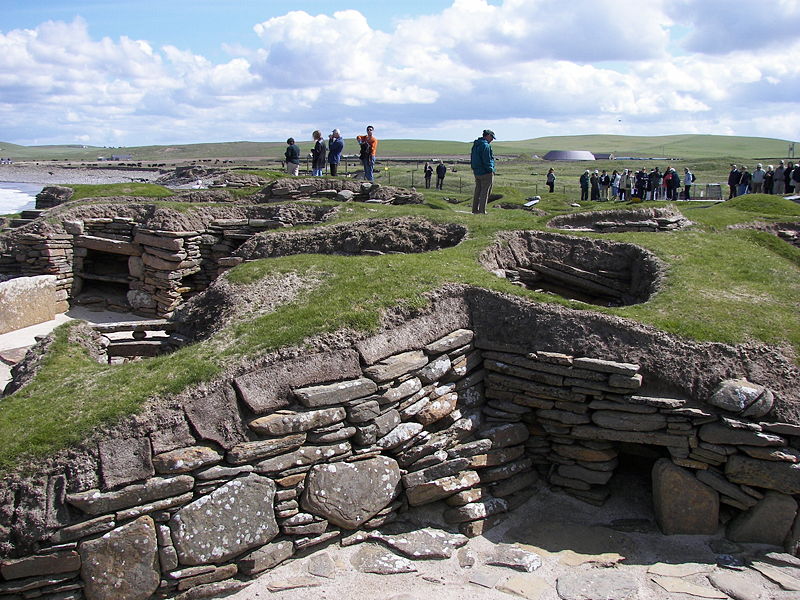
Visitors examining the remains of another sophisticated Neolithic structure in Orkney - Scara Brae.

Visitors examining the remains of another sophisticated Neolithic structure in Orkney – Scara Brae.

The discovery at the Ness of Brodgar demonstrates the sophisticated neolthic Atlantic culture’s architectural prowess already known about from the site of Scara Brae, uncovered from sand dunes in a storm during the early 20th century, and thought initially to be Roman.

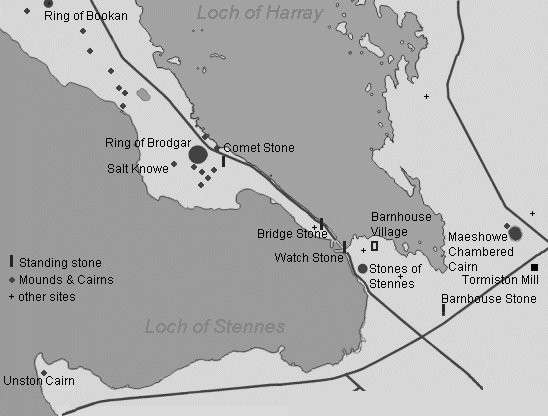
The Ness of Brodgar is the thin finger of land in the middle of the map. The famous Maes Howe cairn whose chamber aligns the winter solstice lies just southeast

The Ness of Brodgar is the thin finger of land in the middle of the map. The famous Maes Howe cairn whose chamber aligns the winter solstice lies just southeast

The sophistication and scale of the Neolithic stone circles, temples, tombs and settlements across the eastern Atlantic Archipelago (ie – the British Isles and Ireland) points towards a very special culture with a deep spiritual connection to their landscape, the heavens and the cycles of the seasons.

The Céide Fields

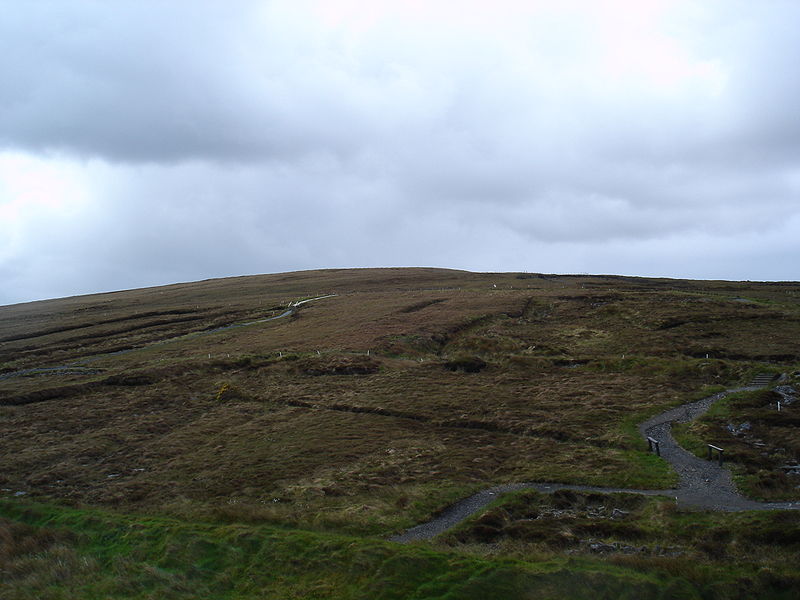
The Céide Fields in Co. Mayo, Eire

The Céide Fields in Co. Mayo, Eire

Emerging from under the blanket bogs of Co. Mayo in Ireland, the Céide Fields represent one of the earliest sites with evidence of organised human agriculture and have been dated as nearly 6000 years old – from before the introduction of metalworking. As well as the remains of stone houses and field walls, the site is associated with the typical megalithic religious and funerary structures found throughout Atlantic Europe from this period – evidence of a particular regional culture with its own philosophy and way of life that was shared. Paleobotanical evidence points to this barren boggy landscape having once been much warmer and covered in pine forest. Other areas in Mayo and the wider ancient province of Connaught contain similar remains.

Atlantean Civilisation

In the 4th century BCE, an Athenian author and philosopher called Plato wrote a description of an ancient civilisation that was once supposed to have existed somewhere outside of the Straits of Gibraltar (known then as the ‘Pillars of Herakles’) either in or bordering the Atlantic Ocean. Plato’s narrator Critias names it the ‘Island of Atlas’ (otherwise known as ‘Atlantis’) and claims the authority for its existence to have been the Egyptians who he claimed had records of it during the 6thc BCE.

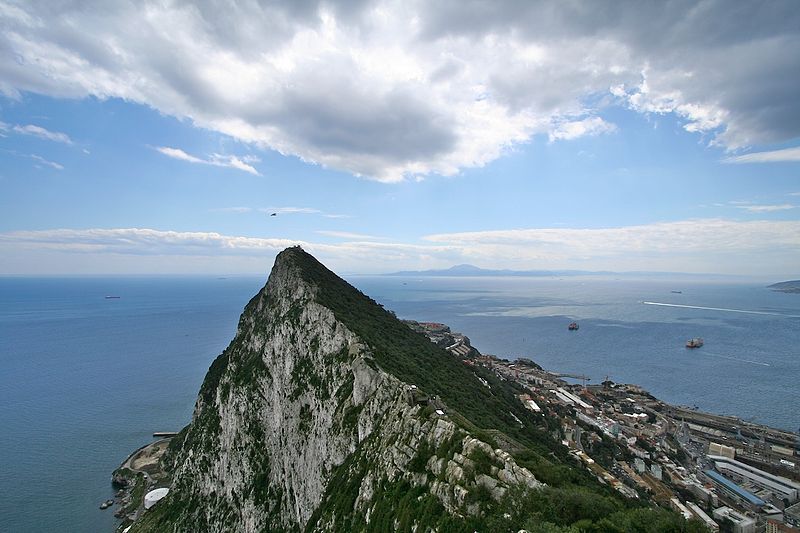
The straits of Gibraltar were known as the 'Pillars of Hercules' to the ancients - gateway to the wild Atlantic.

The straits of Gibraltar were known as the ‘Pillars of Hercules’ to the ancients – gateway to the wild Atlantic.

Plato’s story is full of embellishments of architectural prowess, size and details suggesting Atlantis to be a Hellenic style of civilisation, perhaps unsurprising given the power of Athens in his time and perhaps the story (as much as we have that survives) was meant to be an allegory of the potential for great powers to collapse when they deny their divine (philosophical) origins. Whatever the case, this is the fate of Atlantis in Plato’s tale which is returned to the elemental condition of its supposed founder, the Greek ocean god Poseidon, in a great earthquake and deluge.

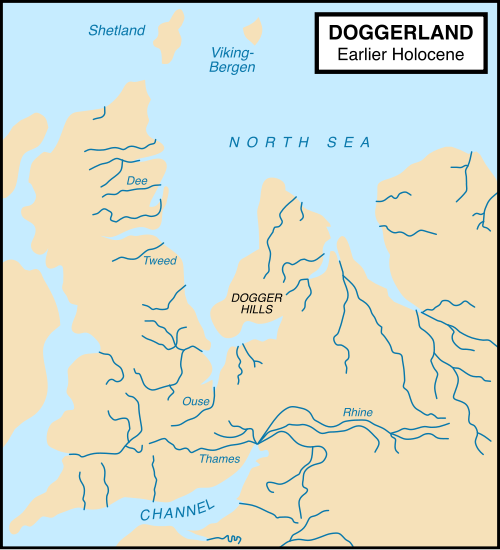
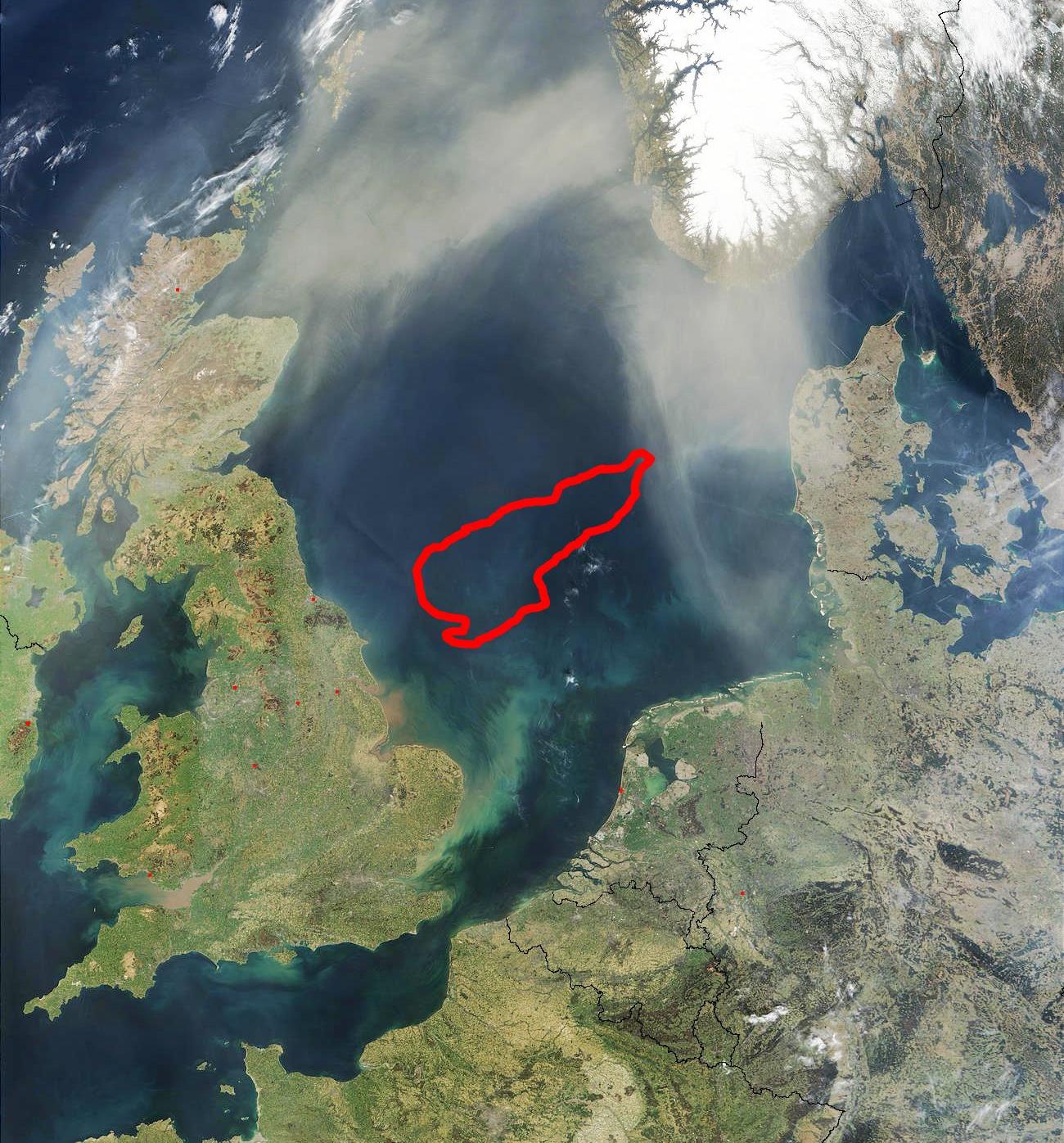
The origin and fate of Atlantis and the Atlanteans has continued to intrigue and generate speculation for almost 2500 years. Many take Plato’s account at face value – that it is a literal truth as he told it and seek to locate the civilisation out in the wider Atlantic; Still others refer the tale to the very real Post-Holocene inundation which flooded the great plain known as Doggerland under what is now the southern part of the North Sea, destroying and displacing many peoples and their settlements during the late Stone Age. The speed of this inundation is not known, but it is likely gradual, with the remaining Island of Dogger Bank probably finally being submerged circa 5000BC around the time of the increase of the fabulous Neolithic Atlantic Culture.

Doggerland circa 8000BC

Doggerland circa 8000BC

Dogger Bank was probably finally submerged by rising sea levels around 5000BC. A likely candidate for Pliny's Atlantis....

Dogger Bank was probably finally submerged by rising sea levels around 5000BC. A likely candidate for Pliny’s Atlantis….


What we can be certain of is that the account deals with an self-encompassed civilisation which had its own religion and philosophy and which achieved technical greatness sufficient to leave echoes in the sophisticated classical world, among the ancient Egyptians and Greeks. The account is specific that the civilisation was Atlantic. The form of it would not therefore very likely be of the Mediterranean type implied by Plato’s Athenian-biased account. The chances are that it was something to do with the ‘Barbarian’ peoples who had developed such a sophisticated survival-relationship with the coastal regions and Island-archipelagos of Northern Europe, and left such an intriguing archaeological record of their sophisticated supra-regional culture through their ancient temples, stone circles, sophisticated field-systems and settlements, by Plato’s time largely abandoned and lost under the sands and peats of the distant islands and bogs of Europe’s Atlantic Northwest provinces. From the Orkneys to the Irish Burren, Brodgar, Newgrange, Scara Brae, Stonehenge and the the Céide Fields of County Mayo this ancient regional civilisation and its attendant religious philosophies continues to emerge from the soil and the mists of history to challenge our notions about civilisation among the ‘barbarians’.

The End of Reincarnation

The ultimate fate of Bran and his party in the medieval Irish tale Imram Brain maic Febail (‘The Voyage of Bran Mac Febal’) is that upon attaining the otherworld, when they try to return to the land of the living a great age has passed and the party are unable to set foot in the land without crumbling to dust. In other words, the Christian narrator denies them access to reincarnation. Bran is only allowed to pass on his story and then fade into legend, the narration finishing with the lines:

And from that hour his wanderings are not known.

The motif of immortality’s end appears in a modified form in the other famous Irish medieval legendary tale of the ‘Children of Lir’, who were transformed into immortal swans and cursed to travel Ireland for hundreds of years until ‘released’ by the coming of Christianity. The ‘Voyage of Bran’ leaves the state of Bran and his party indefinite, but the Children of Lir resume a withered mortal form or crumble to dust, though not usually before receiving christian confession and going to the Christian afterlife.

There are other Irish accounts of very long-lived members of ancient races receiving similar treatment. Some of these, such as in the pseudo-historical Christian narrative of the Lebor Gabála Érenn or ‘Book of Invasions’, and other related historical legends written in the middle ages, contain accounts of ‘Fintan’, one of the first settlers in Ireland who legends and stories claimed lived on in various animal and human forms until the coming of christianity. The Welsh medieval author Walter Map (De Nugis Curialum) left us the tale of King Herla which was based on similar themes as that of Bran, Finn and Caílte. The Middle Irish tale of mad pagan King Suibhne (‘Sweeney’) who literally flies around in a semi-animalistic form until released to heaven by a saint may also continue the Irish Christian tradition which told stories designed to counter a pagan belief in reincarnation.

The theme of submission of the pagan order to that of christianity occurs most strongly in the middle irish manuscript tales of the Acallam na Senórach (‘Colloquy of the Ancients’ or ‘Tales of the Elders of Ireland’ etc) which contains the majority of the ancient tales dealing with Finn and his band. It is set within a Christian framework in which the ancient giant warrior Caílte mac Rónáin (Finn’s nephew) relates tales of Finn and of the Tuatha Dé Danann to an interested St Patrick: By implication Caílte is exchanging the reality of an otherworldly existence in the pagan time frame with a Christianised legendary life in the hearafter.

All of these tales are careful to create a linkage between the old and new religious orders, again demonstrating conformity with the principles of the Christianised reformed laws of the Roman Empire propounded by Theodosius and his successors during the late classical period, during which time christianity was setting up shop in the Atlantic West of Europe. It was a theme of peaceful cohabitation of old and new which formed the skeleton of many medieval narrative and literary traditions, and managed to preserve the tenets of paganism, which after all seemed to explain everything which christianity could not and would continue to influence the folk traditions and beliefs down to modern times.

Otherworld inversions in ‘The Voyage of Bran’

The Old Irish (circa 8thC CE) literary account of the tale of a fairy woman’s invitation to hero Bran mac Febail to visit the otherworld ‘Isle of Women’ (Tír na mBan) is one of the most important containing an appearance by the enigmatic character of Manannán mac Lir (also referred to as Moninnán in the text), who was in the tale described as the Lord of the Otherworld and later also supposed to have been the Irish ‘god of the sea’, or even the founding and protector god of the Isle of Man.

In the first part of the story, an otherworld woman appears unbidden in the fortress of a legendary king named Bran Mac Febal. She bears a silver apple branch laden with blossoms which she says comes from a tree in the otherworld and hands it to Bran before reciting an ‘aisling’-style visionary account of the otherworld which inspires him to set out in search of it. This account tells how this world consists of a great island (or islands) in the west and hints that it is a mirror-reflection of our world. She predicts the liminal moment in his voyage at which he will see Manannán and at which point he will know he has arrived in the Otherworld (Kuno Meyer translation):

 At sunrise   there will come
   A fair man illumining level lands;
   He rides upon the fair sea-washed plain,
   He stirs the ocean till it is blood.

The liminal point of ‘sunrise’ is actually here the sunset of the corporal world, and she alludes to this in her description of the sea turning to ‘blood’, with the reddening sunset. It is probable that the reddening of the sea was interpreted as a figurative indication of the host of the dead going beneath the waves into the inverted Otherworld.

In the second part of the narrative (dealing with the journey), the following stanzas describe the actual moment when Bran is met and addressed by Manannán ,who rides across the waves on a chariot accompanied by a host of souls who Bran cannot see (i.e. – conducting the dead into the land beneath the waves):

Bran deems it a wondrous pleasure to travel in his coracle over a clear sea, while for me, the chariot in which I am is driving from afar over a flowery plain.

What is clear sea for the prowed ship in which Bran is, is a many flowered Mag Meall for me in a two-wheeled chariot.

Over a clear sea Bran beholds many breaking waves. I myself behold flawless red-topped flowers on Mag Mon.

Sea horses glisten in summer throughout the prospects which Bran can roam with his eye. Flowers pour forth a stream of honey in the land of Manannán mac Lir.

The sheen of the sea on which you are, the brightness of the ocean over which you voyage: it has strewn forth yellow and green; it is solid earth.

Speckled salmon leap from the womb of the white sea which you behold: they are calves, they are lovely lambs…

… Though you should see but a single chariot-rider on the many-flowered Mag Meall, on its bosom, besides him, are many steeds which you do not see.

(Translation from Early Irish Lyrics by Gerard Murphy, 2007 reprint of the 1956 first edition; I also refer the reader to the Kuno Meyer transaltions which are available online.)

By contrasting the great plain of the sea, with the great plain of his otherworld domains of Mag Meall (Honeyed Plain) or Mag Mon (Plain of ?Sports/?Delights), Manannán draws Bran (and the reader) into the Otherworld in a smooth transition that eases across the boundary between both worlds almost imperceptibly. The ensuing descriptions he gives tell of the feasting and beauty of the fairy inhabitants of this place.

    The sea, of course, is where the sun appears to Atlantic peoples to descend into in the west every day, and for this reason, Manannán is therefore depicted in this tale as the lord of the parallel world of the afterlife, where sea is land and vice versa.

 This otherworld is named in the poem (either in whole or in its part) by various names, including: Emain, Emne, Ciúin, Aircthech, Mag Findargat, Mag Argatnél, Mag Réin, Mag Mon, Mag Meal, Ildathach and Tír mBan. The diversity of names used in Celtic tales of the otherworld sometimes suggests it to be more of a western archipelago, reflecting that of the eastern Atlantic seaboard: Ireland, Britain and the Hebrides etc. However, by ascribing many names to one idea gives a special status to something magical – an indefinability that prevents its overthrow by literality. This represents the struggle between oral pagan tradition and literary Christian absolutism.

The themes of conflict between the pagan and the Christian are bubbling just below the surface throughout the poetry and prose of the ‘Voyage of Bran’. When the ‘fairy woman’ or Manannán holds the stage, they give a very persuasive account of the spirits of the otherworld, who are said to be without original sin and full of virtue. There is no indication that the Christian scribe(s) and interpreters of the tale and its poetic stanzas are seeking to Christianise the otherworld – the ultimate goal is to consign it to history, or to the world of fantasy and story:

Once the author or scribe finishes dealing with the pagan and fairy themes, the poetic stanzas go on to address christian themes of the afterlife almost as if the transcriber of the pre-historic oral versions is guilty about such content. An interlineal note in one of the surviving manuscripts of the tale even contains a supplication to the christian god: arca fuin dom Dia – ‘I ask forgiveness of my God’. The style is therefore the same as in the ‘Lament of the Sentuine Berri’, which similarly descends into expressions of Christian scribal anxieties over the apparently pagan content: Both pieces contain core doctrinal aspects of the two main characters at the heart of the pre-christian Atlantic religion.

Ancient Irish literature and legends are full of motifs of the masculine hero being inspired by the dreamy visions of a powerful otherworld female, who also frequently functions in such legends as the one who bestows sovereignty and male temporal power. The ‘Voyage of Bran’ is no exception, but where it is exceptional is that it deals with the less common theme of the god-like Manannán (or Moninnán). In the Voyage he seems to function as a walk-on part or herald who welcomes Bran to his kingdom and conducts him through the otherworld showing its sights and impressing upon him the ‘principle of inversion’ regarding the nature of the otherworld. When reconsidering the introductory stanzas spoken by the ‘fairy woman’ in Bran’s fortress in the human world, it is quite possible to conclude that Manannán’s masculine appearance in the otherworld is an inverted reflection of the fairy woman who inspires Bran while in the ‘Land of Men’: In the ‘Land of Women’ the Fairy woman becomes a Man! Such a principle appears to have powered a pagan understanding which balanced the importance of the role of the masculine and feminine, the living and the dead, night and day, summer and winter and so forth… It was a religious philosophy designed to seek harmony between the apparently polar forces of the universe.