The meaning of Samhain

Samhain is the quarter-day festival that starts the Celtic year, marking the start of Winter and the end of harvests. It commences at nightfall on October 31st (new style Gregorian calendar) or the 11th November (old-style Julian Calendar) and goes by a number of different English names including Hollantide, All-Hallows Eve, Hallowe’en and All Saint’s Eve. In Scots and Manx Gaelic the name is the same, although written differently: Samhuinn and Sauin, respectively. The pronunciation is ‘Sow-in’ (rhymes with ‘cow-in’). There are a number of other more archaic names, which I will go on to discuss in due course.

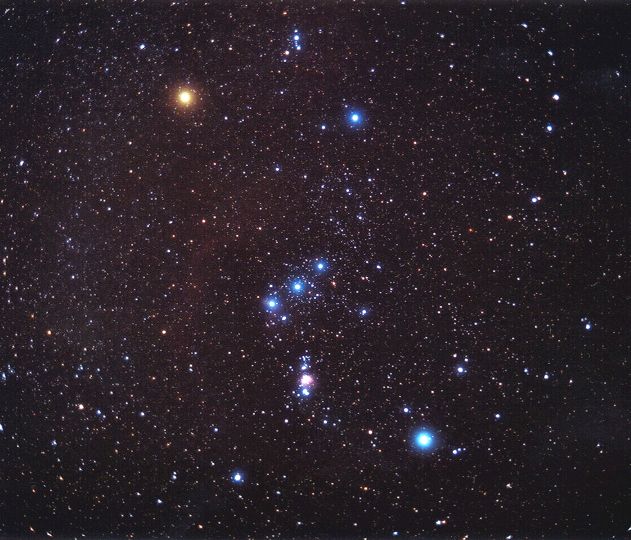
It is a festival that symbolizes death – the transitional phase of the seasons when Atlantic Europe’s foliage dies back, and animal life dwindles. The evenings darken rapidly and the first frosts begin to touch the land. Crows and flocks of migratory wading birds throng the skies in great clouds cawing, whistling and chattering. The constellation of Orion begins to dominate the night skies… The spirit which enlivened nature in the summer months has gone from visible reality to the state of an intangible but certain potential for the coming year. In an ancient religious system that viewed life as a continuous oscillation between the tangible living state and a spiritual state awaiting rebirth in the next cycle, Samhain was therefore also the Festival of the Dead. 

It was Julius Caesar who first noted (in Commentarii de Bello Gallico) that the Gauls held that days started with nightfall, and celebrated the commencement of their important days with the falling of night. The same is true of the other Atlantic peoples, and in Ireland, Scotland and the Isle of Man in particular this continued down to modern times. The festival of Samhain was therefore called Oidhche Samhna – ‘Night of Samhain’ – in Irish, and Oie Hauiney or Houney in Manx. Both would be pronounced pronounced something close to ‘Ee ouna’ allowing for the usual lenitions and aspirations of spoken Gaelic.

The Manx had another name yet for the festival – ‘Hop tu naa‘ (pronounced ‘hop the nay’ or as the more modern ‘hop tyoo nay’) – which is of uncertain meaning and sounds curiously close to the Scots name for New Year: Hogmanay. In fact, Samhain was the Celtic New Year – just as days started with a nightfall, so the years started with the dark part also. It is uncertain when the Scots started to use ‘Hogmanay’ as the term for the 31st of December New Year, or for that matter if the term was ever used for Samhain. It seems that folk traditions of the Atlantic European world show quite a degree of transferability across the period between Samhain and the January New Year – customs including guising, playing pranks, gifting and house-visiting were just as likely at Christmas and New Year as they were around the 1st of November. Whether this represents a natural tendency to transfer celebrations that brighten the dull winter months or a concerted religious effort to dissipate or transform wholly pagan festivities remains unclear, but a combination of factors is likely.

There has always been a strong association of the festival with a ‘witch’ or ‘witches’ that has continued right down to the Halloween celebrations of modern times. The Celtic peoples never really had much time for the idea of ‘witches’ in the 16th/17thC judicial and religious sense of a person who worships the Christian Satan and does magic to harm their neighbours. The ‘witch’ referred to in Celtic areas is generally best interpreted as a Christian opinion of the old Goddess herself, rather than a human individual at the margins of society. She seems to be represented by the folklore character referred to as the Cailleach – a monstrous ancient female supposed to have created the landscape and unloosed the rivers, and supposed in some traditions to be responsible for winter. 

To the Celtic peoples of Ireland, Scotland and the Isle of Man ‘The Witch‘ was a figurative legendary character representing Christian opinion of the ancient Goddess, rather than a clear and present social threat posed by ‘a witch’. For this reason, there were hardly any executions of suspected ‘witches’ in Celtic cultural zones.
'Jinny the Witch jumped over the house to fetch a stick to lather the mouse'  (Old Anglo-Manx Samhain song)

‘Jinny the Witch jumped over the house to fetch a stick to hit the mouse’ (line from an old Anglo-Manx Samhain guising-song) – the constellation of Orion presides over the winter skies between Samhain and Imbolc (1st February).

Irish legends and medieval manuscripts contain a number of references to Samhain, and one in particular to a ‘witch’ associated with the festival. The ‘witch’ was Mongfionn/Mongfind – ‘White Hair’ or ‘Fair Hair’ – supposed at least (euhemerisation agains!) to have been sister of Crimthann mac Fidaig, a king of Munster, and mother of Ailill, Brión and Fiachra, the traditional ancestors of the medieval Connachta, by a High King called Eochaid Mugmedon. The Connachta were the opponents of the Ulaid (Ulstermen) in the Tain. She is supposed by to have been a sorceress responsible for poisoning her brother in order to allow her children to succeed the kingship, but who died after tasting her own poison while trying to convince her brother’s children it was safe. It is the old ‘evil fostermother’ tale from folklore, also related in the story of the ‘Children of Lir’. This murder and her death happened at Samhain and the Book of Ballymote (folio 144, b.1) claims that Mongfind was thereafter worshipped at Samhain by the peasantry who called it the ‘Festival of Mongfind’ – Feil Moing! There is a hill called Ard na Ríoghraidhe (Height of the Kingfolk?) or ‘Cnoc Samhna’ (Hill of Samhain) in Co. Limerick that is associated with her. The details of the kingship-oriented stories involving Mongfind are probably an obfuscation of the facts, and the ‘White Haired One’ is likely to have been the aged Cailleach who represented winter and rebirth in the coming year. Perhaps the Milky Way was her hair? The path to renewal…

Cnoc Tlachtga (now also called ‘The Hill of Ward’) near Athboy, Co. Meath was also a place legendarily or historically associated with Irish Samhain festivities, including the lighting of a bonfire. This Hill was supposedly eponymously named from a magical female of the same name, the daughter of a magician-druid called Mug Roith/Mog Ruith who was suppose to have given birth to triplets on the hill before dying. Another site associated with paganism, death and Samhain was, of course, Magh Slécht (Mag Senaig) in Co. Cavan, supposed to have been the site where ‘Tigernmas’, an ahistorical pagan High King of Ireland died along with many of his followers while worshipping an idol called Crom Cruaich at Samhain. This idol was supposed to have later been broken by Patrick. There are many other traditions besides, including the tale of the Ulster Cycle called Serglige Con Culainn (The Wasting Sickness of Cúchulainn) were the Ulster hero is attacked and seduced by the Queen of the Otherworld – Fand, wife of Manannan – during the course of Samhain celebrations of the Ulaid.

Irish legend also place the start of the Second Battle of Maigh Turead at Samhain, and it commences after a sexual coupling of the Dagda with the Morrigan. Likewise, the cattle raid of the Tain Bo Culainge commences at Samhain, and the tales of this also feature the Morrigan, who I have earlier identified with the Cailleach. The medieval tale The Boyhood Deeds of Fionn claimed that the Fairy Hills (Sid) were open at Samhain. You can tell from ancient Irish literature that Samhain had a particular association with death and the otherworld, and with potent magical female characters!

The themes of conflict and death at Samhain follow on from the Harvest, and then the very visible Atlantic autumn die-back of nature – replete with withering, decay, storms and darkness. These processes are set in motion from the festival of Lunasa (Lughnasadh) onwards. The die-back to pagans was simply a part of the renewal-cycle and therefore did not have the confused connotations of ‘evil’ or ‘uncleanliness’ that was imported with the somewhat ectopic Judaic religions during the 1st millennium.


Tehi-Tegi and the Pictish Stones

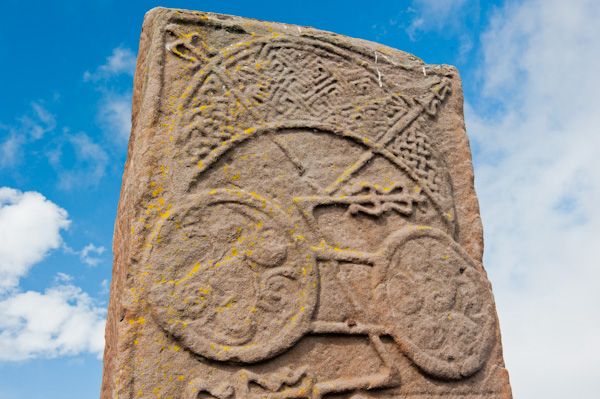
Symbols found on Pictish' stones. Are they related to the Manx 'Tehi-Tegi', Irish Cliodhna, and other 'mermaid' traditions?

Symbols found on Pictish’ stones. Are they related to the Manx ‘Tehi-Tegi’, Irish Cliodhna, and other ‘mermaid’ traditions?

The curious rock-carvings found on the ‘Pictish’ stones of the eastern and lowland parts of Scotland have long excited curiousity and conjecture as to their meaning and symbolism. Having studied the ‘Otherworld’ traditions and legends of the ancient Atlantic Europeans, I am starting to understand the significance behind some of these symbols and would like to share a few of my thoughts on them.

It is my belief that the symbols represent aspects of the processes involved in the passage of the dead to the otherworld, and in the regeneration and reincarnation cycles of nature, as previously discussed in the Blog. Here are a selection of my interpretations based on these theories:

1. The ‘Beast’ = A ‘Water-Horse’ or Porpoise-Horse hybrid. The steed of the ‘Fair Chooser’ which transforms when it dives into water conveying the soul(s) of the dead to the Otherworld ‘beneath the waves’ or ‘beyond the setting sun’.

2. Mirror and Comb: The attributes of the ‘Mermaid’ still used in modern depictions of this archetype. The mermaid represents the ‘Fair Chooser’ herself, and the comb and mirror represent her love of beauty as well as the following: The Mirror represents the inverted state of Otherworld-being and so is a metaphor for this world. The Comb represents a metaphor of the un-knotting of the tangles of life’s threads, in preparation for their refashioning in the otherworld. Scandinavian, Scots and Manx folklore contains many traditions about knots – in particular they were avoided about the person of a dead body, lest they return to haunt the living!

3. Crescent and V-Rod: The crescent represents a rising wave, as well as the Moon which propels the tides – various permutations of it contain swirl-patterns suggesting waves. The V-Rod geometrically represents a state of reflectional-symmetry in its gross appearance, but each arm looks different, representing the otherworld reflection and transformation. My conjecture is that this symbol represents the great wave which swallows the dead and therefore the transition to the otherworld.

4. Serpent and Z-Rod: This symbol expresses rotational symmetry of its geometric forms. This expresses a principle of repeat through cyclicity, rather than repeat through reflection, and introduces the idea of eventual reincarnation. The serpent is  an ancient symbol of rebirth, based on empirical observation of its skin-shedding, its tendency to make coiled and undulating shapes with its body mimicking the cycles of the stars, planets and satellites of the sky perceived to influence nature through the tides, seasons etc.

5. Double Disc and Z-Rod: This is an expression of the cyclicity of the sun and moon in particular – possibly a comment on their inverted otherworld-relationship. The discs are bound together by a tie upon which the Z-Rod is centred. The rod is often decorated at each ends with plant-like elements.

Aberlemno-9946

tbc

The End of Reincarnation

The ultimate fate of Bran and his party in the medieval Irish tale Imram Brain maic Febail (‘The Voyage of Bran Mac Febal’) is that upon attaining the otherworld, when they try to return to the land of the living a great age has passed and the party are unable to set foot in the land without crumbling to dust. In other words, the Christian narrator denies them access to reincarnation. Bran is only allowed to pass on his story and then fade into legend, the narration finishing with the lines:

And from that hour his wanderings are not known.

The motif of immortality’s end appears in a modified form in the other famous Irish medieval legendary tale of the ‘Children of Lir’, who were transformed into immortal swans and cursed to travel Ireland for hundreds of years until ‘released’ by the coming of Christianity. The ‘Voyage of Bran’ leaves the state of Bran and his party indefinite, but the Children of Lir resume a withered mortal form or crumble to dust, though not usually before receiving christian confession and going to the Christian afterlife.

There are other Irish accounts of very long-lived members of ancient races receiving similar treatment. Some of these, such as in the pseudo-historical Christian narrative of the Lebor Gabála Érenn or ‘Book of Invasions’, and other related historical legends written in the middle ages, contain accounts of ‘Fintan’, one of the first settlers in Ireland who legends and stories claimed lived on in various animal and human forms until the coming of christianity. The Welsh medieval author Walter Map (De Nugis Curialum) left us the tale of King Herla which was based on similar themes as that of Bran, Finn and Caílte. The Middle Irish tale of mad pagan King Suibhne (‘Sweeney’) who literally flies around in a semi-animalistic form until released to heaven by a saint may also continue the Irish Christian tradition which told stories designed to counter a pagan belief in reincarnation.

The theme of submission of the pagan order to that of christianity occurs most strongly in the middle irish manuscript tales of the Acallam na Senórach (‘Colloquy of the Ancients’ or ‘Tales of the Elders of Ireland’ etc) which contains the majority of the ancient tales dealing with Finn and his band. It is set within a Christian framework in which the ancient giant warrior Caílte mac Rónáin (Finn’s nephew) relates tales of Finn and of the Tuatha Dé Danann to an interested St Patrick: By implication Caílte is exchanging the reality of an otherworldly existence in the pagan time frame with a Christianised legendary life in the hearafter.

All of these tales are careful to create a linkage between the old and new religious orders, again demonstrating conformity with the principles of the Christianised reformed laws of the Roman Empire propounded by Theodosius and his successors during the late classical period, during which time christianity was setting up shop in the Atlantic West of Europe. It was a theme of peaceful cohabitation of old and new which formed the skeleton of many medieval narrative and literary traditions, and managed to preserve the tenets of paganism, which after all seemed to explain everything which christianity could not and would continue to influence the folk traditions and beliefs down to modern times.

‘Sith’ in the 17th century – survival of an ancient tradition.

In 1691 when he wrote his famous essay on local fairy beliefs, Robert Kirk was the minister in the Scottish village of Aberfoyle, bordering the Trossachs hills in the southern edge of the Scottish Highlands. Being the seventh son of a minister, he was young and enquiring, and seems to have been socially well-connected in both Ireland and England as well as his native home, largely on account of his involvement with translating the Bible into Irish – an effort which would have had the support of Britain’s Protestant elites. As a seventh son, local and wider Gaelic tradition would have deemed that he would be party to the ‘Second Sight’, or visions of the otherworld. Perhaps because of this, he appears to have been able to question and elicit many curious and ancient beliefs from local ‘seers’ to do with the Otherworld – one that Highlanders believed was parallel to our own and inhibited by spirits of both the living and the dead. He wrote these down in a book the year before he died (his body allegedly being found on a fairy knoll near the village), although this work appears to have remained unpublished for over 100 years after when it was rediscovered by Scottish literary romanticists, hungry for source material. It remains one of the most important and detailed early modern accounts of more ancient fairy beliefs, as well as a detailed source on ancient Atlantic paganism. The title at publication was:

“The Secret Commonwealth or An Essay of the Nature and Actions of the Subterranean and for the Most Part Invisible People Heretofor Going Under the Name of Elves, Faunes, and Fairies Or the Lyke, Among the Low Country Scots”

In those days, it was not unusual for the clergy to develop an interest in the occult, as they could always claim the purpose was to grant knowledge in order to purge people of their beliefs. Nonetheless, you can never quite shake the impression that Kirk’s interest is wavering between religious duty and a genuine credulity in regard to the traditional beliefs of his ancestors. Perhaps inspired by his visits to London where he met and talked with many intellectuals, he frequently uses references to contemporary science (particularly microscopy and the discovery that the world is teeming with invisible life) in order to attempt to justify the beliefs. In the preamble to the main text, Kirk describes his work as:

“…an Essay to suppress the impudent and growing Atheisme of this Age, and to satisfie the desire of some choice Freinds.”

Although I will post all of the relevant chapters online here for you, I will start here with a full quote of chapter 1 and some selected quotes from other chapters to illustrate the key important aspects of this work:

Chapter 1: Of the subterranean inhabitants

THESE Siths, or FAIRIES, they call Sleagh Maith, or the Good People, it would seem, to prevent the Dint of their ill Attempts, (for the Irish use to bless all they fear Harme of;) and are said to be of a midle Nature betuixt Man and Angel, as were Dæmons thought to be of old; of intelligent fluidious Spirits, and light changable Bodies, (lyke those called Astral,) somewhat of the Nature of a condensed Cloud, and best seen in Twilight. Thes Bodies be so plyable thorough the Subtilty of the Spirits that agitate them, that they can make them appear or disappear att Pleasure. Some have Bodies or Vehicles so spungious, thin, and delecat, that they are fed by only sucking into some fine spirituous Liquors, that peirce lyke pure Air and Oyl: others feid more gross on the Foyson or substance of Corns and Liquors, or Corne it selfe that grows on the Surface of the Earth, which these Fairies steall away, partly invisible, partly preying on the Grain, as do Crowes and Mice; wherefore in this same Age, they are some times heard to bake Bread, strike Hammers, and do such lyke Services within the little Hillocks they most haunt: some whereof of old, before the Gospell dispelled Paganism, and in some barbarous Places as yet, enter Houses after all are at rest, and set the Kitchens in order, cleansing all the Vessels. Such Drags goe under the name of Brownies. When we have plenty, they have Scarcity at their Homes; and on the contrarie (for they are empow’red to catch as much Prey everywhere as they please,) there Robberies notwithstanding oft tymes occassion great Rickes of Corne not to bleed so weill, (as they call it,) or prove so copious by verie farr as wes expected by the Owner.

THERE Bodies of congealled Air are some tymes caried aloft, other whiles grovell in different Schapes, and enter into any Cranie or Clift of the Earth where Air enters, to their ordinary Dwellings; the Earth being full of Cavities and Cells, and there being no Place nor Creature but is supposed to have other Animals (greater or lesser) living in or upon it as Inhabitants; and no such thing as a pure Wilderness in the whole Universe.

As well as the names ‘Sith’ and ‘Sleagh Maith’, Kirk refers here to domestic fairies (Brownies) using the term ‘Drags’, which is a derivative of an Old Norse term for the undead: Draugr. He tells of the belief that – as well as human houses – they occupy subterranean or infernal places, in green ‘fairy mounds’ and in caves and rocks.

He further expounds the important tenet that the fairies occupy a parallel world to ours that seems to be an inversion of our own: When we have plenty, they have scarcity, and on the contrarie”, by which he explains their hunger for the spiritual quintessence of our world, which these spirits were believed prone to try and steal. The entry of fairies into the house at night to carry out domestic activities is also a reflection of what I will refer to as the ‘Inversion’ principle: that night is daylight for the ‘fairies’, the moon is their sun, death is their life, and so forth. Discussion of this principle is continued in subsequent chapters in the descriptions of fairies ‘aping’ or mirroring the actions of humanity , a belief found elsewhere in Atlantic Celtdom:

“There Men travell much abroad, either presaging or aping the dismall and tragicall Actions of some amongst us; and have also many disastrous Doings of their own, as Convocations, Fighting, Gashes, Wounds, and Burialls, both in the Earth and Air. They live much longer than wee; yet die at last or least vanish from that State. ” (Chapter 6)

Kirk’s authorities for most of his statements appear to be a specific group of people who are able to see into and understand the fairy world, and he refers to these as people of the ‘Second Sight’ or Seers. Speaking of them in the context of funeral wakes, he says:

Some Men of that exalted Sight (whither by Art or Nature) have told me they have seen at these Meittings a Doubleman, or the Shape of some Man in two places; that is, a superterranean and a subterranean Inhabitant, perfectly resembling one another in all Points, whom he notwithstanding could easily distinguish one from another, by some secret Tockens and Operations, and so go speak to the Man his Neighbour and Familiar, passing by the Apparition or Resemblance of him. They avouch that every Element and different State of Being have Animals resembling these of another Element.

What is really interesting is how these accounts blur the boundary separating fairies from the spirits of the dead AND of the living, and as you read the whole essay you become aware that Kirk struggles to conceptualise and organise the information of his sources. In Chapter 7 he says that one seer averred the fairies

“..to be departed Souls, attending awhile in this inferior State, and clothed with Bodies procured throwgh their Almsdeeds in this Lyfe..”

and elsewhere says:

“…There be many Places called Fairie-hills, which the Mountain People think impious and dangerous to peel or discover, by taking Earth or Wood from them; superstitiously beleiving the Souls of their Predicessors to dwell there. And for that End (say they) a Mote or Mount was dedicate beside every Church-yard, to receive the Souls till their adjacent Bodies arise, and so become as a Fairie-hill…”

Perhaps the most amazing assertion he makes about Fairies brings us immediately back to the Roman accounts of the core tenet of the Druids of Gaul and Britain some 1700 years before:

“‘Tis ane of their Tenets, that nothing perisheth, but (as the Sun and Year) every Thing goes in a Circle, lesser or greater, and is renewed and refreshed in its Revolutions; as ’tis another, that every Bodie in the Creation moves, (which is a sort of Life;) and that nothing moves, but as another Animal moving on it; and so on, to the utmost minutest corpuscle that’s capable to be a Receptacle of Life.”

He is speaking of a supposed tenet of the ‘Sith’ or fairies, not that of the ‘illiterate’ seers he discussed them with! The implication is one of continual rebirth or metempsychosis, and comes straight from the core of what Caesar left for posterity about the ancient religion of Atlantic Europe. Kirk makes another (unwitting) reference to part of this tenet in chapter 2 where he describes the fairies moving their habitations en masse at four particular times of the year: the Celtic ‘quarter day’ festivals of Beltain, Lughnasa, Samhain and Imbolc. These spirits and their movements are tied to the regenerative cycle of the year, the evidence for which I will discuss in due course, gathered from evidence from across Atlantic Europe.

Kirk was writing at a juncture in history that was critical in that it marked a watershed in the continuity of pre-Christian traditions, the reasons for which can be summarised as follows:

1. The collapse of the Gaelic cultural world after the protestant Reformation: Following the Roman legal codes, Christianity was established within the Empire through a process of assimilation of paganism and utilisation of its fundamental festivals, myths and geographical sites as the framework for the new religion. Thus, Roman Catholicism was a culture that maintained links with the pagan past and Roman Catholic culture was strong in the Gaelic speaking world of Ireland and the Scottish Highlands and Islands at the inception of the Protestant Reformation. Tudor expansionism and the wavering religious sympathies of the Stuart dynasty that succeeded it was to set the scene for the final collapse of this world: The invasion of Ireland, the plantations, the Statutes of Iona, and the Flight of The Earls were to start what the Hanoverian succession, the Battle of the Boyne, the Jacobite Wars and finally the Highland clearances, mass emigration and famine were to all but finish.

2. The explosion of Rationalism and Sciences and the final collapse of the classical scientific and spiritual system. New models were replacing the old everywhere, and there was a general tendency to denigrate the old as barbaric and superstitious. Literal Protestantism marched more or less conveniently on the coat tails of this, attacking the last vestiges of ‘superstition’ with destructive abandon.

3. Imperial expansion and conquest of the ‘New World’ bought immense wealth as well as exposure to ‘primitive’ cultures that were to be used as a yardstick by which to view what the European should not be: a heathen savage. Ancient marginal lifestyles in Britain and Ireland that were once ignored as existing in the shadows became exposed to the glare of ‘enlightened’ observation and their existence increasingly questioned.

4. This wealth led to unparalleled economic growth and the subsequent Industrial and Commercial Revolution. Society began to urbanise around commercial centres and traditional models of ‘feudal’ rural economic organisation supporting ancient traditional lifestyles began to collapse as a new mercantile aristocracy redefined the world to meet their own ends. Common lands became enclosed, agriculture intensivised and communities dissipated. The burgeoning urban ‘poor’ became defined as a class of the technically and traditionally disenfranchised – consumers of the produce of the wealthy, including religion.

Although none of these got rid of the idea of fairies, they appear collectively to have decimated any coherent vestiges of the paganism underpinning the beliefs described by Kirk – tenets that might in former times have been dismissed as harmless and ignorant (due to their marginal and unthreatening nature), or otherwise persecuted by murder and intimidation by the state and the church for political ends…

Lucan on metempsychosis

Marcus Annaeus Lucanus (d.65 CE) – otherwise known as Lucan – was a poet and author with close ties to the imperial court of Rome. He is best known for his description of the Roman Civil War in the 1stC BC, albeit more for its poetic rather than historical merit. Like Caesar, he commented on the druidic belief in the transmigration of souls:

While you, ye Druids, when the war was done,
To mysteries strange and hateful rites returned:
To you alone ’tis given the gods and stars
To know or not to know; secluded groves
Your dwelling-place, and forests far remote.
If what ye sing be true, the shades of men
Seek not the dismal homes of Erebus
Or death’s pale kingdoms; but the breath of life
Still rules these bodies in another age —
Life on this hand and that, and death between.
Happy the peoples ‘neath the Northern Star
In this their false belief; for them no fear
Of that which frights all others: they with hands
And hearts undaunted rush upon the foe
And scorn to spare the life that shall return.
(Translation by J.D. Duff: “Lucan: The Civil War”, Loeb Classics Library, London, 1928.)

It is possible he was quoting from Julius Caesar, yet almost a century after Caesar’s murder it still appears that the apparently core druidical doctrine of metempsychosis was contentious to Romans such as Lucan. The politics of the day was that the focus of the druidic religion had been pushed back into the Atlantic islands of Britannia and Hibernia, and Rome was in the process of its campaign of subjugating the former. Both Caesar and Lucan’s attitude towards the reincarnation doctrine was mirrored by other Roman writers such as Pomponius Mela (De Situ Orbiis c.43CE) who (like Lucan and Seneca) was from Roman Spain. These authors, along with Pliny the Elder, provided rhetorical accounts unkind to the religion of the druids during the period that Rome’s armies were pushing up through Britannia. A political reason to attack the core doctrine was that it was perceived that it rendered believers fearless of death.

Romans had no objection to the veneration of native gods in the territories they conquered, and must have actually created many as they went. The large number of remaining inscriptions and statuary items dedicated to these ‘Romano-Celtic’ deities in Britain is proof of this. It is a matter of conjecture, though, if these represented ancient original cults, especially as Roman historians and literary commentators during the first 100 years of Roman subjugation in Atlantic Europe indicated a Roman campaign against fundamental tenets of this style of religion, particularly the doctrine on metempsychosis.

It is quite likely that Romano-Gallic and Romano-British ‘deities’ were the result of an active campaign of interpretatio romanum designed to change the fundamental nature of local pagan belief to match one acceptable to the Mediterranean mindset of Rome (centred around their idea of ‘proper veneration’ of the ‘eternal gods’) and to the (often non-Roman) troops and auxiliaries it employed to do its dirty work in frontier provinces.

In Lucan’s time (middle of the 1stC CE) Ireland and the western and northern reaches of the ‘Britannic Isles’ would still have followed the doctrines that Julius Caesar wrote of after he had started to purge them in the 1stC BCE.