Fairy Doctors, Sluagh Sidhe and Fianna

In the 5thC a crack commando unit was sent to purgatory by St Patrick for a crime they didn’t commit. These men promptly escaped from a maximum security stockade into the Gaeltacht underground. Today, still wanted by the church, they survive as soldiers of fortune. If you have a problem – if no one else can help – and if you can find them – maybe you can hire: The F-Team

The idea of a group of heroes who battle the monstrous, the fateful and the chaotic at the boundaries of safe everyday existence is a pervasive feature of European mythology, extending back for as long as stories have been recorded. In the Gaelic language zones, perhaps the most important representatives of this legendary theme are Fionn mac Cumhaill and his Fianna.Through their battles (and romantic encounters) with the magical denizens of legend, and their willingness to lay down their lives and suffer to do this, they become heroes who benefit the people, and their stories are marked by an enduring fondness.

What struck me as interesting about the aforementioned story of Aleisoun Pearsoun (put to death for witchcraft in Fife in 1588) was that her ‘story’ of how she acquired her powers seems to mirror and include aspects of that of the legendary Fianna:

1. She – like Fionn – joins a fairy band who take her on a wild adventure.

2. She ‘marries’ (has a sexual initiation) with a fairy she meets in the wilds. Fionn’s paramour was a woman in the form of a deer who he catches when hunting. Their magical son (poetry) is Oisin (‘Little Deer’).

3. She is tested with great adversity by the Otherworld denizens, who make her ill, but is given magical weapons with which to combat them.

4. She overcomes and returns with knowledge of its secrets, and becomes a warrior against the perils of the Otherworld (disease).

In fact, hers is not a dissimilar story to that of traditional Gaelic folk-healer characters such as Biddy Early (Ireland 19thC) and elsewhere besides. It is a feature pertinent to stories of ‘shamans’ and ‘medicine men’ etc from around the pre-modernised world.

The Fianna and the Sluagh Sidhe:

The fact that the ‘wild band’ or ‘fairy cavalcade’ in Gaelic folk-belief would have had something to do with Fionn and the Fianna often seems implicit, but it is quite rare to see this connection made explicitly in pre-20thC folklore accounts. Aleisoun Pearsoun’s fairy-band were apparently capable of both mirth and malice, which is a possibly a fair description of the legendary antics of the warlike Fianna. Nonetheless, apart from her kindred spirits who protect her, the cavalcade seem mostly harmful, and it is in understanding how to deal with this harm that she understands how to cure diseases. For this reason, we must turn our attention to the chaotic harmful fairy cavalcade, referred to in folklore as the Sluagh Sidhe or Sluagh Sith/Slieu Shee.

‘Sluagh Sidhe’ translates literally as ‘Fairy Host’ or ‘Fairy Army’. Robert Kirk (c.1690) provided one of the earliest accounts of the belief in these fairy hosts:

“… Moreover, this Life of ours being called a Warfair, and God’s saying that at last there will be no Peace to the Wicked, our bussie and silent Companions also being called Siths, or People at Rest and Quiet, in respect of us; and withall many Ghosts appearing to Men that want this Second Sight, in the very Shapes, and speaking the same Language, they did when incorporate and alive with us; a Matter that is of ane old imprescriptible Tradition, (our Highlanders making still a Distinction betwixt Sluagh Saoghalta and Sluagh Sith, averring that the Souls goe to the Sith when dislodged;)… “

As can be seen, Kirk gave two forms supernatural ‘Sluagh’, An Sluagh Saoghalta meaning, literally, ‘The Temporal/Earthly Host’. Kirk himself offers no translation to explain what he calls ‘Sluagh Saoghalta’ (‘Slooa Sheelta’) and uses the term only once. The implication from his fairy narrative is that one host is ‘spiritual’ and the other ‘of the mundane world’, probably meaning those ‘left behind’ due to sinfulness during their lives and more prone to the brutish acts that characterised a difficult existence. So far as I have been able to find out, there are few other references to ‘Sluagh Saoghalta’ from recorded folklore, it being more of a term used in Gaelic christian literature, so let us focus on the Sluagh Sidhe/Sith, a term which probably encompasses both ideas:

Source: Popular tales of the West Highlands, orally collected, Vol. 3 – John Francis Campbell, Pub: Edmonston and Douglas, 1862; pp.340-341

“….A doctor told this anecdote—

“Do you see that kind of shoulder on the hill? Well, a man told me that he was walking along there with another who used to “go with the fairies,” and he said to him—

“‘ I know that they are coming for me this night. If they come, I must go with them; and I shall see them come, and the first that come will make a bow to me, and pass on; and so I shall know that they are going to take me with them.’

“‘Well,’ said the man, ‘we had not gone far when the man called out, ‘Tha iad so air tighin.’ These are come. I see a number of ‘ sluagh’ the people; and now they are making bows to me. And now they are gone.’ And then he was quiet for a while. Then he began again; and at last he began to cry out to hold him, or that he would be off.

“Well,” said the doctor, “the man was a bold fellow, and he held on by the other, and he began to run, and leap, and at last (as the man told me) he was fairly lifted up by the ‘sluagh,’ and taken away from him, and he found him about a couple of miles further on, laid on the ground. He told him that they had carried him through the air, and dropped him there. And,” said the doctor, “that is a story that was told me as a fact, a very short time ago, by the man whom I was attending.”

Not far off I was told this in a house full of people, all of whom knew the story, and seemed to believe it implicitly.”

This account was corroborated by Alexander Carmichael (Carmina Gaedelica Volume 2, pp.3301-331) – as usual, my emphases:

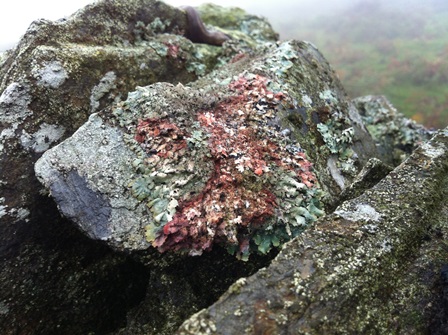
Sluagh – ‘Hosts’, the spirit world – the ‘hosts’ are the spirits of mortals who have died. The people have many curious stories on this subject. According to one informant, the spirits fly about “n’an sgrioslaich mhor, a sios agusa suas air uachdar an domhain mar na truidean’ – ‘In great clouds, up and down the face of the world like the starlings, and come back to the scenes of their earthly transgressions’. No soul of them is without the clouds of earth, dimming the brightness of the works of God, nor can any make heaven until satisfaction is made for the sins on earth. In bad nights, the hosts shelter themselves, ‘ fo gath chuiseaga bheaga ruadha agus bhua-ghallan bheaga bhuidhe’ ‘behind little russet docken stems and little yellow ragwort stalks’. They fight battles in the air as men do on the earth. They may be heard and seen on clear frosty nights, advancing and retreating, retreating and advancing, against one another. After a battle, as I was told in Barra, their crimson blood may be seen staining rocks and stones. ‘Fuil nan sluagh’, the blood of the hosts is the beautiful red ‘crotal’ of the rocks, melted by frost.

Crotal_Blood

These spirits used to kill cats and dogs, sheep and cattle, with their unerring venemous darts. They commanded men to follow them, and men obeyed, having no alternative.

It was these men of earth who slew and maimed at the bidding of their spirit-masters, who in return ill-treated them in a most pitiless manner. ‘Bhiodh iad ’gan loireadh agus ’gan loineadh agus ’gan luidreadh anus gach lod, lud agus lon’–They would be rolling and dragging and trouncing them in mud and mire and pools. ‘There is less faith now, and people see less, for seeing is of faith. God grant to thee and to me, my dear, the faith of the great Son of the lovely Mary.’ This is the substance of a graphic account of the ‘sluagh,’ given me in Uist by a bright old woman, endowed with many natural gifts and possessed of much old lore. There are men to whom the spirits are partial, and who have been carried off by them more than once. A man in Benbecula was taken up several times. His friends assured me that night became a terror to this man, and that ultimately he would on no account cross the threshold after dusk. He died, they said, from the extreme exhaustion consequent on these excursions. When the spirits flew past his house, the man would wince as if undergoing a great mental struggle, and fighting against forces unseen of those around him. A man in Lismore suffered under precisely similar conditions. More than once he disappeared mysteriously from the midst of his companions, and as mysteriously reappeared utterly exhausted and prostrate. He was under vows not to reveal what had occurred on these aerial travels.

I took down several stories of persons who went with the ‘hosts.’ Here is one of the stories of the ‘hosts’ summarised:–The beautiful daughter of a king of France was taken up by the ‘hosts,’ and carried about in the air, over lands and seas, continents and islands, till they came to the little island of Heistamal, behind Creagorry, in Benbecula, where they laid her down in such an injured state that she died from the hard treatment; not, however, till she had told about the lands to which she had been carried, and of the great hardships she had endured while travelling through space. The people of the island buried the princess where she was found.

The ‘sluagh’ are supposed to come from the west; and therefore, when a person is dying, the door and the windows on the west side of the house are secured to keep out the malicious spirits. In Ross-shire, the door and windows of a house in which a person is dying are opened, in order that the liberated soul may escape to heaven. In Killtarlity, when children are being brought into the world, locks of chests and of doors are opened, this being supposed, according to traditional belief, to facilitate childbirth.

These Hebridean and Highland accounts concur with records of similar beliefs from Ireland and the Isle of Man. The Sluagh Sidhe were dangerous, vengeful and often angry – they were represented (as Aleisoun Pearsoun was informed) by gusts of wind which marked their passing. These fairy ‘blasts’ might burn your skin with ignis sacer or boils or other visible cutaneous conditions. They strike you with fairy darts rendering you sick, or paralysed down one side (a ‘stroke’, the name still used in medicine today). They might also carry you away in a state of delirium to a place you had no intention of being – you would be ‘taken‘ by them, sometimes into their own fairy world!

The Sluagh Sidhe/Sith were – like the Fianna of ancient Ireland – bands of souls who roamed the world outside of the laws of settled everyday life. They were dangerous and liminal, yet potentially helpful and – in the fairy faith discussed by Kirk and other commentators – could redeem themselves, sometimes by sharing the knowledge of how to ‘heal’ the harm they cause, and from there could pass to a different place – in the west, beyond the sunset.

A Fairy Doctor was a specialist who understood these modes of harm caused by these Fairy Hosts. He or she also understood the ‘principle of inversion’ which governed how we and the otherworld interacted together, and was able to intervene or advise in redressing this balance.

Going with the fairies – Alesoun Peirsoun, Gaelic ‘shamanism’ and the Otherworld

In Robert Pitcairn’s ‘Ancient Criminal Trials in Scotland’ is a very interesting transcription of an assizes court record for May 1588 from Byrehill, Fife, of a woman named Allison Pearson (‘Alesoun Peirsoun’) who was accused of Sorcery and Witchcraft, for which she was subsequently executed by garrotting and burning.

The trial is interesting on two counts – firstly to historians of Elizabethan/Jacobean political and religious intrigue, as there was a scandalous connection between Allison and the deposed Bishop of St Andrews, Patrick Adamson. Alesoun’s trial was just two years before the famous North Berwick witch trials, presided over by King James himself, who interviewed the traditional healer Agnes Sampson – a character no doubt like Aleisoun in her beliefs. James VI showed an inordinate interest in witchcraft during the 1590’s – a period of great political suspicion and instability. Of the Peirsoun case, it is interesting that a polemic poem The Legend of the Bischop of St Androis Lyfe (supposed to have been written by William Sempill) appears to have been written mentioning the case and making a salubrious innuendo that Aleisoun was caught giving sexual favours to the Bishop in his chamber!

Secondly, and most relevant to us, because of the details it records about Pearson’s account of ‘going’ with the court of the fairy queen and dallying with her entourage, and how they taught her special knowledge of healing herbs. This was interpreted as ‘sorcery and witchcraft’ but the details of her confession as presented in the surviving court documents tell a tale of fairy belief, illumination from the otherworld and the frightening and terrifying regard in which these spirits were held…

The items of her conviction were detailed as follows … for those not up to reading Middle Scots and ‘yoghs'(3) etc, I provide my own translation:

Source: ‘Ancient Criminal Trials in Scotland, Compiled from the original records and mss, with Historical illustrations &c Volume 1, Part 3, 1584-1596’ by Robert Pitcairn; Pub. Edinburgh 1843 The Bannatyne Club. pp.161-165

“… VERDICT: The said Alesoune, being put to the knawledge of ane Assyis of the personis aboue writtin, wes conuict be thair delyuerance of the vsing of Sorcerie and Wichcraft, with the Inuocatioun of the spreitis of the Dewill, speciallie in the visioune and forme of ane Mr William Sympsoune, hir cousing and moder-brotheris sone, quha sche affermit wes ane grit scoller and doctor of medicin, that haillit hir of hir diseis in Lowtheane within the toun of Edinburghe, quhair scho reparit to him being twell 3eiris of aige, and thair cuming and ganging be the space of sewin 3eiris, quhen scho wes helpit of hir seiknes quhilk scho had quhan hir poistee and power wes tane fra hir hand and fute, continewing thairby in familiaritie with him be the space foirsaid, dealing with charmes and abusing of the commoun people thairwith be the said airt of Wichcraft thir diuers 3eiris bypast… ”

“… VERDICT: The said Alesoune, being put to the knowledge of an assize of the persons above written, was convicted by their deliberation of the using of Sorcery and Witchcraft, with the invocations of the sprites of the Devil, especially in the apparition and form of one ‘Mr William Sympsoune’, her cousin by her mother’s brother, who she affirmed was a great scholar and doctor of medicine, that healed her of all diseases in Lothian, within the town of Edinburgh, where she repaired to him at the age of twelve, and with whom she had dealings for seven years, and was finally cured of a paralysis affecting her hand and foot, continuing in familiarity with him in that time, and afterwards dealing in charms and abusing the common people with these for many years afterwards…”

The preamble is unusual as it states that William Sympsoun was both the devil and her cousin, suggesting that he might be a living person. Also, it states that Aleisoun was only 12 years of age when she arrived in Edinburgh. Things get more interesting as the record proceeds…

” … (2.) ITEM, for hanting and repairing with the gude nychtbouris and Quene of Elfame, thir diuers 3eiris bypast as scho had confest be hir depositiounis, declaring that scho could nocht say reddelie how lang scho wes with thame; and that scho had freindis in that court quhilk wes of hir awin blude, quha had gude acquentance of the Quene of Elphane, quhilk mycht helpit hir: bot scho wes quhyles weill and quhyles ewill, and ane quhyle with thame and ane vthir quhyle away; and that scho wald be in hir bed haill and feir, and wald nocht wit quhair scho wald be or the morne: And that scho saw nocht the Quene thir sewin 3eir: And that scho had mony guid freindis in that court bot wer all away now; And that scho wes sewin 3eir ewill handlit in the Court of Elfane, and had kynd freindis their, bot had na will to vifleit thame eftir the end: And that itt wes thay3 guid nychtbouris that haillit hir vnder God; And that scho wes cuming and gangand to Sanct Androus in hailling folkis thir saxtene 3eiris bypast … “

“… (2.) ITEM, for associating and staying with the ‘good neighbours’ (fairies) and the Queen of Elfland during many years past, as she has confessed in her disposition, albeit that she cannot recall for how long she was with them; And that she had friends in the Fairy Court who were relatives of hers, who were also on good terms with the Fairy Queen, and offered her assistance. She realised that while she was with them she was well, but when away from them she was sick; Although she would retire to bed in good form, she might wake the next morning and not know where she was. During this period of seven years she did not see the Queen herself, but encountered many dead friends, although eventually grew tired of visiting with them. And, that it was these ‘good neighbours’ who healed her by God’s will, and for the past 16 years, she has been coming and going to St Andrews to heal people… “

That some of these ‘good neighbours’ were known to Aleisoun as family members, who offered her help is an important aspect to the Gaelic fairy mythology. As we shall see, Aleisoun found sympathy from these members of the Seelie Court, but those who were not her relatives were of a more sinister nature in their behaviour to her. The court deposition further details the family member she alleged to have met.

“(3.) ITEM Conuict of the said airt of Wiche craft, in sa far as be hir Depositioune, scho confest that the said Mr Sympsoun quha wes hir guidschire sone, borne in Striuiling, his fader wes Kingis smyth, lernit hir craft; quha wes tane away fra his fader be ane mann Egypt, ane gyant, being bot ane barne, quha had him away to Egypt with him, quhair he remanit to the space of tuell 3eiris, or he come haine agane and that his fader deit in the meane tyme for opining of ane preist buik and luking vponne it. And that the said Mr Williame haillit hir sone eftir his hame cumming…”

“(3.) ITEM Convicted of the said art of Witchcraft by her own deposition, she confessed that the said Mr Sympsoun, who was her godfather’s son, born in Sterling where his father was the King’s blacksmith, taught her the craft; He was taken away from his father by a man of Egypt (AR: ‘gypsy’), a giant, when he was but a child, who had him away to Egypt with him, where he remained for the space of 12 years, before coming home again after his father was killed for professing his Catholic faith. And that the said Mt William healed her after his homecoming….”

The theme of being ‘stolen away by gypsies’ (the word gypsy means ‘egyptian’) was a common motif in medieval and early-modern folklore. ‘Gypsies’ – like ‘fairies’ – were often used as an explanation for both abduction and the learning of hidden knowledge. Another ‘out-group’ with a similar reputation who might be blamed were Jews, and in Elizabethan/Jacobean England and Scotland – Clansmen and their Romish kind... Here, we see the court explaining Simpson as ‘gypsy-taught’, although his disappearance might have had as much to with the political fallout and murders around the time of the death of Mary, Queen of Scots. His father was royal armourer – a high status individual. This would make Aleisoun herself of reasonably high status too, perhaps explaining why she ended up at the Bishop’s court…

In Item 4, she admits – at around the age of 12 – to having had what sounds like a possibly sexual encounter with fairies (although they might possibly have been humans). The jolly man dressed in green is a coded way of describinging a man from the fairy world in medieval and later folklore.

“…(4.) ITEM that scho being in Grange-mure with the folkis that past to the Mure, scho lay doun seik alane and thair come ane man to hir cled in grene clathis quha said to hir, ‘Gif scho wald be faithfull he wald do hir guid’; and that scho seing him cryit for help bot nane hard hir; and thane scho chargeit him, ‘In Godis name and the low he leuit one’, that if he come in Godis name and for the weill of hir saull, he sould tell; Bot he gaid away thane and apperit to hir att ane vther tyme, ane lustie mane, with mony mene and wemen with him: And that scho sanit hir and prayit, and past with thame fordir nor scho could tell; and saw with thame pypeing and mirrynes and gude scheir, and wes careit to Lowtheane, and saw wyne punchounis with tassis with thame: And quhene scho tellis of thir thingis, declarit scho wes sairlie tormentit with thame. And that scho gatt ane fair straik the fyrst tyme scho gaid with thame, fra ane of thame quhilk tuke all the poistie of hir car syde fra hir, the mark quhairof wes blae and ewill faurrit; quhilk mark scho felt nocht and that hir syd wes far war…”

“…(4.) ITEM that she being in Grangemuir with the people that held that estate, she lay down sick by herself, when a man dressed in green came to her and said that ‘if she would be with him, he would offer her boons’, and that on seeing him she cried for help, but no-one heard her; and then she confronted him, (saying) ‘In the name of God and the Law he lives under’, that if he came in God’s name and for the good of her soul, he should tell. He went away then, but appeared to her another time, a merry man in the company of many men and women. She sained herself and prayed, and accompanied them, losing track of time; They were playing pipes and tambourines and making merry, and she was swept along to Lothian, when they took out wine puncheons and began to (?)make (sexual) teases. And when she told of their actions, declared she was sorely tormented by them. And, that she was struck hard the first time she went with them, for one of them caused her to lose power down her left side, causing a bruise of ill-disposition, yet which did not hurt and it was her paralysis which concerned her more…”

The initial encounter sees Aleisoun feeling sick and then lying down, when she encounters a green-clad man who makes her feel uneasy and vulnerable. She eventually follows him and an entourage on a number of gallivants, culminating in the arrival in Lothian when a dangerous encounter follows: The phrase ‘and saw wyne punchounis with tassis with thame’seems to suggest the party plied Aleisoun with wine and began ‘teases’ (tasses) which might imply sexual molestation or interaction of some sort. Whatever happened, these ‘people’ who were subsequently violent with her and made threats, and she suffered the condition known as ‘fairy stroke’ – unilateral paralysis. A relationship of secret trust had been established, perhaps initiated with the sexual encounter, from which she was to gain some powers, albeit under the threat of harm for breaking their trust. Subsequent to these ongoing encounters and a sickness they engender, she begins to learn the healing arts from them, assuming the sequence of the indictment reflects her own confession:

(5.) ITEM, that scho saw the guid nychtbouris mak thair sawis with panis and fyris, and that thay gadderit thair herbis before the sone rising, as scho did. And that thay come verry feirfull sumtymes and fleit hir verry sair, and scho cryit quhene thay come. And that thay come quhyles anis in the aucht dayes, and quhene scho tauld last of it thay come to hir and boistit hir, saying scho sould be war handlit nor of befoir; and that thaireftir thay tuke the haill poistie of hir syde in sie soirt, that scho lay tuentie oulkis thaireftir. And that oft tymes thay wald cum and sitt besyde hir and promesit that scho sould newir want gif scho wald be faithfull and keip promeis, bot gif scho wald speik and tell of thame and thair doingis thay sould martir hir. And that Mr Williame Sympsoun is with thame quha haillit hir and teichit hir all thingis, and speikis and wairnis hir of thair cuming and saulfis hir and that he was ane 3oung man nocht sax 3eiris eldar nor hirselff, and that scho wald feir quhene scho saw him, and that he will appeir to hir selff allane before the Court cum, and that he before tauld hir how he wes careit away with thame out of middil eird. And quhene we heir the quhirll wind blaw in the sey, thay wilbe commounelie with itt or cumand sone thaireftir, than Mr Williame will cum before and tell hir and bid hir keip hir and sane hir, that scho be nocht tane away with thame agane for the teynd of thame gais ewerie 3eir to hell…”

(5.) ITEM, that she saw the ‘good neighbours’ make their salves with pans and fires, and that they gathered their herbs before sunrise, as was now her practice. At times they would appear to her in a frightening way and scare her badly, causing her to cry when they came.   And they came until once, at the Octave (?of Easter or Pentecost), she decided to tell people about it, and they then came to her and scolded her, threatening that they would handle her more roughly than before, and this time they left her completely paralysed down her side, causing her to be sick in bed for 20 weeks. Often during this period, they would come and sit beside her, telling her she would want for nothing so long as she kept their trust, but that if she would speak and tell of them and their doings, they would murder her. And that Mr William Simpson came to her during this time and was the one who healed her and taught her all things, and speaks and warns her of their coming, and makes her safe; and that he was a young man not six years older than her, and that she overcame her fear when she saw him, and that he would appear to her alone just before the (Fairy) Court appeared, and he told her that he himself had been carried away from the land of the living. And when we hear the whirlwind blowing across the sea, this is made by them, and they will be coming soon after; then William will come before and warn her, and bid her and keep her and sain her, so that she not be taken away with them again, for the tithe/tenth of them goes every year to hell…

The account of her ‘rescue’ from the tormenting fairy mob by William is at once touching, tender and romantic. Remember, she was only 12 years old when this started and claimed that she was ‘away’ 7 years suffering her fairy illness. During this time, William (who had been abducted from middle eird – middle earth – by the fairy cavalcade – by which she means dead in this world) teaches her and heals her and makes her whole again before apparently eventually tasking her with the healing of Bishop Adamson.

“…(6.) ITEM of hir confeffioune maid: That the said Mr Williame tauld hir of ewerie seiknes and quhat herbis scho sould tak to haill thame, and how scho sould vse thame, and gewis hir his directioune att all tymes. And in speciall scho said that he tauld hir that the Bischopof Sanct Androus had mony seikneffis, as the trimbling fewer, the palp, the rippillis and the flexus, and baid hir mak ane saw, and rub it on his cheikis, his craig, his breast, stommak and sydis. And siclyke gaif her directiounis to vse the 3ow mylk, or waidraue, with the herbis, claret wyne and with sume vther thingis; scho gaif him ane sottin fowll and that scho maid ane quart att anis quhilk he drank att twa drachtis twa sindrie dyetis…”

“… (6.) ITEM of her confession made: That the said Mr William told her of every sickness and what herbs she should use to heal them, and how she should use them, and gives her his direction at all times. And escpecially, that he told her that the Bishop of St Andrews had many sicknesses, such as the trembling-fever, palpitations, rigors and gastroenteritis, and bade her make a salve and to rub it on his cheeks, chin, chest, abdomen and loins. And suchlike gave her directions to use the milk of a ewe and Woodruff, to give him claret wine with the herbs and some other things; she ?made a drunken fool of him, giving him a quart to drink in two draughts, between each of his assembly sessions…”


The story of what we know of her life appears to end sadly, mired in the vicious intrigues and politics of late 16thC Scotland and England, when she apparently provides a cure for a malady (?an ague) suffered by the controversial Bishop of St Andrews, Patrick Adamson, for whom she was presumably in service by the time of her prosecution. The fact that the bishop had many enemies (for reasons tied up in the battles for episcopal conformity and regnal politics) was probably a factor in selecting Allesoun for prosecution.

Allison’s own culture-normative accounts of how she acquired healing abilities (as well as her sexuality) were ultimately to damn her to death, convincing the court she had indeed consorted with devils (sorcery) and therefore committed witchcraft. Unfortunately, the court had no insight into her fairy beliefs, and her claim that the fairies taught her because God allowed it fell on unsympathetic ears. They had secured ‘evidence’ that she had made a pact with the devil (with requisite quasi-sexual aspects) and was carrying out magic taught her by devils, even though a ‘rational’ modern reading might suggest evidence of a bout of mental illness, perhaps bought about through rape and abuse. A multitude of factors might have informed her interpretation of events in her life:

Firstly, hers is a typical origin story common to many forms of exceptional or occult knowledge in the ‘Gaelic’ world. The abduction followed by a return after seven years bearing wealth or knowledge is a standard motif of fairy-encounters, and occurs frequently in the folklore and medieval mythological literature of Atlantic Europe. Her physical (and possibly sexual) maltreatment is another feature of Gaelic fairy lore, explaining both bodily marks and disease itself – pinches, strikes and blasts. Nonetheless, she gains from her disquieting association with the Otherworld denizens a higher form of knowledge. Exceptional poets, musicians and craftsmen might have a similar tale ascribed to the acquisition of their skill, and in Allison’s case the supernatural acquisition of powers would have been a useful ‘marketing tool’ to confirm her legitimacy as a traditional fairy doctor by the time of her arrest.

Her ‘illness’ appears to have been a combination of paralysis and delirium which, in the case of a young girl of 12 years of age, could be explained by the possibility of either psychological and emotional disturbances precipitated by an act of rape, or the deleterious effects upon the nervous system of Syphilis contracted from her possible attackers. Other possibilities include transverse myelitis and polio, TB abscesses of the spine etc.

The aspects of possible rape may be overplayed, and her tales to the court of fairy abuse, followed by ‘rescue’ by a young and handsome daoine sith lover who teaches her secrets might just represent aspects of a budding and romantic teenage sexuality frustrated by illness.  Allison was, according to the indictment, only 12 at the time of the start of her formative ‘otherworld’ experiences and illnesses, and these supposedly continued for 7 more years.

The fact that Aleisoun could have been mentally ill is another factor that needs to be examined. She could well have been experienced a transient delusional mental illness (with beliefs congruent on normative ideas in late 16thC Scotland) during a period of physical, psychological and emotional recovery following a traumatic experience of rape or even possibly being orphaned. Indeed, by her own confession she was ill during her seven years stay in Elfhame, and claimed that the fairies (her relative William in particular) made her better, just as they had made her sick in the first place. However, this story may just be her justificatory narrative to explain her supposed curative powers that she was using at the time of her arrest, some time in early adulthood by which time she was apparently confident enough following her childhood traumas, to find time to massage healing oils into the chest and abdomen of one of Scotland’s most prominent clergymen while plying him with wine!

To quote the words of the poem The Legend of the Bischop of St Androis Lyfe:

Scho being in the bischopis cure,

And kepit in his castell sure,

Without respect of warldlie glamer,

He past into the witchis chalmer,

Closing the dure behind his bak,

And quyetlie to hir he spak,

And said, his work lome was not worthe,

Lowsing his poyntis, he laid it furth.

Scho sayned it with hir halie hand ;

The pure pith of the pryoris wand :

To help that raipfull scho hes rest him,

Whairfore, ye say, my ladie left him.

For scho had sayned it tuyss or thrise,

His rubigo began to ryiss :

Then said the bischop to Jhone Bell,

Goe, tak the first seye of hir yor sell.

The witche to him her weschell gave,

The Bischops blissing to resave.

What dayis of pardone then scho want

The relicques of that holie man

Micht save her saule from purgatorie.

His wyfe, coceiving jelowsie,

Cryed out his deid, when it was done,

Ran through the tovn, and tauld it sone.

I will leave the Scots translation to you, but needless to say it contains an indicator of why Aleisoun was probably bought to trial. The Bishop’s enemies would not fail to see the simile between the ‘adoration’ by this young woman of the Bishop’s body and draw a parallel with the body of Satan, with whom witches were supposed by the Christian doctrines of the day to have sexual relations… Aleisoun appears to be the confident aggressor in this matter (at least in the poem) and both the poem and the court transcript seem to suggest she was a well-established local traditional healer, so she cannot be portrayed as a weak and feeble-minded victim. She was a strong character!

Perhaps the most interesting part of Allison’s confession, apart from the suggestion of sexual initiation with fairies, is that she met her dead ancestors while in fairy land! This feature of fairies as departed ancestors was later hinted at in Robert Kirk’s ‘Secret Commonwealth’, although he evades expressing it as a creed directly, not in the least because he was a ‘bright young thing’ on the evangelical clerical scene of his day. Kirk mentions the ‘spirit-doubles’ and ‘ghosts’ of the living and dead (seen by those with second sight) as if in continuity with descriptions of otherworld experiences with the ‘Sith’, and further discusses fairies as fore-runners who once farmed the hilltops where men no longer can, but he stops short of equating them with ancestors. I refer you to read this document yourself (follow the links!).

After the Jacobite rebellions and subsequent land-clearances of the 18thC, the Gaelic-speaking Highlanders’ rapidly-disappearing traditional lifestyles and beliefs became a thing of interest to scholars and authors seeking to capitalise on the popularity of James MacPherson and Walter Scott. James Browne had this to say about their fairy beliefs in the early part of the 19thC:

“…According to the traditionary legends of the Highlanders, the Shi’ichs (AR: Sheogues) are believed to be of both sexes, and it is the general opinion among the Highlanders that men have sometimes cohabited with females of the Shi’ich race, who are in consequence called Leannan-Shi. These mistresses are believed to be very kind to their mortal paramours, by revealing to them the knowledge of many things both present and future which were concealed from the rest of mankind. The knowledge of the medicinal virtues of many herbs it is related has been obtained in this way from the Leannan-Shi. The Daoine Shi of the other sex are said in their turn to have sometimes held intercourse with mistresses of mortal race…”

From: p.112 “History of the Highlands & of the Highland Clans, Volume 1, Part 1” By James Browne (Pub. Glasgow, A. Fullarton & Co 1834)

This opinion seems to concur with the court account of Allison Pearson who apparently gained magical healing powers after a sexual encounter with men of the Otherworld. The contra-sexual aspect of tutelary human-fairy relationships is another example of the otherworld-inversion principle. It might also be noted that in the Gaelic world, a healing charm/piseog/pishag/ortha was often supposed to inherited from woman to man and vice versa.

That Pearson believed she had met dead ancestors in the Seelie Court may be an aspect of a phenomenon commented on by James Browne’s contemporary, Donald MacPherson (of the (in)famous Gaelicist MacPhersons), who discussed the Highland beliefs in the migration of souls into hills after death:

‘Melodies from the Gaelic, and original poems: with notes on the superstitions of the highlanders &c’ By Donald Macpherson. Pub. London 1824, Tomas and George Underwood)

pp. 200-202

OPINIONS RESPECTING THE STATE OF DEPARTED SPIRITS

…The admixture of Christianity with the ancient religion of the Gael created infinite confusion of ideas with respect to the state of departed souls. Heaven and Hell were sometimes mentioned from the pulpit, but the nurse spoke daily of Flath inis, and the Hills of their departed kindred to the children at her knee, and ancient tales of those who had been favoured with visions of the state of the dead prevented the Christian idea of heaven and hell from ever being properly established. It was supposed that only the souls of the supremely good and brave were received into Flath inis and those only of the very base and wicked were condemned to the torments of Ifrin. The Hills of their fathers were in an intermediate state, into which the common run of mankind were received after death. They had no notion of an immaterial being, but supposed that each spirit on departing from this mortal habitation received a body subject to no decay, and that men in a future state enjoyed such pleasures as had been most congenial to their minds in this, without being subject to any of the evils that flesh is heir to. The belief in the Hills of Spirits began in general to give way soon after the reformation and in some parts of the Highlands it soon disappeared altogether. Others however proved more tenacious of it, and among some clans and branches of clans it lingered until very lately. The Orc, a high conical hill in Inverness-shire, was regarded by the House of Crubin, of the clan Macpherson, as their future inheritance, and the House of Garva of the same race believed that their spirits should inhabit Tom mor. On the entrance of every new inhabitant, those hills were seen by persons at a certain distance in a state of illumination. Tom mor was seen on fire for the last time, I believe, about thirty years ago and it was confidently asserted that some member of the house of Garva was passing from this into a better state of existence. But no death being heard of in the neighbourhood for some days an opinion already on the decline was on the eve of being consigned to utter contempt when to the confusion of the sceptics news arrived that the daughter of a gentleman of the house of Garva had expired at Glasgow at the very moment Tom mor had been seen on a blaze. But into whatever state the departed spirit passed it had for a time to return to perform a sacred duty on earth. This was – FAIRE CHLOIDH – the grave watch It was the duty of the spirit of the last person interred to stand sentry at the grave yard gate, from sun set until the crowing of the cock every night, until regularly relieved. This sometimes in thinly inhabited parts of the country happened to be a tedious and severe duty and the duration of the Faire Chloidh gave the deceased’s surviving friends sometimes much uneasiness…


Both MacPherson and Browne would have been well aware of Robert Kirk’s recovered manuscript (first published in 1815 by Walter Scott and friends), and were influenced by the writings of (and Donald’s case, family connection to) James MacPherson (he of ‘Ossian’ fame). MacPherson’s description appears to be saying that ‘fairy hills’ might be the ancestral hill of a highland clan. Although unsaid, Peirsoun’s account of the boon given her by her departed relative seems akin to MacPherson’s ‘Faire Chloidh’, which was also known in the Isle of Man as the Keymagh (‘stile guardian’).

Even though Pearson’s account of herself retold at her trial is from a lowland source, it appears to have been bathed in the same legendary lore as the accounts of Kirk, Martin, Browne, MacPherson and from records of more ancient provenance elsewhere in the Gaelic-Atlantic world. That her reports of going with fairies to learn secret knowledge were repeated by others both before and after her are testament to a tradition shared by those persons who would become known as Fairy Doctors.
Fairies at Beltane – friend or foe?

Continuing my Beltane theme, I aim in this post to examine the role ascribed in pre-modern folklore to fairies and witches during these festivities.

Beltane (Bealtaine, Beltain, Bealtuinn, Boaldyn etc) was another period in the annual cycle of the Atlantic peoples when the spirit world was supposed to be closer to our own (another was Samhain/Sauin), and for this reason certain rituals and customs were observed in regard to these spirits.

The power of vegetative growth and movement of animals is potently evident during this festival and many of the Beltane rituals, as well as being a celebration of this fertility, were designed to sain and protect it from antagonistic forces. The three spiritual forces defined by folklore as posing a potential threat at Beltane were fairies, witches and the Evil Eye, although the second and third may be considered similar. These might prove harmful in different ways:

Protection from Fairies?

Fairies were considered a threat in that they were deemed to be jealous of human abundance (see my commentary on Robert Kirk’s essay for a discussion of this), easy to anger/offend by the ignorant and particularly pervasive at Beltane, as at the other Gaelic (cross-)’quarter days’. Kirk, writing in the late 17thC in the Scottish highlands, expressed the reason why people might fear fairies in a time of abundance with the following succinct explanation:

“…When we have plenty, they have scarcity, and on the contrarie…”

Thomist (after medieval philosopher Thomas of Aquino) views on spirits underpinned much of the theological worldview of Christian Europe after the 13thC. These defined the sins of envy (invidia) and pride (superbia) as spiritual and therefore the only ones incorporal spirits were capable of. This neatly encapsulated the Christian bibilical narrative of the ‘fall’ of proud satan, who envied god. The agents of evil in the Christian worldview were the demons who conducted the will of higher (or lower!) spiritual agents; As ‘fallen angels’ they shared the sins of ‘Lucifer’. This concordance with fairies is obvious, and folk-narratives often reinforce it by claiming fairies and elves to be ‘fallen angels’ in line with Christian doctrine.


Maintaining the ‘otherworld balance’ was a core aspect of traditional Gaelic and Atlantic European culture – modesty was the watchword for a happy life: Attain too much and the otherworld will take it; You would speak with guarded modesty about things you admire, and be cautious with praise lest it invites alarm that you might ‘attract’ forces from the otherworld… Such customs persist among the Gaels to this day, and in other traditional peoples such as the Scandinavians. The Swedes and Norwegians entertain the concept of lagom, for instance, which translates roughly as ‘modest sufficiency’ or ‘just enough’. The Danes have ‘hygge‘ – a term expressing the comfort of the ‘middle way’. Similar concepts pervade other Atlantic cultures.


Witches’ (persons practicing magic designed to steal/transfer vital force) appear to have been a human conception of the same idea. It is often unclear in Gaelic folklore if there is any specific distinction made between the two forces. Why was this so? The strong presence of the Cailleach/Fairy Queen in Gaelic folk-myths placed the personification of the ‘magical hag’ in a context of fairytales and allegory rather than immanent threat.This was coupled with the failure of a judicial witch-panic to take hold in any degree in Gaelic heartlands between the 16th and 18th centuries. Added to this, in the Gaelic world, the process of ‘bewitching’ was more likely to be seen as a passive process anyone might be capable of, on account of the prevalent belief that a jealous eye (an droch shùil) could abstract vigour and fertility from people, animals, property and land. This seen more as a human foible, rather than as an act of service to the devil, and in areas with a stronger conservative and traditional view of religion, the social opinion was that it was a spiritual crime, deserving a spiritual punishment. ‘Witchcraft’ – either by a jealous eye or by abstracting magic – was just another method people used to try and survive: It – like fairies – was a fact of life that informed the apotropaic customs associated with the liminal festivals of the Celtic year.


So… more properly, it is best to see Beltane as a time when it was considered prudent to protect oneself, one’s household and one’s possessions from abstracting forces.


I have mentioned that yellow flowers were said to have been scattered outside houses to protect against fairies at Beltane. However, the decoration of thresholds with specific plants also has other connotations – to distract a jealous eye or as a form of welcome to spirits.

This ‘diversionary’ strategy is a widespread tactic employed in dealing with the ‘evil eye’, as anyone who has looked at fishing boats or doorways in many Mediterranean countries, where symbols are used for this purpose. Floral decorations would be equally effective in the Gaelic conception of distracting the Evil Eye and therefore witchcraft. In fact, fairies being notoriously jealous creatures, the flowers may work upon them the same way, rather than acting as garlic does to vampires…

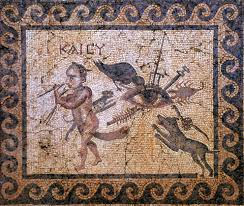
Roman era mosaic of a happy Lare protected from sharp and venomous things by the apotropaic Eye symbol

Roman era mosaic of a happy household spirit (Lare) protected from sharp and venomous things by the apotropaic Eye symbol

Flowers have the appearance of the eye, which would allow them to function in such a manner…

Welcoming fairies:

There is, however, yet another aspect to the flower-strewing customs that mark the Beltane season, which as I have previously commented, shares a kinship and plasticity with the festivities of Easter and Midsummer/St John’s day. The traditions of strewing greenery have a distinct air of welcoming to them also, particularly where (as in the Isle of Man) rushes and Yellow Flag Irises were sometimes strewn in doorways (See: ‘Manx Reminiscences’ John Clague). One late-19thC  Manx poet, Edward Faragher of Cregneish, expressed this positive opinion of the fairies as follows (From ‘Manx Notes and Queries’ by Charles Roeder, for whom Faragher acted as collector of local folklore):

The Fairy Queen—the old folk said—
Was going round on old May-night
When all mankind was gone to bed,
And in the flowers did delight.

She kindly blessed each little cot,
Where yellow flowers did appear:
If there were none – she blessed them not
But gave bad luck through all the year.

I still remember on May-day,
Those flowers scatter’d in Cregnaish,
But since the Queen is gone away
No flowers at the door we place.

Faragher’s reference to a ‘grace and favour’ visit by the Fairy Queen on May Eve has few other direct corroborations in Manx folklore, however. Certainly, the island’s Fairy King, Manannan, was (and is still) celebrated at midsummer (the Germanic Walpurgisnacht) and welcomed with green rushes and sprigs of Artemesia vulgaris (Mugwort, Bollan Bane, Bollan-Feaill-Eoin), but as with much of the post-Christian world, the feminine seems to have been suppressed, or at least to have followed the Island’s tendency to amonarchial feudal republicanism.

Nevertheless, the association of Beltane Eve with potential visitations by potent females (human or fairy, royal or otherwise) was a consistent feature of concern in folklore, also a feature of Imbolc/Candlemass/St Brigit’s Eve and Samhain/Hallowe’en/Holllantide/Sauin/Hop-tu-naa. 

A good example of the May greenery persisting as a ‘welcoming’ rather than apotropaic tradition is seen in the relaxed and joyous collecting and parading of May-crowns/May-bushes and the well-dressing and rush-bearing ceremonies that were once in evidence across the north-western counties of England – many similar to those found in the Gaelic world, it would seem. These seem distinctly redolent of the happy customs once seen at the Lughnasa/Luanys/Lammas festivity harvest-homes. The happy and optimistic nature of Beltane seems to preclude it as a time of fearful apotropaic activity, although it was certainly considered a time of vulnerability. The same can be said about the birth of a new child, when extra care is taken…


The role of serpents and dragons in Norse mythology

Serpents and dragons are a particular feature of northern European mythology that deserve some investigation in this blog.

The ancients viewed ‘serpents’ and ‘worms’ as a whole class of creatures – not just a ‘species’ as we in modern times would conceive it, but a morphological and philosophical grouping which included many types and forms. From earthworms, to snakes, to maggots and aquatic fly larvae, to eels and millipedes – ‘worms’, ‘wyrms’, or ‘serpents’ all occupied the same functional class. In a wider sense it could as a category include all stinging and venomous creatures such as scorpions and spiders.

The idea that disease was caused by ‘worms’ was a prevalent feature of ancient and medieval medicine: From the fungal infection known as ‘ringworm’ to the idea that worms in the teeth caused toothache, all of these were common themes in ancient Atlantic medical beliefs. During the 17th and 18th centuries, for instance, the attack of Gout in the foot was attributed in the Scottish Hebrides to a worm called ‘Fillan’, no doubt on account of the worm-like congested blood and lymphatic vessels that surround the afflicted joint of the big toe… The idea of putrefaction was an important aspect of this idea: the empirical observation that rotting meat appears to generate maggots and worms, and that disease such as infection and cancer seems to be a form of bodily putrefaction are strongly related. The painful aspects of disease were seen as poisons, and ‘worms’ or ‘serpents’ were a key natural class which were known to deliver such venoms to the human body.

Worms burrowed and intruded through the soil forming tunnels, and performed the same function in rotting flesh. Another empirical observation about serpentine, wriggling creatures was that they also ‘appeared’ in stagnant water (the larvae of mosquitoes and aquatic insects) and colonised the smelly putrefying mud-flats of estuaries and on the banks of rivers. They also appear in the bodily waste of humans and animals. Snakes seemed to prefer to rest in holes in the ground, and to rely on the heat of the sun to animate their bodies. Fertile soil was always rich in earthworms… For this reason ‘worms’ or ‘serpents’ became associated with the classical ‘element’ of ‘Earth’ and the regenerative powers of putrefaction. ‘Worms’ such as caterpillars and larvae also expressed the apparently magical and mysterious power of metamorphosis, a connection also prefigured by the ‘rebirth’ of snakes who shed their skins.

There are a number of significant ‘dragons’ or ‘serpents’ who appear in the ‘Edda’ literature of the medieval Scandinavian world… The first is Níðhöggr (‘Malice-striker’) who curls around one of the roots of Yggdrasil at the well of Hvergelmir (‘bubbling/boiling pool’) and who represents the force of putrefaction at the roots of the world-tree. Hvergelmir is described as the well which receives the ‘dew’ which falls from Yggdrasil, otherwise from the sprouting antlers of the stag who grazes the topmost branches of the tree at Valhalla. Snorri’s Gylfaginning (prose Edda) says this of the roots of Yggdrasil:

 ‘…the third reaches down to Niflheim, and under this root is the well Hvergelmir; but Nídhöggr gnaws at this root from below…’

and

‘In Hvergelmir there are so many serpents with Nídhöggr that no tongue can count them…’

This is attested in the poetic Edda (Grimnirsmal) which comments upon the ravages suffered by the Yggdrasil:

‘…The ash Yggdrasil endures hardship, more than men know. A stag bites from above and its sides rot; From below Nídhöggr gnaws…’

There is a clear relationship between the earthly/watery putrefaction and serpents here in the Edda mythology. What is more, this explicitly nourishes the great world-tree. Hvergelmir is also described as the source of all the great rivers of the world (poetic Edda), so is therefore akin to the ancient concept of Okeanos – the world-river that is the destination of all streams. This means that the great serpent Jörmungandr – the ‘Midgard Serpent’ who encircles the watery extents of the world of men, biting on his tail, is cognate with Níðhöggr who coiled around the roots of the world-tree.  Jörmungandr (who happens to be one of Loki’s monstrous offspring) is encountered by Thor on his fishing trip with Hymir at the furthest extent of the ocean, and plays an important role in the mysterious apocalypse of the gods – Ragnarok. The description of Yggdrasil in the Eddas is a static construct-image ‘outside of time’, whereas the narrative tales of Thor and the gods and Ragnarok occupy a ‘temporal’ sequence. This is why Jörmungandr and Níðhöggr can be the same: they represent the primal regenerative chaos that is greater than the power of fate and the gods.

The other important ‘serpent’ of Norse mythology is the dragon in the famous story of Sigurd. Dragons are closely and curiously related to the dwarves: The Icelandic/Norse ‘Poetic Edda’ account of the creation of the world given in the Völuspá describes the race of subterranean dwarves (dvergr) being created after the gods and before the humans. Snorri in his ‘Prose Edda’ account of Norse mythology, called Gylfaginning, says that the dwarves were formed from the body of the primal giant Ymir (also probably the same being as Hymir and Gymir) and occupied his flesh as if maggots:

‘Next the gods took their places on their thrones. They issued their judgements and remembered where the dwarves had come to life in the soil under the earth, like maggots in flesh.They were maggots at that time, but by a decision of the gods they acquired human understanding and assumed the likeness of men, living in the earth and the rocks…’

This association between dwarves and maggots/worms/wyrms/serpents becomes an explicit feature of the tale of Sigurd the Dragon-Slayer and his serpentine adversary, Fafnir, who was described as both a dwarf and a dragon in the various sources of the Sigurd legends found in ancient Norse literature, particularly the Völsungasaga of the Icelandic manuscripts of the 13thC, and also the Sigrdrífumál and Fáfnismál  of the Poetic Edda.

In the VölsungasagaFáfnir is a dwarf whose consuming thirsty greed transforms him into a dragon. He is the model Tolkein used for his famous depiction of Smaug in ‘The Hobbit’, and therefore the archetype of all dragons in the modern western mind. The connection between primordial creatures and greed seems to be based upon the observation that young animals (and humans) seek nothing but to feed and thrive from it – the ancient Norse word for giant, Thurs, is the same as the word ‘Thirst’! In the Saga of the Volsungs, Sigurd is sent to recover the gold of Fáfnir, by Fáfnir’s brother – the dwarf/dvergr Regin. The story revolves around the gold given to the dwarfs by Odinn and Loki in reparation for their slaying of their brother Ótr (‘Otter’) a dwarf who assumed the form of this fish-greedy serpentine water creature. This gold is cursed and causes the corruption and death of all who own it. In the case of Fafnir, he becomes a dragon and is slain by Sigurd, egged on by Regin. Sigurd then kills Regin and carries off the wealth on a horse given him by Odin. The story then takes a turn when he meets his ‘otherworld image’ – the warrior woman Brynhild, otherwise his personal Valykr! He lies with her in a mystical union and thereafter meets his death by murder, the result of his wife’s jealousy.

Similarities between Volsungsaga and the ‘Boyhood Deeds of Fionn mac Cumhaill’:

In the tale, after Sigurd kills the dragon and is cooking its heart for his mentor Regin, he gains magical knowledge after licking his thumb when testing the meat and suddenly understands the language of birds. In a very similar passage in the Irish Fenian tale Macgnímartha Finn (MS Laud 610  folio 118Rb-121Va), Fionn is sojourning with his dwarfish druid mentor Finneccas who has him catch and cook the Salmon of Wisdom who has fed from the hazlenuts falling into an otherworld pool. Fionn burns his finger while testing the salmon and puts it in his mouth, also learning wisdom from the otherworld. The blood of the dragon – like the juices from Fionn’s salmon – is therefore a direct link to the otherworld and its knowledge: The salmon was revered as magical as it migrates Okeanos and returns to the river of its birth, just as the dragon originates (with all serpents and rivers in the Edda cosmology) ultimately in the mysterious well of Hvergelmir… The dragon represents the burden of great power and wealth – the exploding energy of youth which propels us to death. Like Sigurd’s Brynhilda in the Volsungsaga, Fionn is also faced with a challenging and militant otherworld female, this time a fairy woman who lives in Cruachan Bri Eile.  Unfortunately for us, the Laud MS tale is incomplete, but other aspects of the Sigurd myth (also told in the medieval German lay Niebelungenlied) can be found in more medieval Irish stories…


Otherworld streams and rivers in Norse mythology

I have previously discussed how the ancient Greeks and Irish believed that all rivers flowed eventually to the otherworld where they then took a mysterious course before returning to our own. The Irish medieval ‘Dindsenchas’ texts refer to this belief in regard to a number of mythologically and geographically important rivers such as the Shannon and the Boyne.

The much older classical Greco-Roman texts refer to Okeanos – the world-river composed of all the world’s waters – at whose furthest reaches the heavens begin and where there are islands such as Elysium, Erytheia/Hesperides, Ogygia etc peopled by Titans, monsters and the shades and souls of the dead. The Greek Orphic mysteries (another expression of the core pagan faith of the ancient Mediterranean world) were concerned with the transition of souls to and from this far-off watery/spiritual realm, and it appears that Irish myths entertained similar beliefs.

What about the myths of the Norse peoples of the middle ages, who were among Europe’s longest-surviving pagan cultures? Putting aside for now the various Germanic folklore elements which preserved much of the Atlantic metempsychosis myths in the form of fairy lore, I wish to focus on the Icelandic Edda mythology, recorded and written down during the Christian era in Iceland during the 13th century.

This was written down as the result of a desire among some learned Christian Icelanders to preserve as much as possible of the ancient culturally-important ‘portable’ oral mythology which had followed them on their difficult emigration from the ‘viking’ homelands of Norway, Sweden and Denmark as well as Britain and Ireland. They survive in the form of a number of traditional pagan ‘theogonies’ (descriptions of the gods) detailing the construction of the universe and discussing how the dynamic interplay of spiritual forces cause time to unfold and its cycles repeat – an ancient version of what modern astrophysicists are currently trying (with more or less success) to achieve!

The Icelandic manuscript Codex Regius is the source of the important metrical verse accounts known as the Poetic (or ‘Elder’) Edda, containing the most important pieces of preserved pagan Viking theogony. These are as explicitly about actual gods as the Greek myths, in contrast to many Irish tales which are sometimes not so easy to derive a ‘pantheon’ from. They detail the cosmology of how the comprehended universe was arranged, how the world was formed and (perhaps) how the world ends and is reborn. As such, they share many similarities with ancient Greek and NW European ‘Atlantic’ myths, in particular the belief about the role of springs, streams, rivers and the journey to and from the Otherworld.

The most informative of the Poetic Edda narratives about these themes is the cryptic ‘Seer-woman’s Prophecy’, otherwise known as Völuspá. In some ways it is of a similar genre to the prophetic utterings found in a fragmented state in Atlantic Celtic folktales about the character known as Cailleach: A seeress narrates the theogony of the Norse gods from creation to ‘Ragnarok’ when the gods die. Within this narrative the seeress details the first creation of the giants and gods and the earth/sun/moon etc from the waters; she then says the gods and giants made subterranean men (dvergr – dwarfs) who then produced two supra-terrestrial trees – Ash and Elm – from which the gods made men. Then came the creation of the great ash tree Yggdrasil upon which (figuratively) the creation of the world ‘above-ground’, up to the heavens, rested…

An Ash I know stands, Yggdrasil by name, a high tree, drenched with bright white mud; from there come the dews that drop in the dales, it always stands green over Destiny’s well.

From there come maidens, knowing much, three from the lake that stands under the tree: ‘Destiny’ they called one, ‘Becoming’ the second – they carved on wood tablets – ‘Shall-be’ the third; laws they laid down, lives they chose for the children of mankind, the fates of men.

This famous passage describes the immortal ‘Norns’ who were possibly the same three giantesses who came to disturb the peace of the Aesir (apparently to mate with them) and create the dwarfs, who then helped create the sprouts of the word-tree (Ask and Embla) into which the gods infused life. The poetic Edda is vague or deliberately cryptic as to the exact points but, the picture emerges of a life-giving stream of humanity, reflected in the form of a great tree which grew from the subterranean world (of the dvergr) and which rises to the heavens. This feeds from the ‘lake’ of the Norns at the base of the tree, and it appears that the Norns ‘weave’ the wood of the tree from the water – an idea rooted (if you’ll pardon the pun) in the similarity of trees and plant-life with the branching nature of streams and rivers across the landscape. The Ash tree’s bark has the colour of clay, and has many similarities to water in its shape, form and mode of growth: its ‘raining’ seeds, and the blue-tinged flames that lick around its wood when it burns.

A ‘euhemerised’ version of the poetic Edda myths was produced in the late 13th/early 14thC by the great Icelandic scholar and politician Snorri Sturlusson, and (because it was told in prose form) became known as the Prose Edda. Although purporting that the ‘Gods’ were actually just deified real historic persons and the visions conjured of the spiritual world were illusions and hallucinations, it went on to add increased detail to the poetic Edda narratives which (because of their nature) are likely to be based on traditions that the Christian Snorri understood were important to keep. After all, paganism needed to be understood if it was to stay suppressed – a lesson perhaps learned from the experiences of the Irish… Snorri is obviously reasonably well-versed in certain Greek myths which were of interest to the European Christian euhemerist narratives – Troy, the Golden Age, etc, and weaves them into his narrative. He quotes from the poetic Edda and some Skaldic verses throughout, although he sometimes plays free and loose with the sequencing of the information – possibly to obfuscate the pagan themes from understanding. Snorri elaborates a great deal upon the Yggdrasil in part 15 of his Prose Edda narrative known as Gylfaginning. After going into great detail about the creation of the world, the gods, men and dwarves he tackles the great tree:

Then Gangleri said, ‘Where is the central or holy place place of the gods?’ High answered, ‘It is at the ash Yggdrasil. There each day the gods hold their courts.’… ‘The ash is the largest and the best of all trees. Its branches spread themselves over all the world, and it stands over the sky. Three roots support the tree and they are spread very far apart. One is among the Aesir. A second is among the Frost Giants where Ginnungagap once was. The third reaches down to Niflheim, and under this root is the weel Hvergelmir; but Nidhogg [Hateful Stikrer] gnaws at this root from below. ‘Under the root that goes to the frost giants is the Well of Mimir. Wisdom and intelligence are hidden there, and Mimir is the name of the well’s owner. He is full of wisodom because he drinks of the well from Gjallarhorn. All-Father went there and asked for one drink from the well, but he did not get this until he gave one of his eyes as a pledge…’ ‘…The third root of the ash is in heaven, and under that root is the very holy well called the Well of Urd. There the gods have their place of judgement. Every day the Aesir ride up over Bifrost, which is also called Asbru [Bridge of the Aesir]… ‘…A handsome hall stands under the ash besides the well. Out of this hall come three maidens, who are called Urd [Fate], Verdandi [Becoming] and Skuld [Obligation]. These maidens shape men’s lives. We call them the norns. There are yet more norns, those who come to each person at birth to decide the length of one’s life, and these are related to the gods. Others are descended from the elves, and a third group comes from the dwarves…’

These passages relate each root of the tree to a nourishing source of water – a well. These lie within three realms: that of primal chaos (the giants), that of the Aesir (gods) and that of the mortals who are open to fate (men) and under the destiny of the ‘Norns’ (who remained un-named in the original Völuspá).

Note: Although widely accepted as a ‘map’ of the ‘spiritual world’ of the pagan Scandinavians, the Gylfaginning text should perhaps be seen as Snorri’s attempt to reconcile some kind of ordered state upon a corpus of pagan folk-knowledge with diverse origins and traditions some 300 years into the Scandinavian Christian era. His textual ‘map’ of the ‘worlds’ and description of lists of gods, dwarves, elves and giants is probably his own interpretation and should not be accepted as canonical in understanding Norse paganism.

Later in the Gylfaginning, Snorri introduces us to Valhöll (Valhalla) – the mighty hall of the fallen warriors. He describes this as a hall of repose and reconciliation in the otherworld where warriors can still enjoy their sport (fighting) but as immortals, who can feast and enjoy each others’ company after doing battle. Snorri sites the hall (which belongs to Odin) in Asgard (‘Aesir Home’) although his poetic Edda source (one of which is Grimnismal) is less certain of the arrangement of the worlds.

To the hall is ascribed a very important pair of animals, said to dwell upon its roof and feed from a great tree called ‘Laerad‘, which seems (given the presence of the dead in the hall) to be a version or part of Yggdrasil. Although Snorri does not make this connection with Yggdrasil explicit in his prose Edda, it is more certain in the poetic Edda which places Laerad somewhere above the roots of Yggdrasil. From the tree, the goat Heiðrún feeds and her milk is the mead drunk by the heroes in Valhöll . Also up on the roof (think of it as a turf roof extending down to the ground if you want to be authentic) there is the stag named Eikþyrnir (Eikthyrnir) who too feeds upon the foliage of the great tree, and from whose antlers drips a dew which falls downwards and collects in the deepest chthonic pool of  Hvergelmir from which Yggdrasil is nourished, and from which (the poetic Edda says) all rivers arise.

The prose Edda contains other descriptions of munching stags wandering among the branches of Yggdrasil, in part 16 of Gylfaginning. Although Snorri doesn’t comment on dew coming from their antlers, he does refer to the nourishing dew supposed to drip down from the tree’s branches as described in the Voluspa. Hvergelmir was supposed in the poetic and prose Eddas to be the pool of serpents (which in ancient mythology share the winding characteristics of rivers). Níðhöggr (‘Malice Striker’) was the serpent who occupied this deepest region, and who may have been cognate with Thor’s great foe (in fishing and at Ragnarok) – the world-serpent, Jörmungandr. By the ancient reckoning ‘serpents’ included the whole class of earth-loving burrowing animals and might include earth and mud-worms, insects and larvae and even stinging insects: not just snakes. They were linked to the idea of gnawing and decay in disease, and the stings of serpents (venoms or poisons) were often blamed (figuratively or as exemplars) for diseases – mundane or magical. The dwarves or dvergr of Norse myth were sometimes characterised as serpents or worms who first burrowed in the dead body of the Earth-Giant Mimir – dead corpses were believed to generate worms by the old reckoning. The same for pools of water, in which insect larvae seem to ‘appear’ by magic. For this reason dwarves and dragons have their strange correlation in Norse mythology – none moreso than Sigurd’s opponent Fafnir who is described as both dwarf and dragon.

Conclusion:

It is evident that the Edda’s descriptions of the world tree are an important depiction of the flow of creation to and from the Otherworld. The identity of water and wood is very explicit, and the strong connection in old European pagan lore between the tree (and hence rivers) and the generations (and regenerations) of humanity is explicit. The connection with serpents, death and regenesis is also a part of this deep mythology. The connection between mead (the milk of Heiðrún) and poetry is common in the ancient northern and north-western European world. Here, in the case of Valhalla, it signifies the satisfaction given to ancestors by the telling of lays and poems in their honour – a key aspect of the Atlantic religion’s ancestor-cult. The stag Eikþyrnir fulfils the mystical recirculation of water, no doubt the reason that the pursuit of white stags so often presage the encounters between brave knights and fairy-women at fountains in the forest-pursuits of medieval lays and Arthurian Romances. The mystical process explains why northern Europe’s ancient pagans typically venerated trees in the richly-wooded forests of central northwest Europe, and perhaps why trees played a subservient role to ‘fairy hills’ in the relatively tree-denuded extents of Europe’s Atlantic seaboard. Then again… what would an Irish ‘fairy hill’ be without its attendant spring and its thorn tree? 

Similarities in Greco-Roman and Gaelic myth

Although the mythology of the material and intellectual cultures we know as 'Greco-Roman' is Europe's oldest inscribed tradition, that of Ireland and the 'insular Celts' must come next, albeit the written form of it is from a much later date. In particular, it often excels and exceeds the Greek material by its apparent strangeness and stylised 'otherness', yet as a source of pagan myth it needs – like the Norse sagas and Edda texts – to be treated very carefully as it is told by christians, unlike the Greek and Roman material which comes from pagans.

Nonetheless, the Christians did not have much in the way of myth to call their own, except for the 'Old Testament' materials and the early saints' lives, many of which were based on pagan tales, in their style and often in their narrative content: These were essential to pad out its own religious narratives and replace (or at least displace) the contents of the potent oral-transmission culture with a literature-based alternative.

It is worth noting a number of things about southern-European pagan religious culture, however, before framing a debate of paganism vs christianity in terms of oral transmission culture vs. literary culture: Firstly, it is worth remembering that – since the advent of the Hellenistic era in the 5thC BCE – that literary culture became an important stalwart of Greco-Roman societies, and seems to have become a primary mode by which people came to understand their religion. There were certainly traditional aspects to the culture to a late period, but by the advent of christianity, this was being displaced. The role of the priesthood and attendants in many of the most important temples was generally fulfilled as a fixed term civil office by the worthies of Greek and Roman society, so – unlike the traditional and esoteric forms of learning that Gaul (and Britain's) professional priesthood had to undergo, these offices were losing their mystery. Mystery remained the province of cult-centres such as Eleusis, Delphi and the island of Samothrace, and the discourse-communities of the Philosophers – the Neo-Platonists, Hermeticists and Gnostics who thrived in the late-classical world after the advent of Christianity and who pre-figured its rise. It is telling that classical paganism's most complete and (in scope) extensive theogonic text – the Dionysiaca of Nonnus of Persepolis in Egypt – was written by an author whose output later included a commentary on the christian Gospel of John. To understand this is to understand where the impetus for Christianisation was focussed in the less-literate climes of northwest Europe, such as Ireland, in the 5th/6thC CE.

Whereas some of our oldest surviving literature from the pagan world is religious, this aspect of the genre was in mortal decline in parallel to the rise in interest in philosophy and the 'mysteries' from the advent of the Hellenic period. By placing literacy in the hands of a few – a trained elite (after the model perhaps of the barbarian, Egyptian and Eastern peoples) – christianity would place itself at the heart of the new models of kingship appearing in the 'barbarian' world following the collapse of the Roman franchise in the west.

There are many similarities between the written medieval Irish myths and Greek legends. The reasons for this might be fourfold:

1. That the Irish believed in a shared widely-known and ancient cosmic worldview, populated with similar characters and themes to those of ancient Greece and southern Europe, and the Christian authors recorded this from traditional orally-transmitted narratives.

2. That literate monks used Greek and Roman (or Romano-British) myths to flesh out a written Irish narrative which did not otherwise exist – a kind of 'new age' eclecticism.

3. That Irish and Greek myths developed separately, yet shared similarities determined by (a) the culture and traditions/techniques of storytelling and (b) empirical reactions to natural phenomena.

4. A synthesis of points 1-3.

Obviously, the most likely answer is point 4 – we simply do not have enough evidence to support points 1-3 independently, but we have good evidence that all of them have been contributing explanations. I shall now present a number of Irish myths/mythic characters and their apparent Greco-Roman counterparts and let you decide for yourselves:

Cú Chulainn:

The archetypal indefatigable warrior super-hero of the 'Ulster Cycle' stories – Cú Chulainn – seems to have a particular similarity to Herakles or Hercules: He is the son of a god, associated with blacksmith-craftsmen (Cullain). Cullain seems to relate to the Greek 'earth-born' proto-blacksmiths known as the (Idaean) Dactyls, of whom Herakles was sometimes considered one. was a supreme warrior, a lover of goddesses (Fand, wife of Manannán mac Lir) and his nemesis is a goddess (the Morrigan). He is a performer of fantastic tricks and sporting feats, yet forever tied to the whims of his king and his gods. He lives fast and dies young – a true aspect of the Celtic warrior ideal. is also a 'king's champion' warrior archetype – a dog on a leash, as befits his name. He sometimes comes across as bombastic, brash, sometimes clumsy and insensitive – a bit of a lummox at times, and then at others, clever and dextrous, and light on his feet. Like Herakles, he travels to far-off islands and does battle with the weird as well as the mundane, performing 'feats' along the way.

One way in which Cú Chullain differs from Herakles is that Herakles was a folk-hero responsible for taming and conquering the wild and chaotic forces for the good of humanity. In the 'Ulster Cycle', Cú Chullain typically acts on behalf of the interests of his liege lord – like the other famous Greek warrior-strongman Achilles. This perhaps reflects the fact that these Irish legends (like their later French and British 'Arthurian' traditions) were often designed for telling at the courts of elite rulers, and therefore suited the value-system of this milieu. In folk-myths, Fionn and Cú Chullain often take on much more gigantic proportions and attributes.

The Battle of Maige Tuired:

This is the 'showdown' scene of the Irish mythological cycle stories in which the Tuatha Dé Danann, the Fir Bolg and the Fomorians are pitted against one another for supremacy of Ireland. The Fomoire are usually described as a race of sea giants in Irish mythology, and the Manx word Foawr (from 'Fomor') means 'Giant'. They seem similar to the aquatic Titans of Greek myth and the Cath Maige Tuired is like an Irish version of the Greek Titanomachy – the battle and overthrow of the Titans by the Olympian Gods, with whom the TDD share a certain similarity. Similar legends exist from Norse myth – the primal giants here are the Frost Giants: Titans at -40 Celsius! Of course, the bizarre cannibalistic and incestuous Greek narratives of the Titans are absent from the CMT and the 'Book of Invasions' stories which present more of a heroic pseudo-historical dynastic struggle. Tolkein borrowed heavily from the imagery of the battles of Maige Tuired in constructing his battle scenes in Lord of the Rings.

Giants and primordial helpers:

The landscape of Atlantic Europe – particularly those regions where Greco-Roman and later christian culture was slow to assert itself – is riddled with ancient mythology of primordial giants who supposedly played some important roles in determining the shape of the landscape – mountains, fjords, rivers, lakes, plains and great rocks. The same was true of the mythology of the Archaic period and Bronze Age of southern Europe – in particular the mythologies of ancient Greece, but we can discount these as playing a late originating role in the folklore of northern and northwestern legends due to the lack of impact of these material and cultural civilisations in these zones.

The Greek giants and Titans were 'Earth-Born' (Gygas – after Ge/Gaia, the personified Earth). The pagan Norse word used for giants in the middle ages was Gygr – existing into the more modern periods in the Scots Gyre and Faroese Gyro. The Manx equivalent of the Scots Brownie, Uirisk and Grogach legend was the Phynnodderee, 'Dooiney Oie' ('Night Man') or Glashtin – a being considered gigantic, primitive, coarse and animalistic in appearance who helped householders and warmed himself by the hearth at night when humans slept. His local legends seem, curiously, to conflate him with both Fionn mac Cumhaill and even Cú Chullain and, when not explicitly named, with the activities ascribed elsewhere in the Atlantic world to other giants – specified or unspecified. This is a representation of the archetypal earth-born ancestor, and is a particularly important and wide-ranging link between northern and southern pagan mythology which appears to have a commonality stretching way back into the Bronze Age. Herakles was also an aspect of this.

The Otherworld:

Both Greek and Irish myths portray the Otherworld as a location reachable by a westward journey over the great ocean. The legendary Greek islands of Elysium, the Hesperides/Erytheia and Ogygia, and the 'Islands of the Blessed' or 'Fortunate Isles' have their Irish equivalents in the many names of Gaelic mythology's magical western islands which were also considered the resort of departed souls: Mag Mell, Tír na nÓg, Tír na mBeo, Tír Tairngire, Tír fo Thuinn, Ildathach , Hy Brasil, Tech Duinn and Emain Ablach. These places are sometimes explicitly islands, sometimes under the sea, sometimes of a hybrid type that emerges (and just as soon disappears) from the sea.

Like in the Greek legends, the otherworld is also represented as a chthonic realm – beneath the earth. Like the Greeks, the Irish seem to have believed that the rivers of the world joined a 'world river', and that it re-manifested from the otherworld by piercing back though the earth as springs of water. Like the Greeks and Latins of southern Europe, and their fellow Bronze Age and Iron Age era 'Celtic' peoples further north and west they considered springs of water to be important and holy – no doubt for this reason. Sidhe mounds or Fairy Hills were the traditional 'home' of Irish (and to a lesser extent, Manx and Scottish fairies). They were sometimes considered to be the sources of rivers returning from the otherworld. Mountains and artificial mounds had similar associations in Ireland. In a flat landscape, a mound is something akin to an island – a consideration when addressing the 'otherworld inversion' belief that permeates Atlantic European folklore.

An interesting aspect of the Greco-Roman myth is how there seems to be a plasticity in portraying the otherworld 'places' (Elysium, for example) as both meadows or gardens and simultaneously as islands bordering Okeanos. This same conflation appears to represented quite strongly in the old Irish story 'The Voyage of Bran mac Febail' where he is conveyed to the otherworld islands over a sea which gradually appears to become a meadow.

Mermaids and Sirens:

The idea of female (and male) entities who lured men to stay with them in the watery or otherworld realms are common to both Greek and Gaelic myths. The 'Sirens' occur in Greek myths such as Homer's Odyssey and the Argonautica ('Jason/Iason and the Argonauts'). They were sometimes depicted as half-bird, half-female inhabiting islands surrounded by huge rocks and high cliffs, luring sailors to their deaths on the treacherous shores with their beautiful songs. Calypso, the daughter of Atlas on Ogygia also fits the enchanting-island maiden archetype, and although was not considered one of the Sirenai, seems part of the same mythos. Even the Gorgons tempted brave Perseus to their realm, and from his 'killing' of Medusa there was a magical birth (of Pegasus and Chrysaor).

In Atlantic Celtic mythology, this function was the province of alluring beautiful mermaids – usually half-human, half-fish in their conception but sometimes 'seal people' (e.g. – Selkies). The Isle of Man's version of the Cailleach – Caillagh y Groamagh was supposed to fly in from the sea in the form of a bird at Imbolc/La'a Bride, and she may be another aspect of the beautiful fairy maiden called 'Tehi-Tegi' who in Manx legends lures men into the sea or a river to drown them, before flying away in the form of a wren (sometimes a bat!). The Gaelic (Irish/Gallovidian) Merrow was sometimes known as Suire which sounds very much like a version of 'Siren' although this may be in reference to known Greek myths, and this type of mermaid was associated with a feather hat or cape. Crofton Croker's 'Fairy Legends and Traditions of the South of Ireland' is worth reading for a summary on the Merrows.

Harpies and Sidhe Gaoithe:

There was an explicit belief in former times in Ireland, Scotland and the Isle of Man that sudden gusts of wind were caused by the actions of spirits and fairies. Indeed, this was a feature of the demonology of medieval Christian Europe, and may well link back to the ancient Greek beliefs that the Harpies were responsible for the same. They were depicted (again) as half-woman, half bird or as winged female entities and were personifications of storm-winds. The Cailleach Bheara of the Scottish Highlands and Islands had a similar association, and was sometimes considered a female-avian who flapped her wings to make the winter storms. In the Isle of Man, the (not uncommon) tornados were sometimes supposed to be caused by a fairy known as Yn Gilley Vooar ny Gheay – 'Big Boy O' the Wind'.

River Nymphs and Sea Nymphs:

Perhaps subjoined to the mermaid legends, it is notable that the Greeks and the Irish personified their rivers with female spirits or entities. Evidence of this comes from the Dindseanchas legends and those of the so-called 'landscape-sovereignty' goddesses, otherwise referred to as Bean Sidhe, no doubt because river-drainage areas in mountainous landscapes tend to map and define territories. Greco-Roman mythology venerated such female water deities, and this tendency was also found in the European celtic world in the late Iron Age (although much of our evidence here comes after the period of Romanisation). Again, the 'Cailleach' personification from folklore seems to combine many of these functions (Harpies, Sirens, Nymphs etc) into the form of this single protean Titaness. Likewise, the Moura Encantada of the Iberian peninsula and the Marie Morgane of Brittany as well as the 'Lady of the Fountain' (or lake) of Arthurian lays and romances.

Summary:

It is apparent that ancient European paganism was a universal system of philosophy and 'science' illustrated through traditions of the arts: story, poetry, song, pictures, dances and drama. Every possible phenomenon seems to have been addressed by assigning mythology to it, and the boundary between the spiritual and the secular did not really exist – instead there was a continuum. The southern European civilisations emerging from the Bronze Age with a more oriental perspective, eventually coming to consider themselves 'better' and more 'enlightened' than their 'barbarian' cousins (and ancestors) in northeastern and northwest Europe, and due to warfare and incursions of these 'barbarians' between the 5thc BCE and the 1stC CE (and beyond), and due also to the dependence on written knowledge, a perception derived that their religious and spiritual beliefs were 'different', when in fact they had a shared root.


Terror and Beauty from the far shores…

The stylised Gorgon from the pediment of the 6thC BCE Temple of Artemis, Corfu. Was she the Greek version of the 'loathly lady' myths of the north?

The stylised Gorgon from the pediment of the 6thC BCE Temple of Artemis, Corfu. Was she the Greek version of the 'loathly lady' myths of the European north?

To the ancient peoples of Europe, the realm of the dead and of heaven lay deep in the west on the path of the setting sun. This exceeded the bounds of the known world of the Mediterranean and was presumed to lie beyond the extent of the Titanic Atlantic Ocean, believed to represent the extent of the 'world river', Okeanos. Plato (Athens, 4thC BCE) describes the mysterious point where earth and heaven meet in his 'last words of Socrates' dialogue known as Phaedo (trans. Benjamin Jowett) :

“…Also I believe that the earth is very vast, and that we who dwell inthe region extending from the river Phasis to the Pillars of Heracles,along the borders of the sea, are just like ants or frogs about amarsh-pool, and inhabit a small portion only, and that many others dwell inmany like places. For I should say that in all parts of the earththere are hollows of various forms and sizes, into which the water andthe mist and the air collect; and that the true earth is pure and inthe pure heaven, in which also are the stars-that is the heavenwhich is commonly spoken of as the ether, of which this is but thesediment collecting in the hollows of the earth…”

His description of the 'frogs' and the pond is an echo of contemporary Athenian playwright Aristophanes' famous Dionysiac play of the c.405 BCE known as 'The Frogs' when the god Dionysus crosses the river Styx to visit Hades, and rather than being regaled by the shades of the departed from within the water, he is annoyed by a chorus of frogs. The connection between water, and the seemingly grotesques yet miraculous aspects of both death and rebirth was not lost in the ancient European worldview, of which the Greeks were to create the earliest written sophistication:

One of our oldest written sources on ancient Greek mythology, Hesiod ('Theogony'), says that the most archetypal race of Greek monsters, the Gorgons, lived on an island at the furthest extent of the western ocean, supposedly near the island of the Hesperides. This puts them in the realm of Cronos (Saturn) at the far shores of the world-river Okeanos, near Homer's famous island of Ogygia from the Oddyssey. Ogygia in Homer was domicile of the titan Atlas (also called Atlantis) and his daughter Calypso, whose charms almost took Oddyseus away from the land of the living. The name Ogygia (Hy Gyges?) is based upon the greek word gygas, meaning 'born of Ge (Gaia/Ge – the Earth)', often interpreted as 'Giants' (Gigantes) and possibly linked with the name Gorgós (dreadful)…

Accordingly, the Titans of greek myth were viewed as primordial, earth-born giant in stature and monstrously alien. They were supposedly banished in a succession war with their children, the Olympian gods, and the various Greek theogonies suggest these marginal realms were at the farthest reaches of the 'time before memory' of oral-culture mythology – on the shores of the world river Okeanos at the edge of the heavens.

The relation ship between the chthonic underworld of Hades and Tartarus is based upon the fact that the oceans are the deepest places, and the Atlantic far more so that the Mediterranean. The beings of this realm partook of the primal, cthonic 'elements' of Water and Earth. Even the Hebrew Book of Genesis (first compiled 5thC BCE) borrowed this conception…

The children of the Titans were often monstrous, for example: Python, Scylla, Medusa, Charybdis, Cereberus, Ekhidna, the Hydra, Chimera, Geryon, Cetus and the Graeae. Sometimes they were beautiful too, like the titaness Calypso, and Pegasus and Krysaor who were the children born of the neck of Medusa. The mysterious realm of the oceans, has always delivered both beauty and terror to mankind!

Although encountered in Greek mythology in various parts of the Mediterranean, it was not, however, it was not from this comparatively mild 'frogpond' that these creatures and Old Gods derived, but the mighty Atlantic, beyond the 'Pillars of Heracles' or the Straights of Gilbraltar, at the extremes of Okeanos in the Atlantic west. During the era of the Roman expansion into northern Europe, the misty, cold and terrifying reaches of the British Isles, Ireland and the North Sea might well have been at the very brink of this terrifying alien realm… to the ancient world, if you wished to get to Ogygyia and the Hesperides, you went to the furthest navigable islands (Britain and Ireland), and then just went a little further!

In mythology, the monstrous is often depicted as a trial to be overcome by a hero (or 'initiate'). In northern Europe, the aquatic 'loathly lady' traditions of the Melusine, the tale of how Conn Cétchathach gained the High Kingship of Ireland, and Chaucer's 15thC 'Wife of Bath's Tale' are examples of such a tradition. In Greek myth, the story of Perseus and Medusa might be seen as a version of the same principle:

Gorgons:

The most famous monsters of the Greek and Roman world were arguably the three snake-haired Gorgons, who were said to be the daughters of Phorcys (a hypostasis subordinate to Poseidon). These were also the sisters of another divine female triad of Greek myth, the Graeae – the grey, aged and withered, one-eyed Cailleach-like Okeanid nymphs said in some myths to guard the approaches to the Hesperides, Ogygia etc and (redolent of the Norse Valkyries and the Irish Children of Lir) to have part of the form of swans. In the myth of Perseus, the hero is dispatched on an apparent suicide mission by evil King Polydectes to kill and gain the head of the only mortal Gorgon, Medusa, whose gaze turned men to stone. Polydectes fully expected the young hero to die in the task, so that he might marry Perseus' mother, but he survives his 'initiation' and triumphs from it. The Gods Athena, Hades, Zeus and Hermes donate magical weapons and aids for the task, setting Perseus on a perilous course to success. He tricks the Graeae at the approaches, and enters the grey and misty realms to stalk his prey… Upon decapitating Medusa, the magical horse Pegasus is born from her neck – a bizarre conception, fit only for these distant and magical realms of the Titans. Perseus rides the flying horse, saves the maiden Andromeda from being devoured by the sea monster Cetus and rides off into the sunset with the girl.

The characters of the Perseus-Medusa mythology all occupy a portion of the heavens as a group of related constellations named after the characters: Pegasus, Cetus, Perseus, Andromeda, in close proximity to the other 'aquatic' constellations of the zodiac – Pisces, Aquarius and curious Capricorn. This group contains two particular stars which express the curious behaviour of having a cyclical variable intensity, namely the 'blinking' eye of Medusa: Algol (period repeats every 2 days) – seen in the constellation of Perseus, and the longer-period Mira Ceti on the neck of Cetus, whose period is 11 months. Both these stars appear to 'come and go', a feature which must have had particular implications to ancient peoples who believed a star was a perfected heavenly soul. Mythology was sometimes designed to record information about the skies!

By 'killing' Medusa on the far western shores of Okeanos, Perseus immediately helps her 'give birth' to his conveyor back from the Otherworld (Pegasus – whose feet create springs of water on land), and mysterious Chrysaor – the 'golden blade' suggesting agriculture: both aspects of continuity in a culture which believed in reincarnation. By 'kissing' the 'loathly lady', the beauty of regeneration might occur…

Chrysaor, Kallirhoe and Geryon:

Two miraculous children were born at the moment of Medusa's beheading: The winged horse Pegasus ('Creator of Pegai (springs)'?), and the golden boy Chrysaor ('Golden Blade'). Pegasus became the companion and steed of the warrior-hero Perseus, but the mysterious Chrysaor was credited only (so far as we know) with the paternity of another monstrous being: the giant three-bodied cowherd Geryon on whom the legendary strongman-warrior Heracles/Hercules was supposed to have conducted his Tain or cattle-raid. Pegasus and Chrysaor have distinct echoes of the Atlantic Europe's 'fairy helpers' – the 'fairy horse' and the 'brownie'.

Geryon was supposedly born to his father of the Okeanid nymph Kallirhoe who occupied the island of Erytheia, and was said by some later classical authors (Diodorus) have also lived on the mountainous slopes of Atlantic Iberia. Like the tripliform Celtic deities, he was supposed to have been a giant with three bodies.

“From Medusa, daughter of Gorgon, and Neptunus [Poseidon], were born Chrysaor and horse Pegasus; from Chrysaor and Callirhoe, three-formed Geryon.”Pseudo-Hyginus, Fabulae 151 (2ndC CE) – Trans. Grant.

His home was the far-west 'red island' of Erytheia in the mystical Hesperides (equivalent by name and association with the 'Arthurian' Avalon, and Irish Emain Abhlach), no doubt the reason his cattle also had coats the colour of the setting sun – the predominant colour of the flowers in Atlantic Europe after the Summer Equinox and also, notably, the colour of the running blood of the dead… He was once allegedly defeated by Hercules, who stole his cows. The constellations Orion (the 'stick-waver') and Boötes (the 'cowherd') might even be considered cosmic aspects of the legend behind Geryon, on account of the location of his myth – at the boundary of the Otherworld… the heavens near to that great nourishing sky-river, the Milky Way. The 'cattle' of Geryon are a motif for the spirits of the dead, like Aristophanes 'Frogs' and 'Birds' and Hercules taking of them is an expression of the role of the psychopompic gods: Manannan, Dionysus, Hermes/Mercury etc.

The Hesperides:

The mythical garden of the Hesperides lay somewhere in the mythological west – either beyond the Atlas mountains and Libya (home of the setting winter sun) or further out beyond the Atlantic ocean at 'Okeanos' far shore' (summer sunset), depending on the accounts. It was the site of goddess Hera's magical apple tree, whose golden fruit imparted divine knowledge (or chaos and warfare when placed in the hands of Eris!), and the three nymphs known as the 'Hesperides' were its guardians. It features in the myths of Perseus (the nymphs tell him where to find Medusa) and of Heracles (who steals the apples). These nymphs were supposed by some sources to be the daughters of Hesperus – personification of the 'evening star' (Venus) known as 'Hesperus' to the Greeks ('Vesper' to the Romans). Venus, being close to the sun, and relatively close to Earth often appears in the sun's train ('evening star') or vanguard ('morning star') as it traverses the ecliptic path. The Greeks, of course, named the planet Venus after Plato's muse Aphrodite.

Not trusting the Hesperides with her precious apples, Hera (a notoriously jealous sort of person) is supposed to have set the dragon Ladon to guard it, and he coils around the base of the apple tree's trunk. This is somewhat redolent of the Norse myth of the Midgard serpent coiled around the world tree, and the constellation Draco was said by Hyginus ancient account of the constellations to represent Ladon.

The exact 'identity' of the 'Island of the Hesperides' itself is somewhat mysterious – is it Ogygia or Erytheia? Or somewhere else, even? Erytheia is sometimes given as the name of one of the Hesperides, so this may link to Geryon and his herd of red cows. Conceptually, of course, this does not matter – the 'island' has no corporal existence, but an important spiritual one. The apples were a bridal gift of Gaia (the Earth) to Hera. The Irish and British also had a legend of an 'Isle of Apples' – Avalon and Emain Abhlach.

Hercules eyes up Hera's 'bridal gift' - perhaps the Hesperides are a tripliform expression of Zeus' wife?...

Hercules eyes up Hera's 'bridal gift' - perhaps the Hesperides are a tripliform expression of Zeus' wife?... The imagery is somewhat phallic!

The location of the Titans and their monstrous offspring at the far reach of Okeanos in ancient European mythology made them occupy the liminal 'crossing place' between the mundane world and the heavens. It is a place simultaneously distant in both space and time, ruled over by its Titan king, Cronus, whose 'star' (the planet Saturn) takes so long to traverse its ponderous path (as if an old Boddagh of a man) when compared to our nearer planets. If this 'crossing place' seemed distant and somehow unobtainable except through an extreme journey and a trial of nerve, the spiritual realm of the heavens on the other side was paradoxically immanent and of the 'here and now'. The meaning of this 'crossing over' point and a belief that the traffic here was bidirectional became a feature of the ancient initiatory mystery cults of Eleusis and the 'Orphic' mysteries and was a key part of the mythology of the barbarians of Atlantic Europe, preserved in their own rich traditions…


Pythagoras, Empedocles and Plato – spiritual philosophy

Medieval accounts of the Cosmos such as that given by the character Taliesin in Geoffrey of Monmouth’s ‘Life of Merlin’ are based upon much older pagan philosophies:

“…I shall tell thee a twofold tale. At one time it grew to be one only out of many; at another, it divided up to be many instead of one. There is a double becoming of perishable things and a double passing away. The coming together of all things brings one generation into being and destroys it; the other grows up and is scattered as things become divided. And these things never cease continually changing places, at one time all uniting in one through Love, at another each borne in different directions by the repulsion of Strife. Thus, as far as it is their nature to grow into one out of many, and to become many once more, when the one is parted asunder, so far they come into being and their life abides not. But, inasmuch as they never cease changing their places continually, so far they are ever immovable as they go round the circle of existence…” Empedocles of Acragas/Agrigentum (Sicily) – 5thC BCE (From: ‘Fragments’ of the Strasbourg Papyrus)

Empedocles was one of the ‘Pre-Socratic’ (Pre-Hellenic) philosophers of the ancient Greek world – a group of individuals including Pythagoras of Samos (attributed to the 6thC BCE, but possibly even legendary) about whom we know little except of what was reported much later. In the case of Empedocles, we are lucky as some of his contemporary writings survive. Empedocles is credited with developing the cosmogenic theory of the Four Elements (Earth, Air, Fire and Water) which her referred to as ‘roots’ of matter, and which was to dominate the worldview of the ancient European, North African and Middle-Eastern peoples right through to the 17th century. Whether or not he was the true originator remains to be seen, but he became an icon of this to the Greeks. His surviving fragmentary works were – like those of Homer and Hesiod – written in a poetic verse, suggesting a possible connection to an oral transmission tradition. He was as much concerned with spiritualism and religion as what we moderns would think of as ‘philosophy’ – to the ancients there was no difference. As a Sicilian Greek, he would have had access to and interest in the ‘Celtic’ peoples and their philosopher-priests. His belief in transmigration of the soul was supposedly shared by/derived from Pythagoras and was common to the Orphic/Eleusinian mysteries, as well as by the Atlantic Europeans. The Greeks would never admit that they derived anything or shared a common heritage with the ‘Barbarian’ world, of course!

The Cosmogony attributed to Empedocles was used by Plato of Athens some 100 years later during the era of the Hellenic expansion. His famous dialogue ‘Timaeus’ discussed the structure of reality and history of creation, framed within Plato’s theories of geometry and number, itself derived from ideas of Pythagoras. Here he discusses the relationship between the elements (stoichaea):

“…Now that which is created is of necessity corporeal, and also visible and tangible. And nothing is visible where there is no fire, or tangible which has no solidity, and nothing is solid without earth. Wherefore also God in the beginning of creation made the body of the universe to consist of fire and earth. But two things cannot be rightly put together without a third; there must be some bond of union between them. And the fairest bond is that which makes the most complete fusion of itself and the things which it combines; and proportion is best adapted to effect such a union. For whenever in any three numbers, whether cube or square, there is a mean, which is to the last term what the first term is to it; and again, when the mean is to the first term as the last term is to the mean-then the mean becoming first and last, and the first and last both becoming means, they will all of them of necessity come to be the same, and having become the same with one another will be all one. If the universal frame had been created a surface only and having no depth, a single mean would have sufficed to bind together itself and the other terms; but now, as the world must be solid, and solid bodies are always compacted not by one mean but by two, God placed water and air in the mean between fire and earth, and made them to have the same proportion so far as was possible (as fire is to air so is air to water, and as air is to water so is water to earth); and thus he bound and put together a visible and tangible heaven. And for these reasons, and out of such elements which are in number four, the body of the world was created, and it was harmonised by proportion, and therefore has the spirit of friendship; and having been reconciled to itself, it was indissoluble by the hand of any other than the framer…” Plato – Dialogue of Timaeus (4thC BCE, Athens)

You will note that Plato talks of the ‘creator’ or ‘God’ as a single force (you’d need to check the Greek original, though!) – surprisingly like the idea of God to the Judaeo-Christian-Islamist faith it would seem. This might seem strange, until one realises that to Plato and the philosophers of this age this was a natural part of polytheismthe plural ‘gods’ were a description of the important functions and continuum of time and space between the philosophical absolute ‘Monad’ and the dissolution of chaos. This was quantum physics for the mind! To worship the Monad was as senseless as worshipping pure chaos.

In the following passage from Timaeus, he explains how the stars and souls are one, expressing a great deal of the same theory as Empedocles, no doubt one of his formative sources. He tells how – as well as the universe being a huge soul ‘framework’ in itself, the souls of beings (gods and mortals) were made by combining them with aspects of the elements:

“…and once more into the cup in which he (ed: the Creator) had previously mingled the soul of the universe he poured the remains of the elements, and mingled them in much the same manner; they were not, however, pure as before, but diluted to the second and third degree. And having made it he divided the whole mixture into souls equal in number to the stars, and assigned each soul to a star; and having there placed them as in a chariot, he showed them the nature of the universe, and declared to them the laws of destiny, according to which their first birth would be one and the same for all,-no one should suffer a disadvantage at his hands; they were to be sown in the instruments of time severally adapted to them, and to come forth the most religious of animals; and as human nature was of two kinds, the superior race would here after be called man. Now, when they should be implanted in bodies by necessity, and be always gaining or losing some part of their bodily substance, then in the first place it would be necessary that they should all have in them one and the same faculty of sensation, arising out of irresistible impressions; in the second place, they must have love, in which pleasure and pain mingle; also fear and anger, and the feelings which are akin or opposite to them; if they conquered these they would live righteously, and if they were conquered by them, unrighteously. He who lived well during his appointed time was to return and dwell in his native star, and there he would have a blessed and congenial existence. But if he failed in attaining this, at the second birth he would pass into a woman, and if, when in that state of being, he did not desist from evil, he would continually be changed into some brute who resembled him in the evil nature which he had acquired, and would not cease from his toils and transformations until he followed the revolution of the same and the like within him, and overcame by the help of reason the turbulent and irrational mob of later accretions, made up of fire and air and water and earth, and returned to the form of his first and better state. Having given all these laws to his creatures, that he might be guiltless of future evil in any of them, the creator sowed some of them in the earth, and some in the moon, and some in the other instruments of time; and when he had sown them he committed to the younger gods the fashioning of their mortal bodies, and desired them to furnish what was still lacking to the human soul, and having made all the suitable additions, to rule over them, and to pilot the mortal animal in the best and wisest manner which they could, and avert from him all but self-inflicted evils…”

    Although seeming mysogynistic to modern readers, Plato’s opinions about unworthy souls being reincarnated first in the body of a woman, and next in that of a ?beast have to be judged, firstly by the standards of his culture and age, and secondarily by considering the otherworld inversion principle I have made previous references to in terms of ancient spirit beliefs. For instance, the ancient Gaelic belief in hereditary healing and protective charms always had contrasexual inheritance as its core mode of transmission. Plato’s audience at his seminars were privileged Athenian males.

   In spite of his apparent misogyny, he was steadfastly devoted to the principles of Sensation (resulting, he believed, from the conflict between matter and spirit and the soul) and Love as the highest faculties motivating humanity. These, to him and his devotees of future generations, were represented in the Goddesses Athena (Strife) and Aphrodite (Love).

The views of Pythagoras, Empedocles and Plato were to have a profound influence upon religious philosophy in the Hellenic and Roman empires, inspiring new generations of philosophers who flourished from the 3rdC BCE to the 4thC CE. The philosophical origins of christianity may in fact be based upon them – albeit with a one-sided doctrine of ‘Love thy Neighbour’ and the denial of the sensationalist aspect…. 


Taliesin’s description of the world in ‘Vita Merlini’

The Monk and the Magician

The Monk and the Magician

Geoffrey of Monmouth – ‘Vita Merlini’: The speech of the bard Taliesin about the order of the heavens and the earth: Trans. John Jay Perry (University of Illinois, 1925)

“…Out of nothing the Creator of the world produced four [elements] that they might be the prior cause as well as the material for creating all things when they were joined together in harmony: the heaven which He adorned with stars and which stands on high and embraces everything like the shell surrounding a nut; then He made the air, fit for forming sounds, through the medium of which day and night present the stars; the sea which girds the land in four circles, and with its mighty refluence so strikes the air as to generate the winds which are said to be four in number; as a foundation He placed the earth, standing by its own strength and not lightly moved, which is divided into five parts, whereof the middle one is not habitable because of the heat and the two furthest are shunned because of their cold.  To the last two He gave moderate temperature and these are inhabited by men and birds and herds of wild beasts.  He added clouds to the sky so that they might furnish sudden showers to make the fruits of the trees and of the ground grow with their gentle sprinkling.  With the help of the sun these are filled like water skins from the rivers by a hidden law, and then, rising through the upper air, they pour out the water they have taken up, driven by the force of the winds.  From them come rain storms, snow, and round hail when the cold damp wind breathes out its blasts which, penetrating the clouds, drive out the streams just as they make them.  Each of the winds takes to itself a nature of its own from its proximity to the zone where it is born.  Beyond the firmament in which He fixed the shining stars He placed the ethereal heaven and gave it as a habitation to troops of angels whom the worthy contemplation and marvellous sweetness of God refresh throughout the ages.  This also He adorned with stars and the shining sun, laying down the law by which the star should run within fixed limits through the part of heaven entrusted to it.  He afterwards placed beneath this the airy heavens, shining with the lunar body, which throughout their high places abound in troops of spirits who sympathize or rejoice with us as things go well or ill.  They are accustomed to carry the prayers of men through the air and to beseech God to have mercy on them, and to bring back intimations of God’s will, either in dreams or by voice or by other signs, through doing which they become wise.  The space beyond the moon abounds in evil demons, who are skilled to cheat and deceive and tempt us; often they assume a body made of air and appear to us and many things often follow.  They even hold intercourse with women and make them pregnant, generating in an unholy manner. So therefore He made the heavens to be inhabited by three orders of spirits that each one might look out for something and renew the world from the renewed seed of things….”

This is a great vision of the spiritual realms of the heavens delivered from the mouth of Taliesin in Geoffrey’s ‘Life of Merlin’ from the 12thC. Geoffrey was Bishop of St Asaph in Wales, and friends with Jocelyn of Furness who seems to have incorporated aspects of the ‘Merlin’ story into his own ‘Life of St Mungo’. Both were keen to retell local Pagan mythology within a pseudohistorical Christianised framework, and to do it in a way that would influence popular culture, consigning ancient ‘religious truths’ into the realms of fantasy, and helping reinforce the foundations of European christianity.

Taliesin was a ‘bard’s bard’ – a literary character who was a verbal expert, historian, fount of knowledge and a storyteller. His account is almost the same as that you would have heard in ancient Athens in the 4thC BCE and stayed consistent across Europe until the start of the ‘Early Modern’ period of European history in the 17thC.

‘The Hairy Helper’ – folklore of the Brownies.

The belief that there are omnipresent providential spirits that can help or hinder humans is one that pervades cultures across the globe. To some, these represent the spirits of ancestors, to others the spirits of places and land features, to others the frightening forces of chaos seeking to test our resolve. In European cultures, these are represented as a sometimes confused and conflated set of beliefs and traditions in ‘fairies’, ‘elves’, ‘goblins’ and so forth, that handed down to modern times have become contradictory and perhaps meaningless, but in former times were of great importance in navigating the perils of this life and the next.

Fairy traditions come in two main flavours – those about beings encountered in mysterious, marginal, frightening and liminal places far from the comforts and sureties of home – the stuff of good stories. The other comprise of a set of beliefs about fairies or elves interact with us right at the heart of our households and in our daily lives – the stuff of aphorism and custom. In the latter category we place the ‘hobgoblins’ – domestic spirits akin to the Lares once venerated in Roman households, who go under many regional names, but generally follow the same pattern: Brownie, Lubber, Kobold and Goblin, Urisk, Gruagachs, Robin Goodfellows, Hobs, Domovoi, Phooka, Phynnodderee, Glashtin, Dooiney Oie, Tylwth Teg, Mooinjer Veggey, Tomte, Nisse – the list goes on. It is about this class of beliefs that I am going to discuss.

The most primitivist form of the house-fairy myth comes from its expression in Scotland, Northern England and the Isle of Man, where they were portrayed as hairy, semi-wild, slightly stupid and powerful beasts who would help householders with the work of day-to-day survival in return for a bowl of milk or some similar simple form of sustenance which would customarily be left for them at night. Peasants living a subsistence lifestyle would be certain to leave offerings  to these beings in order to gain the favours of the Otherworld in their efforts. Just why such beings had an animalistic aspect is interesting:

Certainly, most of man’s helpers – if not other men – were the beasts whom they had domesticated to their cause, so it is logical from this respect that a Brownie, Gruagach, Phynnodderee or Urisk had a similar half-animal appearance. However, the significance of hairiness went way beyond the primitive and animalistic … The hairy ‘wild man’ had aspects of fecundity and fertility to him that represented the sprouting of nature from the body of the earth. It was also a more ancient allegory for the rays of the sun and tongues of flame from fire…

The worship of solar deities such as Apollo, Dionysus/Bacchus, Hercules, Ammon-Ra and the Celtic Belenos was as much about veneration of the seasonal cycle driven by the sun and the earth’s proximity to its heat as it was about a big fiery glowing orbs in the sky.  Sun-worship was ultimately about transience, changeability and -ultimately – reincarnation. The flowing ‘hair’ of animals such as lions, horses, the bristles of the boar and the flowing locks of a barbarian warrior were a popular representation of this force – the planet’s great fertilising power, represented by the ancient Celtic ‘Grannus Apollo’ figures.

Each winter in Europe, the Earth – like a person as their life progressed – grew old and sparse. As humans were an intimate part of the Earth, they followed her patterns, and they used their own experience to relate to that of the Earth. The baldness and coldness of winter was contrasted to the sprouting youth and vigour of spring and summer when the Earth regrew its ‘hair’ – the foliage and vegetation that re-sprouted from the body of the ground. Hairiness was therefore also an important and naturalistic metaphor for this growth.

The ‘help’ offered by the Brownies and their kin was also a metaphor for the learned experiences passed on between generations in a cultural based upon oral transmission. As such, Brownies might be considered the helpful spirits of those who have gone before – those who had grown out of the very soil of the land. They were therefore quite obviously a manifestation of ‘ancestral’ spirits, and were believed to congregate (as families tended to do on night time evenings) around the hearth of the house – a symbol of continuity, which was customarily kept burning in perpetuity in the Gaelic provinces (it was considered bad luck to let the fire go out completely). Bowls of water or milk, and food was left out at night ‘for the fairies’, who typically (being creatures of the inverted Otherworld) visited at night, which was their daytime.

The ‘man-beast’ nature of these spirits was represented in the winter ‘guising’ traditions (e.g. – the Scandinavian Julbocken or dolly or as a disguised person in an goat costume). It was unlucky to offer a Brownie (or Phynnodderee, or Domovoi) clothes, because (to paraphrase the words of Robert Kirk) ‘When we have plenty, they have little, and so to the contrary’.

In fact, the word ‘Goblin’ (a ‘class name’ for the ‘Brownie’ beings comes from the Celtic/PIE root ‘Gabbal’, meaning ‘horse’. The horse occurs along with the other profound solar images of the sun-wheel and the head of the ‘glorious golden warrior’ on most of the Celtic coins of the Iron Age. In Irish myth, the helpful but horny Dagda appears to have been a representative of this spiritual role. The Nixie and the Kelpie were perhaps other aspects of this spiritual role, when the helper also became the conveyer to the realm of the dead.