Boand – Water Goddess of the Boyne

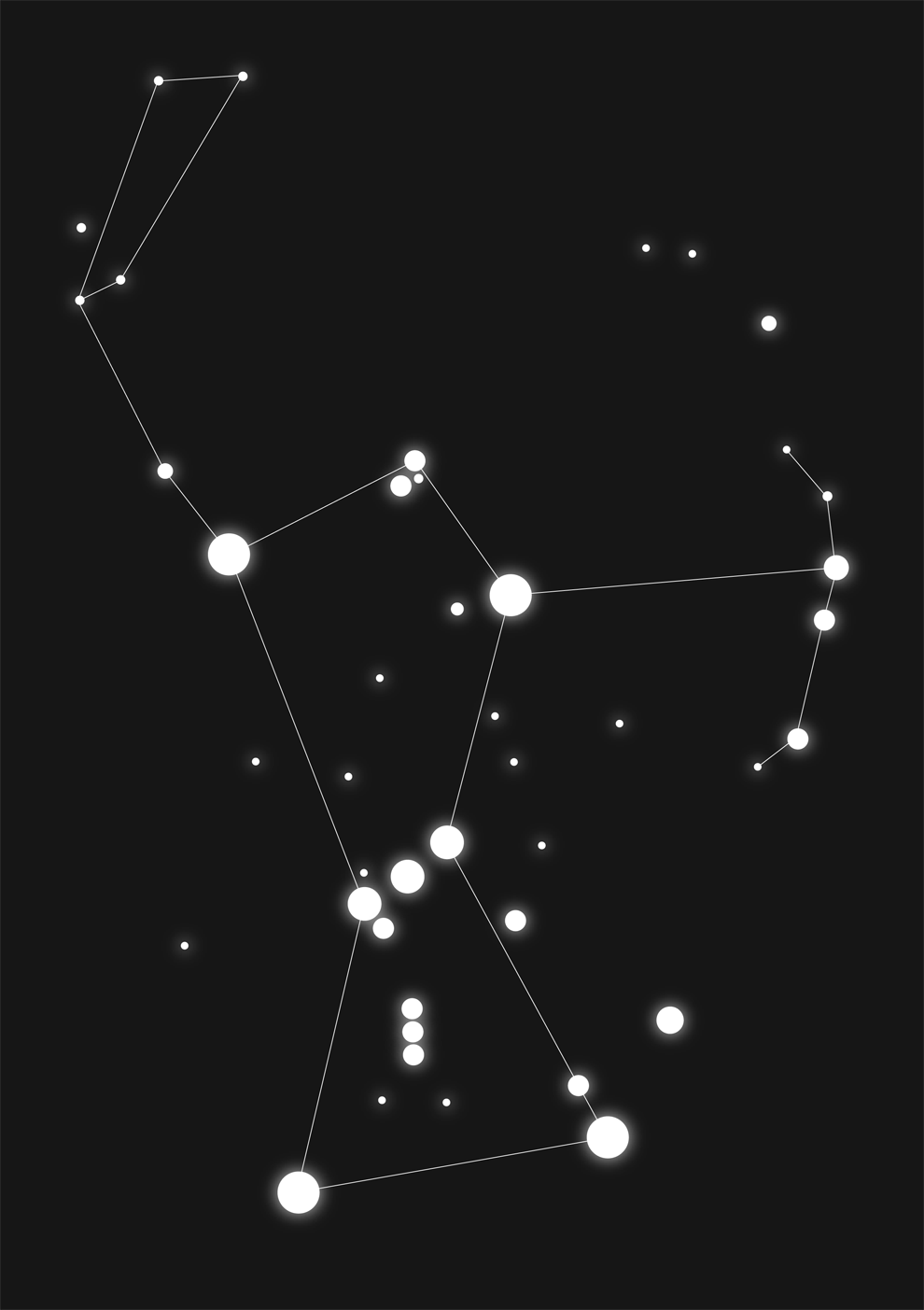
I have already mentioned in recent posts that there were legendary connections between the Atlantic Goddess and water: For starters she is represented in the constellation Orion, standing on the banks of the great white river of the Milky Way as it arches across the winter sky. As ‘Tehi Tegi‘ in the Isle of Man, she conveyed the souls of the dead across the land until they reached the rivers or the sea and were able to enter the realm of the Otherworld. The Cailleach traditions of Ireland, Scotland and Wales tell of her role in creating Lochs and other floods by neglecting to close off springs, and as the Bean Nighe she sat near water washing the garments and effects of the dead.. In Brittany she is represented by the oceanic fairy queen known as the ‘Gro’ach‘ and as a Moura Encantada in Portugal and Gallicia she is a guardian of springs. Archaeologists across Atlantic Europe recognise the association of springs with pagan goddess-worship.

It is perhaps unsurprising that the rivers of Ireland have associations with pagan female entities preserved in their legendary lore. A good example of such stories are from the onomastic explanations of placenames found in medieval literature, often produced by Christian monks. These texts – published in compiled form in the early 20thC as the ‘Metrical Dindshenchas‘ (taken from the mss. the Book of the Dun Cow, the Book of Leinster, the Rennes Manuscript, the Book of Ballymote, the Great Book of Lecan and the Yellow Book of Lecan) – has the following (from Vol.3)  to say about the origin of the River Boyne (under ‘Boand 1’), the most prominent river of the Irish midlands, and one associated with a rich mythology and archaeology:

Sid Nechtain is the name that is on the mountain here,

the grave of the full-keen son of Labraid,

from which flows the stainless river

whose name is Boand ever-full.

Fifteen names, certainty of disputes,

given to this stream we enumerate,

from Sid Nechtain away

till it reaches the paradise of Adam.

Segais was her name in the Sid

to be sung by thee in every land:

River of Segais is her name from that point

to the pool of Mochua the cleric.

From the well of righteous Mochua

to the bounds of Meath’s wide plain,

the Arm of Nuadu’s Wife and her Leg are

the two noble and exalted names.

From the bounds of goodly Meath

till she reaches the sea’s green floor

she is called the Great Silver Yoke

and the White Marrow of Fedlimid.

Stormy Wave

from thence onward

unto branchy Cualnge;

River of the White Hazel

from stern Cualnge

to the lough of Eochu Red-Brows.

Banna is her name from faultless Lough Neagh:

Roof of the Ocean as far as Scotland:

Lunnand she is in blameless Scotland —

or its name is Torrand according to its meaning.

Severn is she called through the land of the sound Saxons,

Tiber in the Romans’ keep:

River Jordan thereafter in the east

and vast River Euphrates.

River Tigris

in enduring paradise,

long is she in the east, a time of wandering

from paradise back again hither

to the streams of this Sid.

Boand is her general pleasant name

from the Sid to the sea-wall;

The poet who wrote this account is effusive in his descriptions of the great river, comparing it (or perhaps more accurately actually identifying it) with the other great rivers of the known world, including the River Severn, the Tiber, the Tigris and Euphrates, the Jordan etc. It was believed that the oceans were made up of all the world’s rivers in the era of authorship – an idea born of classical antiquity and beyond. What is more important is the author implies that the river actually runs from Sid Nechtain to the ‘paradise of Adam’, being a direct allusion to a christianised  telling of the pagan Irish belief in an Otherworld at the Ocean’s End, and to the Garden of Eden, where Christians believe life begins! This almost tells of a former belief in rebirth… The passage also implies that the river is regenerated from the East and returns to Sid Nechtain to flow again by some unspecified route.

Quite amazing.

The compiled texts go on to describe the mythological origin of the River of Boand:

I remember the cause whence is named

the water of the wife of Labraid’s son.

Nechtain son of bold Labraid whose wife was Boand, I aver;

a secret well there was in his stead,

from which gushed forth every kind of mysterious evil.

There was none that would look to its bottom

but his two bright eyes would burst:

if he should move to left or right,

he would not come from it without blemish.

Therefore none of them dared approach it

save Nechtain and his cup-bearers: —

these are their names, famed for brilliant deed,

Flesc and Lam and Luam.

Hither came on a day white Boand (her noble pride uplifted her),

to the well, without being thirsty to make trial of its power.

As thrice she walked round about the well heedlessly,

three waves burst from it, whence came the death of Boand.

They came each wave of them against a limb,

they disfigured the soft-blooming woman;

a wave against her foot, a wave against her perfect eye,

the third wave shatters one hand.

She rushed to the sea (it was better for her) to escape her blemish,

so that none might see her mutilation;

The authors relate a typical Irish Christian rescension of the pagan tale of the woman and the water. The passage also tells of the practice of circling a well or spring three times, which any folklorist who has studied Celtic traditions will recognise. The tale of Boand therefore acts on a number of levels: Firstly as a poetic figurative description of the river as a woman, secondly as descriptive account of the Boyne replete with onomastic and pseudo-historical details, and thirdly it seems to contain a warning to the ungodly of the fate which will meet them if they emulate the legendary magical female… Of particular interest is the manner in which the water harms Boand: It causes the ‘wounds’ of the Cailleach – the ‘fairy stroke’ of withering in one eye, one arm, one leg. Such ‘wounds’ are given to other magical females at rivers or fords or shorelines in other Irish myths from medieval works, including that of the Christian ‘St Brighid‘…

Medieval Irish tales with pagan themes usually contain a Christian footnote in their third part…

Orion, the Milky Way and the Winter Goddess

I have already mentioned in passing that the identity of the ancient Atlantic pagan Goddess is tied up in the identity of the seasons: Born at Imbolc, sexually mature (flowering) at Beltain, pregnant (developing fruit and seeds) at midsummer, birthed (harvested) by Samhain, and old and withered between Samhain and Imbolc – she followed the seasons as well as the 9-month cycle of human gestation. The development of her mythos was a perfect analogy of the vegetation and seasonal cycle upon which Atlantic Europeans depended to survive.

This mythos required a rationalisation of the autumn die-back following harvest and this was developed in the British and Irish archipelago into the characterisation of the Cailleach Beara/Bheur/Berry of Irish, Scottish and Manx mythology. There is good evidence that this characterisation once had a much wider reach, but Christianisation and demonization appear to have somewhat altered the folklore of the matter and substituted tales of an explicitly pagan origin with demonic or ‘saintly’ themes.

This ‘Cailleach’ (named possibly from the traditional ‘veil’ of old age – a metaphor for the winter landscape) was attributed with a number of active and historic functions in certain remaining legends about her. Of the active functions, she was a guardian of herds and flocks of nature, guardian of stores of food*, she flew through the air stirring up the winter weather, and she had a stave or stick with which she beat back the vegetation in autumn and winter. Her historic functions were the formation of the physical landscape and the genesis/invention of things.

In the notes to his 1804 book ‘The Grampians Desolate: A Poem’ (Pub. J.Moir, Edinburgh), Alexander Campbell describes on pages 262-263 the classes of Highland dances and gives the following example of a solitary ‘character’ dance:

A dance performed by one person, is, strictly considered, a sort of character, of consequence, in some measure dramatic. If a female, the character assumed is a’ Cailleach, or old wife; and the person who dances is dressed in a very grotesque stile, having a huge bunch of keys hanging by her apron-string, and a staff to support her, for she affects to be very stiff, and lame of one leg. When the tune strikes up, she appears hardly able to hobble on the floor ; by degrees, however, she gets on a bit, and as she begins to warm, she feels new animation, and capers away at a great rate, striking her pockets, and making her keys rattle; then affecting great importance as keeper of the good things of the store-room, ambry (AP ed: a storage recess for important items), and dairy. Meanwhile some of the company present join the person who plays the tune, and sing words suitable to the character the dancer assumes—generally some nonsense of a comic cast with which the matron, or Cailleach seems wonderfully delighted. The names of the tunes and words that I have heard played and sung to this dance, are: A’ Sean Rong mhor, Cailleach an Durdan, Cailleach a’ Stopan-falaimh, and several others that I do not at present recollect.

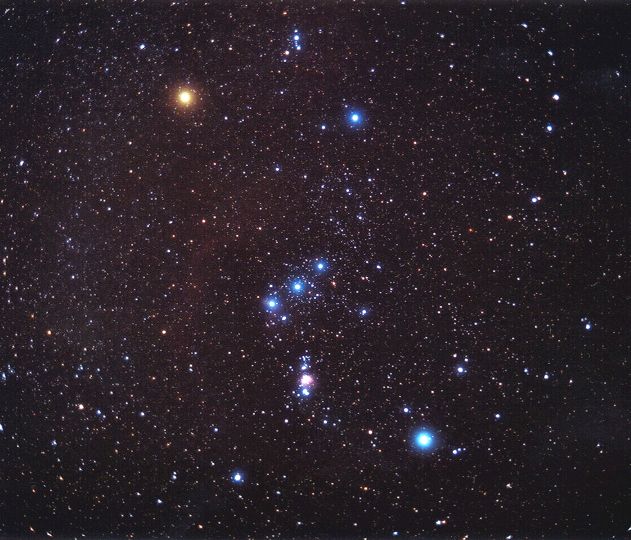
Campbell’s description of the Cailleach character dance is quite striking, and is one of the sole sources still existing that explicitly describes her as a protector of store-rooms. More importantly, he is describing in this dramatic image of the Cailleach a representation of the asterism of Orion: one of the most important to occupy the winter skies of Atlantic Europe, and usually portrayed as a belted warrior with a sword or staff raised aloft, and items dangling from his ‘belt’. Orion is significant in that it sits on the banks of the great Milky Way, associated with the star Sirius (known as the ‘Dog Star’) and the constellations and asterisms of Canis Minor, Taurus, Auriga and the Pleiades. Those becoming familiar with Cailleach myths will recognise certain features in these stars and constellations that have echoes of Cailleach legends, and for a good reason! Those familiar with Norse mythology might know that Orion was named after Freyja and the item on her ‘belt’ was known as ‘Freyja’s Distaff’. The Pleiades are portrayed as a little flock of birds. The Cailleach is associated with Bulls (the Tain), flocks and in Irish tales with a dog, sometimes a beetle and other specific creatures.

Orion - the winter Cailleach...

Orion – the winter Cailleach…

In his 200 year old description of the ‘Cailleach’ dance, Campbell makes it clear that the character has a stave, a bunch of keys, and is lame on one side. It is clear that ‘she’ (the character is danced by a man) has the attributes typical of the ancient Cailleach or ‘witch’ archetype of myth and legend, and what is more the dance emphasises her transition from old and lame back to sprightly and young – a metaphor for regeneration that is strongly seasonal.

tbc

The meaning of Samhain

Samhain is the quarter-day festival that starts the Celtic year, marking the start of Winter and the end of harvests. It commences at nightfall on October 31st (new style Gregorian calendar) or the 11th November (old-style Julian Calendar) and goes by a number of different English names including Hollantide, All-Hallows Eve, Hallowe’en and All Saint’s Eve. In Scots and Manx Gaelic the name is the same, although written differently: Samhuinn and Sauin, respectively. The pronunciation is ‘Sow-in’ (rhymes with ‘cow-in’). There are a number of other more archaic names, which I will go on to discuss in due course.

It is a festival that symbolizes death – the transitional phase of the seasons when Atlantic Europe’s foliage dies back, and animal life dwindles. The evenings darken rapidly and the first frosts begin to touch the land. Crows and flocks of migratory wading birds throng the skies in great clouds cawing, whistling and chattering. The constellation of Orion begins to dominate the night skies… The spirit which enlivened nature in the summer months has gone from visible reality to the state of an intangible but certain potential for the coming year. In an ancient religious system that viewed life as a continuous oscillation between the tangible living state and a spiritual state awaiting rebirth in the next cycle, Samhain was therefore also the Festival of the Dead. 

It was Julius Caesar who first noted (in Commentarii de Bello Gallico) that the Gauls held that days started with nightfall, and celebrated the commencement of their important days with the falling of night. The same is true of the other Atlantic peoples, and in Ireland, Scotland and the Isle of Man in particular this continued down to modern times. The festival of Samhain was therefore called Oidhche Samhna – ‘Night of Samhain’ – in Irish, and Oie Hauiney or Houney in Manx. Both would be pronounced pronounced something close to ‘Ee ouna’ allowing for the usual lenitions and aspirations of spoken Gaelic.

The Manx had another name yet for the festival – ‘Hop tu naa‘ (pronounced ‘hop the nay’ or as the more modern ‘hop tyoo nay’) – which is of uncertain meaning and sounds curiously close to the Scots name for New Year: Hogmanay. In fact, Samhain was the Celtic New Year – just as days started with a nightfall, so the years started with the dark part also. It is uncertain when the Scots started to use ‘Hogmanay’ as the term for the 31st of December New Year, or for that matter if the term was ever used for Samhain. It seems that folk traditions of the Atlantic European world show quite a degree of transferability across the period between Samhain and the January New Year – customs including guising, playing pranks, gifting and house-visiting were just as likely at Christmas and New Year as they were around the 1st of November. Whether this represents a natural tendency to transfer celebrations that brighten the dull winter months or a concerted religious effort to dissipate or transform wholly pagan festivities remains unclear, but a combination of factors is likely.

There has always been a strong association of the festival with a ‘witch’ or ‘witches’ that has continued right down to the Halloween celebrations of modern times. The Celtic peoples never really had much time for the idea of ‘witches’ in the 16th/17thC judicial and religious sense of a person who worships the Christian Satan and does magic to harm their neighbours. The ‘witch’ referred to in Celtic areas is generally best interpreted as a Christian opinion of the old Goddess herself, rather than a human individual at the margins of society. She seems to be represented by the folklore character referred to as the Cailleach – a monstrous ancient female supposed to have created the landscape and unloosed the rivers, and supposed in some traditions to be responsible for winter. 

To the Celtic peoples of Ireland, Scotland and the Isle of Man ‘The Witch‘ was a figurative legendary character representing Christian opinion of the ancient Goddess, rather than a clear and present social threat posed by ‘a witch’. For this reason, there were hardly any executions of suspected ‘witches’ in Celtic cultural zones.

'Jinny the Witch jumped over the house to fetch a stick to lather the mouse'  (Old Anglo-Manx Samhain song)

‘Jinny the Witch jumped over the house to fetch a stick to hit the mouse’ (line from an old Anglo-Manx Samhain guising-song) – the constellation of Orion presides over the winter skies between Samhain and Imbolc (1st February).

Irish legends and medieval manuscripts contain a number of references to Samhain, and one in particular to a ‘witch’ associated with the festival. The ‘witch’ was Mongfionn/Mongfind – ‘White Hair’ or ‘Fair Hair’ – supposed at least (euhemerisation agains!) to have been sister of Crimthann mac Fidaig, a king of Munster, and mother of Ailill, Brión and Fiachra, the traditional ancestors of the medieval Connachta, by a High King called Eochaid Mugmedon. The Connachta were the opponents of the Ulaid (Ulstermen) in the Tain. She is supposed by to have been a sorceress responsible for poisoning her brother in order to allow her children to succeed the kingship, but who died after tasting her own poison while trying to convince her brother’s children it was safe. It is the old ‘evil fostermother’ tale from folklore, also related in the story of the ‘Children of Lir’. This murder and her death happened at Samhain and the Book of Ballymote (folio 144, b.1) claims that Mongfind was thereafter worshipped at Samhain by the peasantry who called it the ‘Festival of Mongfind’ – Feil Moing! There is a hill called Ard na Ríoghraidhe (Height of the Kingfolk?) or ‘Cnoc Samhna’ (Hill of Samhain) in Co. Limerick that is associated with her. The details of the kingship-oriented stories involving Mongfind are probably an obfuscation of the facts, and the ‘White Haired One’ is likely to have been the aged Cailleach who represented winter and rebirth in the coming year. Perhaps the Milky Way was her hair? The path to renewal…

Cnoc Tlachtga (now also called ‘The Hill of Ward’) near Athboy, Co. Meath was also a place legendarily or historically associated with Irish Samhain festivities, including the lighting of a bonfire. This Hill was supposedly eponymously named from a magical female of the same name, the daughter of a magician-druid called Mug Roith/Mog Ruith who was suppose to have given birth to triplets on the hill before dying. Another site associated with paganism, death and Samhain was, of course, Magh Slécht (Mag Senaig) in Co. Cavan, supposed to have been the site where ‘Tigernmas’, an ahistorical pagan High King of Ireland died along with many of his followers while worshipping an idol called Crom Cruaich at Samhain. This idol was supposed to have later been broken by Patrick. There are many other traditions besides, including the tale of the Ulster Cycle called Serglige Con Culainn (The Wasting Sickness of Cúchulainn) were the Ulster hero is attacked and seduced by the Queen of the Otherworld – Fand, wife of Manannan – during the course of Samhain celebrations of the Ulaid.

Irish legend also place the start of the Second Battle of Maigh Turead at Samhain, and it commences after a sexual coupling of the Dagda with the Morrigan. Likewise, the cattle raid of the Tain Bo Culainge commences at Samhain, and the tales of this also feature the Morrigan, who I have earlier identified with the Cailleach. The medieval tale The Boyhood Deeds of Fionn claimed that the Fairy Hills (Sid) were open at Samhain. You can tell from ancient Irish literature that Samhain had a particular association with death and the otherworld, and with potent magical female characters!

The themes of conflict and death at Samhain follow on from the Harvest, and then the very visible Atlantic autumn die-back of nature – replete with withering, decay, storms and darkness. These processes are set in motion from the festival of Lunasa (Lughnasadh) onwards. The die-back to pagans was simply a part of the renewal-cycle and therefore did not have the confused connotations of ‘evil’ or ‘uncleanliness’ that was imported with the somewhat ectopic Judaic religions during the 1st millennium.


‘Mary’ the Goddess

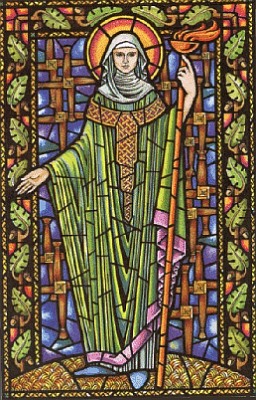
The curious tale of ‘Saint’ Brighid (Bride, Brigit etc) of Ireland is one of the most striking examples of the conversion of a Pagan Goddess into a Christian Saint. What is more curious still is the efforts of her early monkish hagiographers to identify her with Mary, mother of Jesus, as ‘Mary of the Gael’ according to one of her medieval hagiographies.

stbrigid2

Vita sanctae Brigidae (Bethu Brigte) is the oldest hagiographic Life of Brigid (circa 800CE). In Chapter 11, Brigid is introduced to the assembled saints of Leinster by ‘Bishop Ibor’ who tells them he has had a vision that Brigid is to be the Mary of Ireland. This story is repeated in the later Leabhar Breac account of her life.

Subsequently, the tradition and portrayal of ‘Mary of the Gael’ has stuck. Alexander Carmichael recorded the Hebridean tradition of Bride as ‘Foster Mother of Christ’ as late as the 19th century. The reason why this should be so, is less than clear, and needs to be examined:

Brighid herself was undoubtedly originally a pagan goddess looking for a Christian identity, and it is possible that giving her the well-understood mantle of the christian Mary provided this identity. However, the names of the Gallician and Basque ‘fairy’ goddesses – Moura and Mari – force us to consider the question of identity in greater depth. For starters, it is unlikely that these Hispanic pagan ‘Maries’ were named after the Christian character. In which case, we have to speculate which pagan Irish character was the ‘Mary’ that Saint Brighid was to replace? From the pagan-flavoured Irish legends left to us by monks, one possible character comes to mind – the magical female referred to by a number of names, including Morrígan, Mórrígan and Morrígu, also in the plural as Morrígna.

As examined previously, the Morrigan was represented in some of the old tales as part of a triplicate combination: Badb-Morrigan-Macha, and there was a medieval Christian tradition of ‘Three Maries’ who went to find the body of Jesus after he was presumed dead. With this in mind, we must turn to a fragment of evidence from (again) the Isle of Man, to a reference to a ‘Triple-Morrigan’ in the text of a charm recorded in ecclesiastical court documents from the island during the 18th century: This is known to Manx folklorists as ‘Daniel Kneale’s charm to staunch a horse’s blood’, and runs as follows (copied from Kirk St Anne parish registers for 2nd September 1722):

Tree Moiraghyn hie d’yn Raue,

Kemy, Cughty, Peddyr, as Paul,

Doort Moirrey jeu, Shass,

Doort Mooirey jeu, Shooyl,

Doort Moirrey elley, Dy gast

yn’Uill shoh, myr chast yn’Uill,

haink as Lottyn Chreest:

Mish dy ghra eh, as Mac Voirrey

Dy chooilleeney oh.

My translation:

‘Three Marys/Mothers/Morrigans went to Rome

Boundary Fairies, Cliff Fairies, Peter and Paul.

Mary said to ‘Stand’

Mary said to you ‘Walk

Mary said ‘Go Quickly’ this blood,

like to stop the blood,

Did come by Christ:

Me to say it and the Son of Mary

To fulfil it.’

Curious indeed! The Manx word Moiraghyn is almost exactly like Morrígan – its meaning is can be interpreted as a plural of Mary (‘Maries’) but it also means ‘Mothers’ in its own right, and more importantly the word Muiraghan is given in John Kelly’s 19thC Manx Dictionary as a word for Mermaid. The reference to ‘Kemy’ and ‘Cughty’ is to ‘Keymagh’ and ‘Cughtagh’ – these are Manx terms for local types of spirits, and I have translated these as best I can given current evidence. Kelly’s dictionary has  this translation for Cughtagh: “Cughtagh s. pl Cughtee – a fairy, a sprite, a spirit of the houghs; some say ny keymee as ny cughtee…”. He also gives the related word Guight to mean the same. This is evidently the same word as the English/Germanic word ‘Wight’ (from OE/OHG wiht), meaning a sentient being – the Manx, like the Irish, typically added a guttural sound to words beginning with ‘W’. A Keymagh was a spirit believed to haunt the styles and boundaries of churchyards – possibly the same as the revenant of the last-buried who guarded the same in Scottish and Hebridean folklore. The name itself (allowing for m-w sound transformation) would be pronounced the same as the Scots Gaelic Ciuthach (‘kewach’) – a spirit that lived within rocks. It is therefore also possibly cognate with the Breton death spirit Ankou. The charm provides a fascinating insight into the persistence of pagan ideas in a syncretic form with christianity, as well as giving a new insight into the possible identity of the Morrígan of Irish myth.

All this might be a bit much to take in, but it is only a small part of the picture of these ‘Pagan Maries’ of the Celtic world… Loch Maree (traditionally linked in Christian history to a saint called Máel Ruba) in Wester Ross in the NW Scottish Highlands is associated with a late description (recorded in the records of the Presbytery of Dingwall from 1695) of the apparently pagan sacrifice of cattle to a god called ‘Mourie’ on one of its islands. The town of Tobermory on Mull takes its name from the Gaelic for ‘Mory’s Well’, there being no Christian history of a well dedicated to the Christian Mary! Carmichael notes some Gaelic names for the month of May in Carmina Gaedelica Volume 2 as ‘mi Moire‘, ‘mios Moire‘ (‘month of Mary’) and ‘Bochuin Moire’ (‘Swelling of Mary’) suggesting a connection between the month of exploding fecundity and ‘Mary’. The pagan goddess was, after all, a representation of the year and her different aspects (and names) represented the seasons. Port St Mary in the Isle of Man was and is known to locals as ‘Purt le Murra’. There is a place near it on Meayll (Mull) Hill called Lag ny mBoire, pronounced ‘Lag na Murra’, suggesting a possible link between the names Beara/Berry (ie – the Cailleach) and ‘Mary’.

The question as to the meaning of Mourie, Murra, Mary, Mari, Moura or whatever the original derivation is now arises. There are several possibilities: The first (most likely) is that the word derives from the Latin word for the sea: Mare and its various regional derivations, such as the Germanic Mere, Irish Muir, Welsh Môr, Manx Muir and Moor etc. This is quite in line with the doctrines of the Atlantic Religion I have so far been discussing. The second (less likely) is the Celtic word for ‘big’ – Mór – although the fact that the vastest thing in the experience of Atlantic peoples has always been the sea itself must at least be considered in passing. The Irish version of ‘Mary’ is ‘Muire’. As already mentioned, there is a possibility that there has been a linguistic mutation involving the labial sounds ‘M’ and ‘B’ meaning that the name of the Cailleach – Beara – was originally mBeara – ‘Meara’ or ‘Murra’. A fourth derivation might be from the Greek Moirae, or Fates. A fifth might be the Germanic ‘Mara’ – a spirit that caused nightmares, and from which we derive that word.

Moura Encantada and Mari

The southernmost Atlantean provinces (NW Spain, Portugal, the Basque Country and former Aquitania as well as part of Occitania) have a history and folklore rich in the traditions of the Atlantean Religion, and remember the Goddess in folk tradition as the ‘Moura Encantada’ in Portugal, Gallicia and Asturia, and as ‘Mari’ in the Basque Country. The Basques were late nominal converts to Christianity, probably being changed during the 10th and 11th centuries – the same time as the Scandinavians.

The Moura is remembered as the most prominent member of a race of ‘Mouros’ – equivalent to the fairy folk of the northern Atlanteans, said to inhabit the old Castros, barrows and megalithic structures of the region, as well as being associated with caves and springs – typical sites of veneration for pagans. She (Moura) is often portrayed as a frighteningly seductive fairy, who like her northern European counterparts is able to shape-shift. She is sometimes portrayed as being trapped in her haunts by a spell, and beseeches humans to free her in return for promises of treasure etc. She might sometimes show herself as a serpent, a horse, a goat or as a cat or dog. Traditional activities of the Moura include those also typical of (fairy) women in the northern Atlantean provinces – brushing her lovely hair, spinning and washing in particular. Although usually appearing as a young woman, some older tales portray her as elderly. In short, she has all of the attributes of an Irish, Scots, Welsh, Breton or Manx fairy woman and can be considered as representative of an identical idea – the Goddess.

In a 1998 paper, Gallician scholar Fernando Alonso Romero (University of Santiago de Compostella) wrote an account of the Moura (sometimes also called Orcabella at Fisterra) and her activities. He noted that local legends generally suggested that Dolmens and Standing stones as well as landscape features were deposited by the Moura, suggesting she was analogous to the Cailleach in Ireland,  Mann and Scotland as well as legendary giants of the atlantic coasts of France and England/Wales. Romero also noted that as well as carrying stones on their heads, Mouras (?Moirae?) carried a distaff for spinning – redolent of the Isle of Man’s mountainous ‘Red Woman’ (Ben Jiarg).  Sites Romero mentions include: Arca de Ogas, the Casa de Vella Troiriz, Casia de Arquela and Casa da Moura among others.

Mari, in the Basque country, is a similar character more often associated with particular caves and is said to travel periodically between different abodes in these caves in the mountains, for example between Anboto and Oiz. She is believed (like Manannan in the Isle of Man) to be responsible for weather phenomena. Like the Moura, she is sometimes linked to a tribe of beings whose collective name seems derived from hers – the Mairu – a name usually used in reference to the Lamia or Laminak*. Unlike Moura, she is sometimes associated in legend with a masculine consort figure or aspect – known s Sugaar or Maju, who has snake/dragon connotations. In this regard she shares legendary characteristics typical of ‘giants’ in other Atlantean districts – mountainous, cave-dwelling and chthonic, a controller of the weather, and often paired with a partner. In spite of this, she is still a representation of the Goddess – the form of her legends is simply typical of the geography and geology of the landscape where her tales were told. Although considered a separate entity to the other magical female species of the Basque country – the *Laminak – it is worth noting that Laminak bear a more specific resemblance to the Portuguese and Gallician Moura. They are considered more of a plural species, whereas ‘Mari’ is considered a more singular deity or ‘legendary place-holder’, but are probably representations of the same Goddess.


Tehi-Tegi and the Pictish Stones

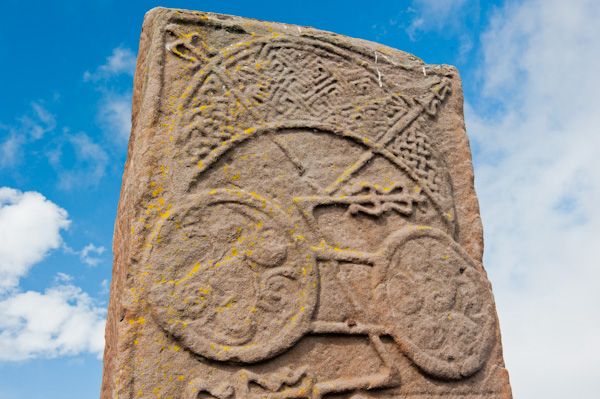
Symbols found on Pictish' stones. Are they related to the Manx 'Tehi-Tegi', Irish Cliodhna, and other 'mermaid' traditions?

Symbols found on Pictish’ stones. Are they related to the Manx ‘Tehi-Tegi’, Irish Cliodhna, and other ‘mermaid’ traditions?

The curious rock-carvings found on the ‘Pictish’ stones of the eastern and lowland parts of Scotland have long excited curiousity and conjecture as to their meaning and symbolism. Having studied the ‘Otherworld’ traditions and legends of the ancient Atlantic Europeans, I am starting to understand the significance behind some of these symbols and would like to share a few of my thoughts on them.

It is my belief that the symbols represent aspects of the processes involved in the passage of the dead to the otherworld, and in the regeneration and reincarnation cycles of nature, as previously discussed in the Blog. Here are a selection of my interpretations based on these theories:

1. The ‘Beast’ = A ‘Water-Horse’ or Porpoise-Horse hybrid. The steed of the ‘Fair Chooser’ which transforms when it dives into water conveying the soul(s) of the dead to the Otherworld ‘beneath the waves’ or ‘beyond the setting sun’.

2. Mirror and Comb: The attributes of the ‘Mermaid’ still used in modern depictions of this archetype. The mermaid represents the ‘Fair Chooser’ herself, and the comb and mirror represent her love of beauty as well as the following: The Mirror represents the inverted state of Otherworld-being and so is a metaphor for this world. The Comb represents a metaphor of the un-knotting of the tangles of life’s threads, in preparation for their refashioning in the otherworld. Scandinavian, Scots and Manx folklore contains many traditions about knots – in particular they were avoided about the person of a dead body, lest they return to haunt the living!

3. Crescent and V-Rod: The crescent represents a rising wave, as well as the Moon which propels the tides – various permutations of it contain swirl-patterns suggesting waves. The V-Rod geometrically represents a state of reflectional-symmetry in its gross appearance, but each arm looks different, representing the otherworld reflection and transformation. My conjecture is that this symbol represents the great wave which swallows the dead and therefore the transition to the otherworld.

4. Serpent and Z-Rod: This symbol expresses rotational symmetry of its geometric forms. This expresses a principle of repeat through cyclicity, rather than repeat through reflection, and introduces the idea of eventual reincarnation. The serpent is  an ancient symbol of rebirth, based on empirical observation of its skin-shedding, its tendency to make coiled and undulating shapes with its body mimicking the cycles of the stars, planets and satellites of the sky perceived to influence nature through the tides, seasons etc.

5. Double Disc and Z-Rod: This is an expression of the cyclicity of the sun and moon in particular – possibly a comment on their inverted otherworld-relationship. The discs are bound together by a tie upon which the Z-Rod is centred. The rod is often decorated at each ends with plant-like elements.

Aberlemno-9946

tbc

Tehi Tegi

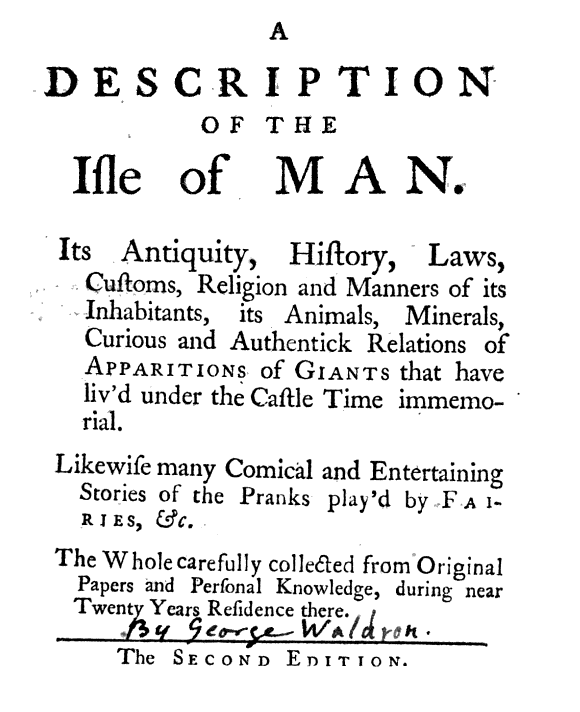
Some time between 1720 and 1730, a young Englishman by the name of George Waldron was living in the Isle of Man, employed as a trade commissioner for the British government who were trying to supress smuggling in the Irish Sea region. Fascinated by the strange history and wild ancient beliefs of the islanders he began compiling a book – ‘A Description of the Isle of Man’ – which provided one of the earliest pieces of indigenous ethnography and folklore writing from Britain and Ireland. This was published shortly after his untimely death in 1731:

WaldronIOMCoverThe book was famously used as source material by romantic authors of the next century, most notably Sir Walter Scott, who employed some of the Island’s fairy tales and legends to embellish historical stories such as Peveril of the Peak. In the book, Waldron related one particular popular local tale of the Manx taken from the popular pseudo-historical narrative tradition:

(pp.143-152)

A person at his first coming to this Island, would be strangely amazed at the little complaisance they pay to the: weaker sex: the men riding always to market on horseback with their creels on each side their horses full of fowls, butter, eggs, or whatever they bring thither to dispose of, and the women following them on foot over rocks, mountains, bogs, sloughs,   and thro’ very deep rivers, and all this without either shoes or stockings’ carrying, these superfluous coverings, as they term them, under their arms till they come near the market-town; then they sit down all together on the side of a hill,   and put them on for fashion sake, and let down their petticoats also, which before were tucked up higher than their knees’   for the convenience of wading thro’ the rivers, and to preserve them from the mire of the bogs and sloughs.

But the reason for obliging the females to this hardship, is a very whimsical one, and such a one, as I believe, cannot but afford some diversion to my curious reader, I shall therefore insert it in the manner it was told me by an old native, to whom it had been handed down from many generations as an undoubted verity.

He told me that a famous enchantress sojourning in this Island, but in what year he was ignorant, had, by her diabolical arts, made herself appear so lovely in the eyes of men, that she ensnared the hearts of as many as beheld her. The passion they had for her so took up all their hearts that they entirely neglected their usual occupations; they neither Flowed nor sowed; neither built houses nor repaired them; their gardens were all overgrown with weeds, and their once fertile fields were covered with stones; their cattle died for want of pasture, their turf lay in the Bowels of the earth undug for; and every thing had the appearance of an utter desolation: even propagation ceased, for no man could have the least inclination for any woman but this universal charmer, who smiled on them, permitted them to follow and admire her, and gave every one leave to hope himself would be at last the happy he.

When she had thus allured the male part of the Island, she pretended one day to go a progress through the provinces, and being attended by all her adorers on foot, while she rode on a milk-white palfrey, in a kind of triumph at the head of them: she led them into a deep river, which by her art she made seem passable; and when they were all come a good way in it, she caused a sudden wind to rise, which driving the waters in such abundance to one place, swallowed up the poor lovers to the number of six hundred in their tumultuous waves. After which, the sorceress was seen by some persons who stood on the shore to convert herself into a bat, and fly through the air till she was out of sight; as did her palfrey into a sea-hog or porpoise, and instantly plunged itself to the bottom of the stream.

To prevent any such like accident for the future, these wise people have ordained their women to go on foot, and follow wheresoever their lords the men shall lead; and this custom is so religiously observed, as indeed all their traditions are, that if by chance a woman is before, whoever sees her, cries out immediately, Tehi-Tegi! Tehi-Tegi ! which, it seems, was the name of that enchantress which occasioned this law among them.

The essence of the legend of ‘Tehi-Tegi’ is of a magical female in times past (the usual narrative subtext for a pagan goddess) whose beauty leads an enslaved army of Manx men on a procession ‘through the provinces’ and then to a river or to the sea (the legend has a certain plasticity) where they are drowned and taken by the waters. The tale contains strong elements of the old Scots legends of Kelpies and the related Scando-Germanic Nixies or Necks – usually portrayed as beautiful women who transform into horses and drown men in rivers or in the ocean. The root word of Nix apparently means ‘wash’, and this probably relates to the fairy washer-women who pepper folk-tales in the Isle of Man, Scotland and Ireland as well as further afield. It is also related to the Mermaid traditions, of which the Isle of Man has a rich share. The theme is of a transforming feminine force, related somehow to horses, which steals men’s lives by conveying them into water. The Manx also call their own local Kelpie the Cabbal Ushtey or Water Horse, or the Glashtyn – ‘Grey One’. There is even a pool on the Island called Nikkesons showing the Viking input to the legendary heritage of the place.

However, ‘Tehi-Tegi’ is also a tale bearing strong similarities to that of Nerthus in Tacitus’ Germania from the 1stC CE. In Waldron’s tale, the ‘Enchantress’ rides a white horse rather than travelling in a wain or waggon, but the parallels are striking: The procession ‘through the provinces’ led by a potent ancient ‘magical’ female, and the drowning of the enslaved at the conclusion of the account… There are also echoes in the medieval story of the Ratcatcher or Piper of Hamelin in Germany. It therefore appears that it might represent a little fragment of pagan belief cast in legend!

The name ‘Tehi-Tegi’ means ‘Fair Chooser’ (Tei is the Manx verb ‘to pick, gather, collect’, Teg is a Brythonic Gaelic word meaning ‘fair’ or ‘beautiful’, placing the origin of the name in the island far back in time). The meaning of the name ‘Tehi-Tegi’ and the description of her as an enchantress mark her as a pagan deitypreserved in a fairy tale. Curious details include her final transformation into a flying creature bring to mind an otherworld-transition; She becomes a bat in Waldron’s version, and but more usually a wren in other local versions, linking ‘Tehi-Tegi’ firmly to the annual Wren Hunt held on St Stephen’s Day (Dec. 26th) on the Island and in former times, elsewhere. Here are some examples of this:

Legends of the north, or The feudal Christmas; a poem By Henry Rolls (mrs.), Pub Simpkin & Marshall London 1825, pp.269-270

The wren is still regarded by the Manx people as possessing supernatural intelligence. They say that when St Maghull (Ed: Maughold – the Manx ‘Saint’) came to the island and converted it to Christianity he banished all the fairies but their queen who assumed the form of a wren in which she at times still appears and that if in that shape she can be killed her power will cease for ever. They hate this bird but fear to destroy it as some dire calamity will befall the person and all his family who effects the destruction of the reign of the fairies in Man.

AND

From: History of the Isle of Man, by Hannah Bullock; Pub. Longman, London, 1819. (Chapter 19):

….one of the most curious ceremonies, and which, I believe, is peculiar to the Isle of Man, is, that of hunting the wren, founded on a tradition, that in former times, a fairy of uncommon beauty exerted such undue influence over the male population, that she at various times seduced numbers to follow her footsteps, till, by degrees, she led them into the sea, where they perished. This barbarous exercise of power had continued for a great length of time, till it was apprehended the island would be exhausted of its defenders, when a knight-errant sprung up, who discovered some means of countervailing the charms used by this syren, and even laid a plot for her destruction, which she only escaped at the moment of extreme hazard, by taking the form of a wren; but though she evaded instant annihilation, a spell was cast upon her, by which she was condemned on every succeeding New Year’s Day, to reanimate the same form, with the definitive sentence, that she must ultimately perish by a human hand. In consequence of this well authenticated legend, on the specified anniversary, every man and boy in the island (except those who have thrown off the trammels of superstition), devote the hours between sun-rise and sun-set, to the hope of extirpating the fairy…

Tehi-Tegi’s white horse (possibly representing the moon which controls the tides) becomes a porpoise and swims away at the end of Waldron’s version of the tale – redolent of the scene in the Voyage of Bran when Manannan introduces the transition to the otherworld and the horses galloping alongside him appear as fish!

The tale probably survived in its traditional form because it also acted as a metaphor where Tehi-Tegi IS the sea – drawing the Manxmen away from agriculture and into the trades of the sea: fishing, commerce and piracy! The Manx rural economy as far back as records go has been supported by its menfolk going to sea during the herring fishing season in order to increase food stocks of winter food and provide cash money to supplement the income from agricultural surplus. It was a dangerous trade, and a law of 1610 limited the fishery to operate only between midsummer and the end of December, meaning that the start of harvest crossed over with that of the fishery, offering some Manxmen a quandary between going to sea and working the land. Either way the womenfolk must have been anxious – both about the danger, and the lack of male help on the farmstead close to harvest… This perhaps provides a social aspect to the legend as told to Waldron, crackling as it is with gender politics.

So who might this ‘enchantress’ or ‘Fair Chooser’ have been? She appears in the legend and by her name to operate as a psychopomp or conductor of souls of the dead. She also represents the ‘otherworld attractor’ qualities of Love and Beauty that typifies fairy legends. She also has a particular association with the rivers and the ocean, and with horses, marine life and flying creatures. The Manx tales state ‘Tehi-Tegi’ was Queen of the Fairies, and there is a similar account from Ireland, naming the Fairy Queen Cliodhna as the protagonist who is annually transformed into a Wren. She is more usually associated with the Tonn Cliodhna – a powerful tidal surge in the neck of Glandore Harbour, Co.Cork. Local legends held her to be a daughter of ‘Manannnan’s druid’. Manannan is also associated with the Tonn Banks off Co. Donegal, which also have Cailleach legends associated with them.

That some of these attributes could be associated with the Scandinavian Vanir goddess Freyja (and her Father:Mother (N)Jörð) is perhaps unsurprising as the Islanders are a genetic combination of Viking and Celtic settlers whose folklore preserves many of the old pagan ideas. Freyja was described in Snorri‘s 13thC Icelandic ‘Prose Edda’ tale – Gylfaginning as having the choice of ‘half of the slain’ in battle, the other half going to Odin. He uses the kenning Valfreyja – ‘Lady of the Fallen’ – a function certainly being carried out by Tehi-Tegi. One of the other kenning-names used by Snorri was Mardöll, possibly meaning ‘Image of the Sea’ (Mar and a contraction of the Lat in/Greek word (e)idola, which entered Germanic languages and Manx at an early stage).

Freyja was supposed to have had a ‘cloak of feathers’ which could transform the wearer into a bird, much in the manner of the jǫtunn Þjazi, to whom some legends have her being grand-daughter. Apart from the connection of Tehi-Tegi with the bat or wren, another Manx legend – of a giant magical female called Caillagh ny Groamagh who comes from the sea in the form of a bird on February 1st (or March 25th – the tradition is confused) to search for firewood/build her nest back on land. The dating of ‘Caillagh ny Groamagh’s Day’ coincides with that of the day of St Bridget, which is also the Celtic/Atlantic festival of Imbolc. The similarity between the Manx name for Bridget: Vreeshey or Breeshey (the terminal -ey in Manx is pronounced ‘-a’, as Vreesha‘) and the name Freyja is very intriguing. One wonders if they might be related? And is the Manx name for the Isle of Man – Vannin or Mannin – related to the tribe of the Vanir? We know that many of the Scandinavians who settled Iceland and who preserved many of the old Eddaic legends were connected strongly to the Viking kingdoms of Dublin and the Isle of Man.

It is possible that regional alliance and cultural and population mobility between the northern European peoples during the Iron Age led to a syncresis between Western and Eastern forms of paganism which led to the combined Aesir and Vanir traditions recorded and described by the (Christian) Icelanders during the 13thC. Alternatively, the Scandinavian and Germanic religions may be the survival of un-Romanised, un-Christianised Celtic paganism, albeit altered through a prolonged interaction with these cultures before the final Christianisation began in the 10th and 11th centuries.

tbc


The Cailleach in ‘Togail Bruidne Dá Derga’

Togail Bruidne Dá Derga is one of the most stylised tales from the ‘Ulster Cycle’ mythological tales, found in a number of versions spread over a number of famous medieval Irish manuscripts. It deals with the fate of King Conaire Mór, who is introduced in the tale as being fathered by a magical bird who visits his mother. The story’s themes are fate, inescapable doom, sacral kingship and the idea of geasa – the taboos a king or a recipient of magical gifts must follow if they are to retain the benefits.

The tale is paralleled by another which appears in the ‘Ulster Cycle’ corpus and seems to be an alternative ‘opening act’ to the story: Togail Bruidne Dá Choca in which the character Cormac is cast in place of Conaire. ‘Choca’ appears to be a phonetic/dialetic transliteration of ‘Derga’.

The stage for the tale is set in the ‘Hostel’ or castle of Dá Derga – full of magical rooms filled with the many strange visitors whom the hosteller is obliged to entertain. He is visited by the King who is surprised when a certain Wyrd Sister visits the door of the hostel and gives dire prophecies to Conaire about his coming fate. She is the Cailleach herself, as the tale’s description quite clearly shows:

When they were there they saw a lone woman coming to the door of the Hostel, after sunset, and seeking to be let in. As long as a weaver’s beam was each of her two shins, and they were as dark as the back of a stag-beetle. A greyish, wooly mantle she wore. Her lower hair used to reach as far as her knee. Her lips were on one side of her head. She came and put one of her shoulders against the door-post of the house, casting the evil eye on the king and the youths who surrounded him in the Hostel.

…and identifies herself as one with many names:

CailbSamain, Sinand, Seiscleand, Sodb, Saiglend , Samlocht,
Caill, Coll,
Díchoem, Díchuil, Díchim, Díchuimne, Díchuinne,
Dairne, Dáirine, Der úaine,
Égem, Agam, Ethamne,
Gním, Cluichi, Cethardam,
Nith, Nemain, Noenden,
Badb, Blosc, Bloar,
h-Uaet,
Mede, Mod.”

It is obvious that this character is a very significant individual, whose names echo many others given to ‘fairy women’ in the various other Irish bardic tales. Her great size, twisted face, her mantle, her prophetic powers, ancient nature and names all point directly to the Cailleach archetype or goddess. Standing upon one leg with one arm outstretched she utters a terrible doom on Conaire:

‘Truly I see for thee,’ she answers, ‘that neither fell nor flesh of thine shall escape from the place into which thou hast come, save what birds will bear away in their claws.’

What comes from the birds will go with the birds*, in other words…

In Togail Bruidne Dá Choca the ‘Cailleach’ appears again as the Badb, described as a ‘red woman’ washing blood from a chariot at a Ford, and presaging the death of the would-be king Cormac. She too stands on one foot and closes one eye and chants Cormac’s doom, a similar pose to the Badb or Cailb etc. She then apparently transforms into a fair maiden to restate Cormac’s fate… This Badb is very similar to the TBDD one and also to the Morrigan in the Tain, and was obviously a motif of orature or literature strongly linked to the narratives of the pre-Christian past.

(* Birds appear as a recurring theme in early and middle Irish stories representing the spirits of ancestors and forebears, and the Badb/Cailleach character is often associated with them.)

The <Cailleach/Badb/Aine/Morrigan/Brighid> ‘hypostasis’** is a ruler of herds and flocks in the various traditions surrounding her: Of Cattle, Deer, Birds and Souls of the Dead. She also represents the phases of the annual cycle and embodies both generation and death in continuity with annual rebirth. For this reason she appears in the old irish stories as a prophetic being, as she embodies everything which has gone before (her age) with everything which will come again (her knowledge of the future). The occasional narrative tendency for her to transform into a youthful countenance represents the continuing uncertainty about the future, while the aged decayed appearance arises from our knowledge of past certainties.

The comparison of tribal kings with rutting bulls and their contests in their respective territories (on the Magh or ‘Plain’) is a theme underpinning the contest of the Old Order and New Order in Irish mythology: The attempts of powerful mythical females to control these is the main theme of the Táin Bó Cúailnge.

** Hypostasis means “underlying state” or “underlying substance”

‘Sluagh Sidhe’ and ‘Hidden Folk’ – the Host of Souls

The belief in souls having an aerial or avian aspect is based upon the ancients’ elemental system of belief which put things of Air above the mundane world of Earth and Water in their scheme of the Universe – closer to the ‘upper’ stations occupied by Fire (which was believed to ascend above air) and Spirit (which was the ‘Ethereal’ aspect of Fire). Christian iconography today still uses the figurative portrayal of their ‘Holy Spirit’ as a dove coming down from the spiritual realms of heaven, but this idea has its roots deep in pagan ideaology (ie – natural philosophy).

Writing in Ireland during the 7thC CE, a monk known to scholars as ‘Augustine Hibernicus’ made a reference (in his exegetic writing known as De mirabilibus sacrae scripturae) ridiculing historic ‘magi’ (pagan priests) who once taught that the ancestral soul took the form of a bird. He argued that to give literal credence to the biblical miracle story of Moses and Aaron in Egypt which states that the wands of the Hebrew magicians were turned into actual serpents was:

`… et ridiculosis magorum fabulationibus dicentium in avium substantia majores suos saecula pervolasse, assensum praestare videbimur…’

`…to show assent to the ridiculous myths of the magi who say that their ancestors flew through the ages in the form of birds…’

The context of this comment was against a political background where Christian authors and proselytes in Ireland (mostly monks related closely to clan chiefs) were still promoting stories about local saints such as Patrick, Brighid, Columba, Kevin, Senan etc. defeating ‘magical’ pagan adversaries in the early days of christianising Ireland, Scotland, the Isle of Man etc. For example, one of the adversaries of St Patrick in Tírechán’s 8thC account of his life was a flock of magical birds on Cruachán Aigli. Contemporary christianity was still struggling to come to terms with the fact that the biblical miracles it was trying to promote could not be reproduced to the sceptical (pagan-thinkers) who still transmitted fabulous magical tales of their own as part of the stylised traditional oral narrative about how the world was, and which undoubtedly formed an unassailable part of clan and community life.  There was therefore an atmosphere of ‘anti-magic’ in the contemporary monkish discourse, but allowances made for magic in historical tales involving saints to show that for every action by a pagan character the Christian god would allow a greater and opposite reaction in order to destroy paganism once and for all.

This Irish theme of birds representing fairies or souls of ancestors (as ‘fallen angels’) appears later in a modified form in one of the most popular European books of the high middle ages – the Legenda Aurea (Golden Legend) of James/Jacob of Voraigne (c.1260). This collection of stories in Latin about saints was drawn from traditions across Europe and of particular interest is the popular Irish hagiography of St Brendan, postulated to be a christianisation of the apparently pagan tale of the voyage of Bran mac Febal to the otherworld. In the Brendan tale, the saint is addressed by a flock of birds (here translated from the Latin):

“…And then anon one of the birds fled from the tree to Saint Brandon, and he with flickering of his wings made a full merry noise like a fiddle, that him seemed he heard never so joyful a melody. And then Saint Brendon commanded the bird to tell him the cause why they sat so thick on the tree and sang so merrily ; and then the bird said: Sometime we were angels in heaven, but when our master Lucifer fell down into hell for his high pride, we fell with him for our offences, some higher and some lower after the quality of the trespass, and because our trespass is but little, therefore our Lord hath set us here out of all pain, in full great joy and mirth after his pleasing, here to serve him on this tree in the best manner we can…”

The birds are recounting to Brendan a version of a belief that became common across Europe after the spread of christianity, and that was applied in dealing with pagan indigenous spirits from Iceland and Orkney (Hulderfolk) through to Slavic Russia (Domovoi etc): This was that these spirits, beloved of the people, were really fallen angels from that (confused) Christian interpretation of the biblical narrative (Isaiah 14:12) about a character called ‘Morning Star’ (‘Lucifer’) and his ‘fall’ from grace. This sole reference in the Jewish religious books is used by christians to suppose that the angel Satan (God’s right-hand man in the Book of Job) was ‘Lucifer’ who fell from heaven with his rebel angels after challenging the monotheistic god. Jews don’t believe this, saying that the passage is about a human ruler punished for his pride. The Christian interpretation was designed to incorporate and find a place for recidivist (probably ‘pre-Olympian’) indigenous European beliefs: of genii and daemones, and in ancestral domestic spirits in the new Christian order. It paints them as evil representatives of an adversarial christian anti-god called ‘Satan’, who appears as god’s most important angel-servant in the semitic Old Testament stories, and arguably in the same context in the Gospel of Matthew (4:9).

‘Augustine Hibernicus’ and James/Jacob of Voraigne both appear to be quoting from or referring to the same tradition of folkore that remembered the old beliefs. This legend existed in Ireland and the Isle of Man in the late 19thC. Manx folklorist William Cashen wrote the following of it (‘William Cashen’s Manx Folk-Lore’, Pub. Johnson, Douglas 1912):

“…The Manx people believed that the fairies were the fallen angels, and that they were driven out of heaven with Satan. They called them “Cloan ny moyrn”: The Children of the pride (or ambition) (Ed: May be a corruption of Cloan ny Moiraghyn – see later). They also believed that when they were driven out of heaven they fell in equal proportions on the earth and the sea and the air, and that they are to remain there until the judgment…”

And Lady Wilde said ( ‘Ancient Legends, Mystic Charms and Superstitions of Ireland’, p.89 1888):

“…all the Irish, believe that the fairies are the fallen angels who were cast down by the Lord God out of heaven for their sinful pride. And some fell into the sea, and some on the dry land, and some fell deep down into hell, and the devil gives to these knowledge and power, and sends them on earth where they work much evil. But the fairies of the earth and the sea are mostly gentle and beautiful creatures, who will do no harm if they are let alone, and allowed to dance on the fairy raths in the moonlight to their own sweet music, undisturbed by the presence of mortals…”

This belief was common to many other countries besides, from the Atlantic to the Baltic. The fairy multitude was the ‘Sluagh Sidhe’ or ‘Fairy Host’ – represented in Irish, Manx, Welsh and Scots folklore as a tumultuous aerial flock who might carry people aloft on wild rides, and that caused whirlwinds and bad weather through their aerial battles. They also caused sickness and disease.

Walter Evans-Wentz’s ‘The Fairy Faith in Celtic Countries’ was a compendium of fairy lore collected around the turn of the 20th century collected with the assistance of a group of prominent folklorists from throughout the Celtic provinces. He collected the following account of the Sluagh Sidhe from a woman named Marian MacLean (nee MacNeil) of Barra (pp.108-110):

‘…Generally, the fairies are to be seen after or about sunset, and walk on the ground as we do, whereas the hosts travel in the air above places inhabited by people. The hosts used to go after the fall of night, and more particularly about midnight. You’d hear them going in fine. weather against a wind like a covey of birds. And they were in the habit of lifting men in South Uist, for the hosts need men to help in shooting their javelins from their bows against women in the action of milking cows, or against any person working at night in a house over which they pass. And I have heard of good sensible men whom the hosts took, shooting a horse or cow in place of the person ordered to be shot…

… My father and grandfather knew a man who was carried by the hosts from South Uist here to Barra. I understand when the hosts take away earthly men they require another man to help them. But the hosts must be spirits, My opinion is that they are both spirits of the dead and other spirits not the dead.’

Wentz then goes on to comment:

The question was now asked whether the fairies were anything like the dead, and Marian hesitated about answering. She thought they were like the dead, but not to be identified with them. The fallen angel idea concerning fairies was an obstacle she could not pass, for she said, ‘When the fallen angels were cast out of Heaven God commanded them thus:–“You will go to take up your abodes in crevices under the earth in mounds, or soil, or rocks.” And according to this command they have been condemned to inhabit the places named for a certain period of time, and when it is expired before the consummation of the world, they will be seen as numerous as ever.’

Again, we can see a tantalising expression of ancient traditions that Wentz found his modern narrator having difficulty fully reconciling in her own mind, although she quotes the catechism about fairies as fallen angels as if it were a passage from the bible!

Alexander Carmichael (Carmina Gaedelica 2 pp.330-331) was more explicit than Wentz when speaking through his Hebridean sources, some of whom he no doubt introduced to Wentz: (Ed note: my emphasis added)

Sluagh – ‘Hosts’, the spirit world – the ‘hosts’ are the spirits of mortals who have died. The people have many curious stories on this subject. According to one informant, the spirits fly about “n’an sgrioslaich mhor, a sios agusa suas air uachdar an domhain mar na truidean’ – ‘In great clouds, up and down the face of the world like the starlings, and come back to the scenes of their earthly transgressions’. No soul of them is without the clouds of earth, dimming the brightness of the works of God, nor can any make heaven until satisfaction is made for the sins on earth. In bad nights, the hosts shelter themselves, ‘ fo gath chuiseaga bheaga ruadha agus bhua-ghallan bheaga bhuidhe’ –

‘behind little russet docken stems and little yellow ragwort stalks’.They fight battles in the air as men do on the earth. They may be heard and seen on clear frosty nights, advancing and retreating, retreating and advancing, against one another. After a battle, as I was told in Barra, their crimson blood may be seen staining rocks and stones. ‘Fuil nan sluagh’, the blood of the hosts is the beautiful red ‘crotal’ of the rocks, melted by frost. These spirits used to kill cats and dogs, sheep and cattle, with their unerring venemous darts. They commanded men to follow them, and men obeyed, having no alternative.

It was these men of earth who slew and maimed at the bidding of their spirit-masters, who in return ill-treated them in a most pitiless manner. ‘Bhiodh iad ’gan loireadh agus ’gan loineadh agus ’gan luidreadh anus gach lod, lud agus lon’–They would be rolling and dragging and trouncing them in mud and mire and pools. ‘There is less faith now, and people see less, for seeing is of faith. God grant to thee and to me, my dear, the faith of the great Son of the lovely Mary.’ This is the substance of a graphic account of the ‘sluagh,’ given me in Uist by a bright old woman, endowed with many natural gifts and possessed of much old lore. There are men to whom the spirits are partial, and who have been carried off by them more than once. A man in Benbecula was taken up several times. His friends assured me that night became a terror to this man, and that ultimately he would on no account cross the threshold after dusk. He died, they said, from the extreme exhaustion consequent on these excursions. When the spirits flew past his house, the man would wince as if undergoing a great mental struggle, and fighting against forces unseen of those around him. A man in Lismore suffered under precisely similar conditions. More than once he disappeared mysteriously from the midst of his companions, and as mysteriously reappeared utterly exhausted and prostrate. He was under vows not to reveal what had occurred on these aerial travels…

… The ‘sluagh’ are supposed to come from the west, and therefore, when a person is dying, the door and the windows on the west side of the house are secured to keep out the malicious spirits. In Ross-shire, the door and windows of a house in which a person is dying are opened, in order that the liberated soul may escape to heaven. In Killtarlity, when children are being brought into the world, locks of chests and of doors are opened, this being supposed, according to traditional belief, to facilitate childbirth.

The West is, of course, the direction of the setting sun and supposed location of the ‘Blessed Isles’ (which go under a variety of euphemistic names) where the dead live in ancient Atlantic/Celtic folklore and legend. Carmichael’s account of the Hebridean idea of the Sluagh draws together the widespread references from throughout the Celtic world of fairies in an aerial state: Riding plant stalks through the air, causing illness by darts and diseased blasts of wind and carrying the living spirits of humans aloft, enslaving them to their bidding.

The connection between birds and spirits also occurs in the Irish and Manx wren legends and wren-hunts, also as the Morrigan-Badbh of Irish folklore and legend, and in the form of the Manx Caillagh ny Groamagh (a personification of winter and storms just like the highland Cailleach) who supposedly comes ashore from the oceans on St Bridget’s day in the form of a great bird before transforming into an old woman (Caillagh/Cailleach) who looks to kindle a fire. In southern Scotland during the 16thC this fearsome legendary female was referred to as the ‘Gyre Carline’ – the bird-form of the ‘Cailleach Vear’ legendary female figure of the Highlands, and once at the centre of the Celtic/Atlantic religious mythos as I shall later attempt to prove. In fact, the association between the Cailleach Vear/Bhear/Beara (and the multiplicity of other names she appears under) and flocks or hosts of animals is explicit in ancient Scottish traditions. In the Isle of Man she was sometimes also known as ‘Caillagh ny Fedjag’ (‘Old Woman of the Feathered Ones’ or ‘Old Woman of the Whistlers’) and was sometimes imagined as a giant whose presence could be witnessed in swirling flocks of birds, such as crows, starlings and plovers. Her name (and gender) became corrupted to Caillagh ny Faashagh in Sophia Morrison’s book of Manx Fairy Tales. Another Manx folklorist – W.W.Gill – said (A Manx Scrapbook, Arrowsmith, 1929) that fairies were known by the term Feathag. All seemingly related to a core idea – first referred to by ‘Augustine Hibernicus’ – that ancestral spirits have an aerial presence…

Going back much further in time to Iron Age Europe, we must remember that the Augurs and Haruspices of ancient Rome (originally Etruscan in their foundation) were priests and officials whose job it was to watch the behaviour and flight of birds in order to determine the will of the divine, so we can see that there is an entrenched ancient belief about spiritual forces being represented by birds in ancient Europe. Medieval Anglo-Saxons and Scandinavians applied similar superstitious import to the calls, flight and behaviour of members of the crow family…

The ‘Hidden Folk’:

The other theme in Atlantic fairy belief is the idea of them as (ancestral) spirits hidden away after the coming of christianity. The Icelandic Huldufólk, Orcadian Hulder-folk, and the fairy children of Germanic folklore’s Huldra/Holde/Hylde female personages have their equivalent versions in the legends of the Atlantic celts: A prime example of this, and one that also ties in to the souls-as-birds theme, is the great medieval Irish story of ‘The Children of Lir’ which occurs in a modified form in the writings of the christianised pseudo-history of Ireland: the ‘Book of Invasions’ or Lebor Gabála Érenn as well as in the text called Acallam na Senórach. These tell of a group of children (adopted or otherwise) of an ancestral heroic figure, sometimes turned into swans (or fish), and destined to wonder or hide in this form for many ages until released by a christian agency, depending on the telling.

Interestingly, the Valkyries of Norse folklore (conductors of the souls of the battle-dead) appear as swan-maidens in some tellings… Even in Wales, a form of the legend exists, and author William Wirt-Sikes reported the following one from Anglesey in the late 1800’s (‘British Goblins: Welsh Folk-Lore, Fairy-mythology, Legends and Traditions’, Pub: London: Sampson Low, Marston, Searle, and Rivington, 1880):

“…In our Savior’s time there lived a woman whose fortune it was to be  possessed of nearly a score of children, and as she saw our blessed Lord  approach her dwelling, being ashamed of being so prolific, and that he  might not see them all, she concealed about half of them closely, and  after his departure, when she went in search of them, to her great  surprise found they were all gone. They never afterwards could be  discovered, for it was supposed that as a punishment from heaven for  hiding what God had given her, she was deprived of them; and it is said  these her offspring have generated the race called fairies…”

All of these types of legend or folktale (Aarne-Thompson-Uther type 758) often refer back to the ‘hidden’ elves/fairies/subterraneans (the souls of the dead) as children of a particular impoverished female, in order to suit a euhemerised christian narrative.
Fairies as ancestors in the Isle of Man

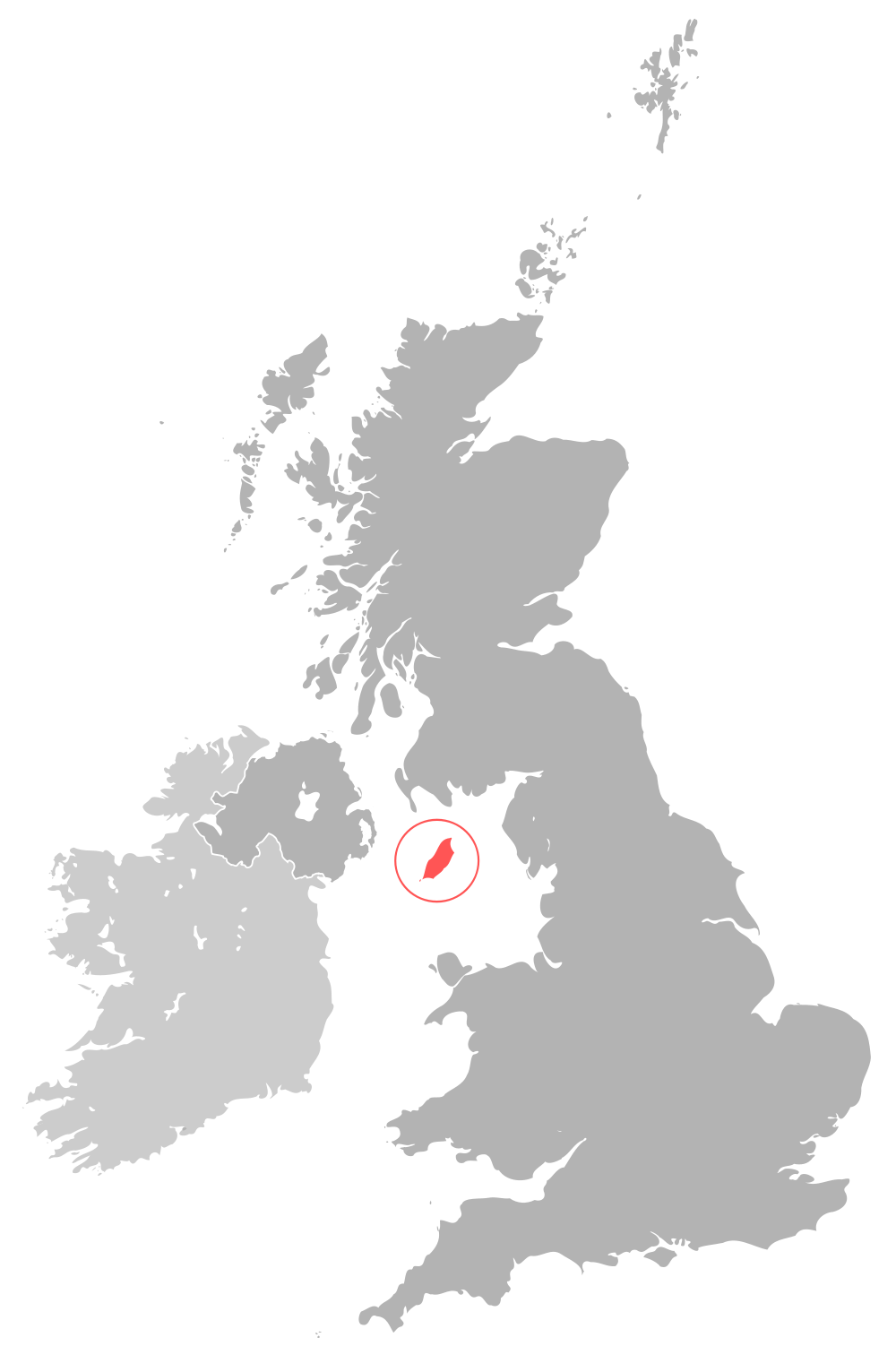
Right at the centre of Europe’s Atlantic archipelago, in the sea between Ireland and Britain and guarding the southern approaches to the Hebrides and west of Scotland, sits the Isle of Man – smallest of the surviving ‘Celtic’ nations. Although falling under successions of external rulers from Ireland, Scandinavia, Scotland and England since the middle ages, it has managed to maintain an independent cultural identity and language (Manx Gaelic, a version of Irish). Due to its insular nature, fertile geology, habitable geography, and because it has faced relatively little major warfare and social or political upheaval in its history, it has managed to maintain a good deal of its ancient traditions down to quite a recent period, traditions which elsewhere would otherwise have been lost.

The_Isle_of_Man_svg

When a man called George Waldron (a commissioner for the British government) was working there in the early 1700s, he wrote a treatise on the island’s history, geography and economy embellished with some interesting sketches of the beliefs, traditions and stories of some of the locals. His purpose was, no doubt, to portray islanders as credulous, superstitious and backward, but you can tell from some of the stories that Waldron’s own credulity was being cheekily tested. Nevertheless, the book he wrote: A Description of the Isle of Man (published posthumously in 1731 following his untimely death) stands as one of the late Early Modern period’s most valuable ethnographic tracts dealing with fairy belief in the Celtic/Atlantic world. Along with Martin Martin’s A Description of the Western Isles of Scotland (1703) and Robert Kirk’s Secret Commonwealth (1691) it was to inspire generations of future writers such as Sir Walter Scott, and fuel the romanticisation of what ‘progress’ was rapidly destroying. In fact it may have been indirecctly responsible for a great deal of the tourism the Isle of Man experienced during the 19th century!

Of the Manx belief in fairies Waldron had this to say:

Some hundred years, say they, before the coming of our Saviour, the Isle of Man was inhabited by a certain species called fairies, and that everything was carried on in a kind of supernatural manner; that a blue mist hanging continually over the land, prevented the ships that passed by from having any suspicion there was an island. This mist, contrary to nature, was preserved by keeping a perpetual fire, which happening once to be extinguished, the shore discover’d itself to some fishermen who were then in a boat on their vocation, and by them notice was given to the people of some country, (but what, they do not pretend to determine) who sent ships in order to make a further discovery: that on their landing they had a fierce encounter with the little people, and having got the better over them, possess’d themselves of Castle Russin (Ed – Castle Rushen, at Castletown in the south of the island), and by degrees, as they received reinforcements, of the whole Island. These new conquerors maintained their ground some time, but were at length beaten out by a race of giants, who were not extirpated, as I said before, till the reign of Prince Arthur, by Merlin, the famous British enchanter. They pretend also that this Island afterward became an asylum to all the distress’d princes and great men in Europe, and that those uncommon fortifications made about Peel Castle were added for their better security…

Waldron’s account that some Manx people in the 18th century apparently believed that their land was first inhabited by fairies and giants would have gained snorts of derision from the enlightened, rational coffee-sipping intellectuals of the day. He continues warming to his theme later in the text:

I know not, idolisers as they are of the clergy, whether they would not be even refractory to them, were they to preach against the existence of fairies, or even against their being commonly seen: for, tho’ the priesthood are a kind of gods among them, yet still tradition is a greater god than they; and as they confidently assert that the first inhabitants of their Island were fairies, so do they maintain that these little people have still their residence among them. They call them the good people, and say they live in wilds and forests, and on mountains, and shun great cities because of the wickedness acted therein; all the houses are blessed where they visit, for they fly vice. A person would be thought impudently profane who should suffer his family to go to bed without having first set a tub, or pail full of clean water, for these guests to bathe them selves in, which the natives aver they constantly do, as soon as ever the eyes of the family are closed, wherever they vouchsafe to come.

He paints a picture of a local belief in fairies not dissimilar to that of Robert Kirk, of which there is ample support in the Island’s folklore records, which show that the Manx had fairy-seers, believed that fairies prognosticated events, and that they interfered with the ‘substance’ or quintessence of humanity. He also demonstrates a belief in them as representing the souls of forebears who continue to live as spirits among the living, and are welcomed into their homes at night. Waldron paints a picture of fairies as moral agents who bestow a blessing upon correct deeds and living – a distinctly religious aspect to the belief, existing in parallel to Christianity.

Writing in 1845, following on from a renewed and somewhat more sympathetic romantic interest in fairies and the rapidly disappearing old world, Joseph Train published his Historical and Statistical Account of the Isle of Man in Two Volumes in which he noted the following custom:

” On New Year’s eve, in many of the upland cottages, it is yet customary for the housewife, after raking the fire for the night, and just before stepping into bed, to spread the ashes smooth over the floor with the tongs, in the hope of finding in it, next morning, the track of a foot ; should the toes of this ominous print point towards the door, then, it is believed, a member of the family will die in the course of that year ; but, should the heel of the fairy foot point in that direction, then, it is firmly believed, that the family will be augmented within the same period.” Volume 2, p. 115, (1845).

The implication here is that it was believed that fairies entering the house portended deaths and births, linking these spirits to the process of genesis and decay. In fact the hearth seems to have been the focus of the domestic fairies in the Isle of Man, as supported by numerous other Manx traditions: leaving bowls of water and food near the hearth for fairies, the traditional curse was a damnation of hearthside empty of ‘root, branch and seed’, ‘Saint’ Bridget’s bed being made here on the 1st of February, planting an Elder (‘Tramman’) tree at the hearth gable end of the house for the fairies to live in, rebuilding houses but maintaining the hearth etc etc. Waldron had commented that it was the custom of the people to never allow their hearth fire to be extinguished, citing the legend of the fairies’ perpetual fire going out, implying this was a superstition against calamity. The original Celtic New Year appears to have been Samhain or the night of October 31st (November 10th in the original Julian calendar) and it is probable that Train’s account refers to this, as throughout the Atlantic/Celtic world Samhain was a time to look for these prognostications. A similar belief in the ‘fairy footprint’ was recorded in Ireland during the same century by Lady Wilde, and in 1932, Manx folklorist William Walter Gill elaborated on Train’s observation of nearly 100 years before, saying that the Manx believed the fairy footprint to be like that of a bird – the crow (W.W. Gill – A Second Manx Scrapbook; Pub. Arrowsmith Bristol 1932).