Warband culture and the Celtic Iron Age

The dynamic stylistic and cultural impact of ‘celtic’ civilisation on Europe during the Iron Age was driven initially by trade among peoples with geocultural commonality as well as the emerging Greek and Phoenecian mercantile powers, and later by the highly mobile warfare practised by many of its peoples, which often led to permanent migration. A cultural shift at the advent of what became known as the La Tène period, from the 5thC BCE, saw a change in the habits of central Europe’s celtic peoples. It was marked by an increase of burials indicating a higher status of warrior elites and a change in attitudes towards warfare, and with this came a new excitingly fluid and dynamic style of decorative art that most of us today recognise as ‘typically celtic’. Use of iron swords, chainmail armour and better fighting horses all marked this shift from the former ‘Halstatt‘ styled cultures seen before the 5thC BCE. The La Tène period also marked that when Mediterranean people started to write things down about the Celts…

Although existing largely as loose tribal federations, from the 5thC these would occasionally organise en masse into highly organised war parties or armies, such as that led by Brennus of the Senones (Alpine Gaul) against Rome in the 4thC BCE. These would cause no end of trouble to the Roman Republic’s northern borders and interests.

The most notable of these massed military movements, however, was the invasions of a Gallic tribal confederacy through the Balkans in the 3rdC BCE, led by characters such as Bolgius, Brennus and Acichorius. It was directed at the unstable kingdom of Alexander’s recently dead successor Lysimachus, which included Macedonia, Thrace, Greece and Anatolia. The gains for those Gauls who invested their time and effort into this adventure were manifold – some returned home with plunder, some took land for themselves and settled in ethnic communities, some were paid off to desist from their attacks, and some found service as mercenaries in Macedonian empire’s internal disputes, of which there were many. Many, including Brennus, died: this was also acceptable outcome to Gauls, believers as they were in reincarnation, as having acquitted themselves in glorious battle, they could earn themselves better fortune in their next life.

The impact of such a well-organised campaign against an enemy with such an impressive empire would have sent cultural shockwaves through the Celtic world, and would have important implications. Rumours of vast wealth plundered from the 279BCE assault of Delphi in Greece became attached to the Tectosages tribe, based at what is now Toulouse. There was an explosion in the issue of coins throughout the Celtic world initially copying the style of those of Lysimachus, but which would eventually transform and incorporate indigenous designs with mysterious meanings, and a totemic power invoking military success. New tribes and confederations formed (eg – the Scordisci and the ‘Volcae’ – perhaps from Bolgius’ faction) and settled the Balkans, Thrace and Carpathia, and at least as far east as Anatolia (Galatians) as  well as returning to the more western Gallic heartlands.

How the waves of migration and invasion culminating in the invasion of Greece in 279 affected or interacted with Celtic religious ideology is hinted at in the coinage of the period which followed in its stead: This combined the image of the world’s most famous campaigning military leader with designs hinting at a complex view of spirituality, astronomy, the afterlife and reincarnation.

This organised mobile ‘warband culture’ of continental Celtic tribes was reflected to varying degrees among the Celtic peoples of the ‘Atlantic fringe’. Many of these were  coastal seafaring peoples and islanders perhaps not so much inclined towards such grand expeditions of conquest, and more likely engaged in commerce as a source of livelihood. The insular Celts were possibly something of an ‘old nobility’, slower to take up the manners and trappings of continental ‘La Tène’ culture. It is possible that they were religiously more conservative too with Britain and Ireland remaining to history as the last outposts of the Druid religion following the Romanisation of Celtic culture and religion from the 1stC BC…


The Icenii, ‘Andraste’ and ‘Andate’

2ndC CE Roman historian Cassius Dio famously mentions details of the ill-fated revolt of the Iceni and their allies against Nero’s legions in southern Britain during 60/61CE. His compendium ‘The Roman History’ may well have relied upon on first-hand accounts of the events of this episode, but Dio uses a certain creative licence regaling us with a rousing speech made by queen Boudica to her people before their battles. Indeed, it largely functions to portray Nero as a weak and effete figure of ridicule, but is of interest to religious historians, as he has the queen call upon a British goddess referred to as ‘Andraste’:

“…When she had finished speaking, she employed a species of divination, letting a hare escape from the fold of her dress; and since it ran on what they considered the auspicious side, the whole multitude shouted with pleasure, and Buduica, raising her hand toward heaven, said: “I thank thee, Andraste, and call upon thee…” (The Roman History, Boook 62 -trans. Bill Thayer)

Whoever Andraste was, she seems to have inspired the Britons with a confidence matched only by the fear which drove the Roman legions to eventually overcome them. Little else is known about Andraste save for this account. However, the reason for this might be because the ‘name’ given by Cassius Dio was a misunderstanding of ‘An Dras De’ – which is simply the Brythonic phrase meaning ‘The Tribal God’, ‘Dras’ being an old Welsh word meaning ‘kindred’. Consider the Irish god known as ‘An Dag De’ – the Dagda – a similar composite term is therefore possible.

Cassius Dio goes on to describe the rampage of revenge and humiliation wreaked upon the hapless Romans at Camulodunum (Colchester) and Londinium (London):

“… Having finished an appeal to her people of this general tenor, Buduica led her army against the Romans; for these chanced to be without a leader, inasmuch as Paulinus, their commander, had gone on an expedition to Mona, an island near Britain. This enabled her to sack and plunder two Roman cities, and, as I have said, to wreak indescribable slaughter. Those who were taken captive by the Britons were subjected to every known form of outrage. The worst and most bestial atrocity committed by their captors was the following. They hung up naked the noblest and most distinguished women and then cut off their breasts and sewed them to their mouths, in order to make the victims appear to be eating them; afterwards they impaled the women on sharp skewers run lengthwise through the entire body. All this they did to the accompaniment of sacrifices, banquets, and wanton behaviour, not only in all their other sacred places, but particularly in the grove of Andate. This was their name for Victory, and they regarded her with most exceptional reverence… “

It is possible that ‘Andraste’ and ‘Andate’ were simply kennings for the same female divinity, but another possibility arises: that Cassius Dio got it wrong, and that ‘Andate’ was actually the male deity known in Ireland as ‘An Dagdae’ or ‘Eochaidh Ollathair. This is reasonably within the bounds of Celtic language pronunciation where consonantal sounds within words are readily dropped. Here is my reasoning:

An Dagda and the Morrigan in Cath Magh Turedh:

A coin of the Gaulish Redones (Brittany) shows the martial female mounted upon a horse: The Morrigan and Dagda?

A coin of the Gaulish Redones (Brittany) shows the martial female mounted upon a horse: The Morrigan and Dagda?

The Irish mythological cycle tale known as Cath Magh Turedh (possibly a composite of different tellings of an original) contains a number of mysterious, poorly elucidated ‘scenes’ featuring the Dagda.

Firstly, it mentions his ‘cauldron of plenty’. Next it mentions his role doing heavy work as a builder of the fortress of Bres of the Fomorians. He seems unusually trusting and a bit simple, and gives some of his vast meal portions away to a man who demands the best part each sitting, causing him to weaken. He forms a triplicity with Lugh and Ogma, and they go to ‘three gods of Danu’ (one of  whom is stated to be the Morrigan) who give weapons to Lugh. Dagda then has sexual intercourse with the Morrigan at a ford of the River Unshin in Connacht, an act of heiros-gamos ensuring the victory of the Tuatha De Dannan in the coming battle with the Fomorians. In another curious scene, with distinct parallels with to the Siege of Troy described in Homer’s Iliad, the Dagda enters the camp of the Fomorians to spy, seemingly in the guise of a horse. The Fomorians force him to eat a prodigious meal (again demonstrating his great equine appetite) so as to dull his wit.

The story continues (CELT version):

“…Then he went away from them to Tráigh Eabha. It was not easy for the warrior to move along on account of the size of his belly. His appearance was unsightly: he had a cape to the hollow of his elbows, and a grey-brown tunic around him as far as the swelling of his rump. He trailed behind him a wheeled fork which was the work of eight men to move, and its track was enough for the boundary ditch of a province. It is called ‘The Track of the Dagda’s Club’ for that reason. His long penis was uncovered. He had on two shoes of horse-hide with the hair outside. As he went along he saw a girl in front of him, a good-looking young woman with an excellent figure, her hair in beautiful tresses. The Dagda desired her, but he was impotent on account of his belly. The girl began to mock him, then she began wrestling with him. She hurled him so that he sank to the hollow of his rump in the ground.

He looked at her angrily and asked, ‘What business did you have, girl, heaving me out of my right way?’ ‘This business: to get you to carry me on your back to my father’s house.’ ‘Who is your father?’ he asked. ‘I am the daughter of Indech, son of Dé Domnann,’ she said. She fell upon him again and beat him hard, so that the furrow around him filled with the excrement from his belly; and she satirized him three times so that he would carry her upon his back. He said that it was a ges for him to carry anyone who would not call him by his name. ‘”What is your name?’ she asked. ‘Fer Benn,’ he said. ‘That name is too much!’ she said. ‘Get up, carry me on your back, Fer Benn.’ ‘That is indeed not my name,’ he said. ‘What is?’ she asked. ‘Fer Benn Brúach,’ he answered. ‘Get up, carry me on your back, Fer Benn Brúach,’ she said. ‘That is not my name,’ he said. ‘What is?’ she asked. Then he told her the whole thing. She replied immediately and said, ‘Get up, carry me on your back, Fer Benn Brúach Brogaill Broumide Cerbad Caic Rolaig Builc Labair Cerrce Di Brig Oldathair Boith Athgen mBethai Brightere Tri Carboid Roth Rimaire Riog Scotbe Obthe Olaithbe
[gap: meaning of text unclear]
Get up, carry me away from here!’ ‘Do not mock me any more, girl,’ he said. ‘It will certainly be hard,’ she said. Then he moved out of the hole, after letting go the contents of his belly, and the girl had waited for that for a long time. He got up then, and took the girl on his back; and he put three stones in his belt. Each stone fell from it in turn—and it has been said that they were his testicles which fell from it. The girl jumped on him and struck him across the rump, and her curly pubic hair was revealed. Then the Dagda gained a mistress, and they made love. The mark remains at Beltraw Strand where they came together.

Then the girl said to him, ‘You will not go to the battle by any means.’ ‘Certainly I will go,’ said the Dagda. ‘You will not go,’ said the woman, ‘because I will be a stone at the mouth of every ford you will cross.’ ‘That will be true,’ said the Dagda, ‘but you will not keep me from it. I will tread heavily on every stone, and the trace of my heel will remain on every stone forever.’ ‘That will be true, but they will be turned over so that you may not see them. You will not go past me until I summon the sons of Tethra from the síd-mounds, because I will be a giant oak in every ford and in every pass you will cross.’ ‘I will indeed go past,’ said the Dagda, ‘and the mark of my axe will remain in every oak forever.’ …”

The scene is certainly saucy, but also weird – almost a retelling of the Dagda’s encounter with the Morrigan in an earlier passage, albeit with more salacious detail. The picture painted of the Dagda is a half-man, half-stallion: His horse-hide brogues, his great round belly, his large penis, his propensity to create lots of dung: all are heavily suggestive of this, as is one of his other names, Eochu Ollathair. The heiros-gamos with a feisty fighty female (similar to Fand in Serglige Con Chullain) is again used to precede a victory in battle. What is more, the marks of his hoof/foot upon rocks appears to be a reference to cup-marks, bullauns and petrosomatoglyphs of feet, common to the archaeology of the Atlantic world.

The suggestion that can be drawn from this is that victory was ensured by the sexual coupling of the Otherworld masculine god and the worldy goddess. Dagda represents, as the horse, the fertility, power and energy on offer from the Otherworld, albeit a force that was a bit simple. The Morrigan was the warrior aspect of the feminine triplicity – their combination would allow peace to be determined through warfare. Lugh (the battlefield hero of the Cath Maigh Tured) was the active warrior aspect of the masculine triplicity, and Ogmios was the wise thinking part.

Gold stater of the Gaulish Parisii c.1stC BCE. The horse has a human face, and the charioteer appears female. The image is warlike.

Gold stater of the Gaulish Parisii c.1stC BCE. The horse has a human face, and the charioteer appears female. The image is warlike.

The horse seems so prevalent on Europe’s late Iron Age celtic coinage that it must have had special importance, beyond just being a copy of the coins of those Macedonian-Thracian leaders of the Hellenic world – the horse-loving ‘Phillip’ and, of course, the solar warrior-king, Alexander whose legend was celebrated among the proud warriors of the Celtic world. By invoking the Morrigan aspect of the triple-goddess (the tribal ancestor or sovereignty queen, who Cassius Dio called ‘Andraste’), Boudica set her on a course for her liason with the peace-lord of the Otherworld, a drama possibly acted out in the groves of ‘Andate’ by the seemingly victorious Britons, shortly before General Paulinus reappears bearing the ‘Gorgon’s Head’, taken on Anglesey…


L’Ankou – Gaelic parallels with the Breton death-spirit

‘Ankou’ is the personification of death’s assistant (a psychopomp) from Breton folklore, and a figure which reached greater prominence here than in any other of the modern ‘Celtic’ nations. It was noted by folklorist Walter Evans-Wentz in his 1911 book The Fairy Faith in Celtic Countries, that L’Ankou and The Dead appeared to provide the equivalent role to the Aes Sidhe of Gaelic folklore – a parallel which provides us with some interesting questions as to the nature of Celtic spirit-beliefs:

“… Without setting down here in detail numerous other death-legends which we have collected, we may now note how much the same are the powers and nature of the dead and spirits in Brittany, and the power and nature of the fairy races in Celtic Britain and Ireland. Thus the Breton dead strike down the living just as fairies are said to do; the Ankou who is a king of the dead, and his subjects, like a fairy king and fairies, have their own particular paths or roads over which they travel in great sacred processions; and exactly as fairies, the hosts of the dead are in possession of the earth on November Eve, and the living are expected to prepare a feast and entertainment for them of curded-milk, hot pancakes, and cider, served on the family table covered with a fresh white table-cloth, and to supply music. The Breton dead come to enjoy this hospitality of their friends; and as they take their places at the table the stools are heard to move, and sometimes the plates; and the musicians who help to entertain them think that at times they feel the cold breath of the invisible visitors…”

(The Fairy Faith in Celtic Countries by Walter Evans-Wentz; Pub. Henry Frowde, Oxford University Press, 1911; p.218)

He goes on to note ‘Every parish in the uncorrupted parts of Brittany has its own Ankou, who is the last man to die in the parish during the year‘. Wentz’s source, the respected Breton folklorist Anatole Le Braz, wrote a book about Ankou, called La Légende de la Mort () and had this to say about it:

The Ankou is the henchman of Death (oberour ar maro) and he is also known as the grave yard watcher, they said that he protects the graveyard and the souls around it for some unknown reason and he collects the lost souls on his land. The last dead of the year, in each parish, becomes the Ankou of his parish for all of the following year. When there has been, in a year, more deaths than usual, one says about the Ankou: War ma fé, heman zo eun Anko drouk. (“on my faith, this one is a nasty Ankou”).

Wentz drew parallels with the Gaelic beliefs in people ‘taken’ to fairyland, but unfortunately did not establish much else by the way of concordance with this supposedly ‘Brythonic’, and in terms of surviving folklore, specifically Breton belief. It is therefore my aim here to demonstrate that Ankou did indeed have its Gaelic equivalents, whose memory became lost due to the influence of christianity and the 19thC romantic movement:

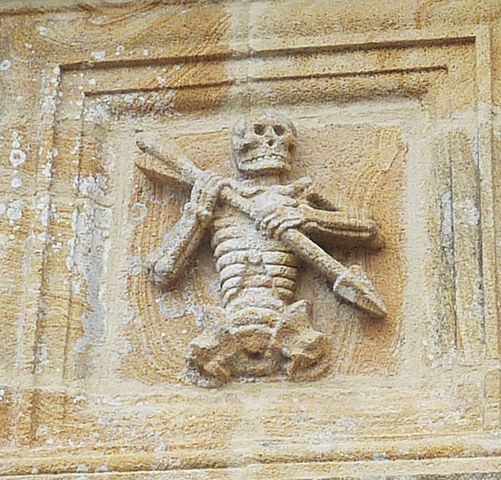
Ankou, depicted on a carving at the ossuary of the chapel of St Joseph at Ploudiry, Brittany.

Ankou, depicted on a carving at the ossuary of the chapel of St Joseph at Ploudiry, Brittany. Note the ‘elf-arrow’ it appears to wield!

Ankou in the Isle of Man and Scotland:

The Manx – a nation whose linguistic and cultural roots lie firmly in the ‘Gaelic’ world – maintained an independent tradition which corresponds closely with that of L’Ankou. However, in examining this it is first necessary to go ‘back’ to Brittany and examine the word ‘Ankou’ itself:

The standard English definition or translation usually given for the Breton word ‘Ankou’ is ‘the agony’, originally proposed in a ‘pirated’ (uncredited) 1860 English translation (Breton Legends – Pub. London 1860, Burns and Lambert) of the folklore collected and published in French by Théodore Claude Henri, vicomte Hersart de la Villemarqué – a noted Breton dictionarian and philologist. ‘An-‘ is the definite article, and ‘-Kou’ is usually (in English translations) supposed to mean ‘agony’. However, this etymology is speculative at best, as the ‘kou’ suffix as a sound can have a number of meanings within the scope of the historical linguistics of the celtic languages. Indeed, the 1821 Breton-French dictionary of Jean-François-Marie-Maurice-Agatha Le Gonidec tellingly uses the word Kouer to mean ‘peasant’, of which more presently.

Fockleyr Manninagh as Baarlagh – the 1863 dictionary (based partly upon an earlier manuscript of John Kelly from the late 18thC) published by the Manx Society contains the following interesting entry:

Keimagh s. pl. -ee, A spirit which is supposed to haunt and guard the churchyard stiles.

Also, the word Cughtagh:

Cughtagh s. pl. cughteeA fairy, a sprite, a spirit of the houghs* …

*AR: Hough in this context refers to a rough, rocky place or a cliff 

Both entries are followed by the interesting usage example ‘Ny keimee as ny cughtee’ of which the authors say no more, but which appears to be a reference to a popular Manx charm for stopping blood, a version of which can be found in William Harrison’s ‘Mona Miscellany’ (Manx Society Volume 16, Pub. Isle of Man, 1869).

The idea of the last deceased watching over the graveyard appears to have been common to the Highlands and Islands of Scotland – Donald MacPherson called it the Faire Chloidh in his book ‘Melodies from the Gaelic, and Original Poems; with Notes on the superstitions of the Highlanders &c’ (Pub. Thomas and George Underwood, London 1824), p.202:

FAIRE CHLOIDH, (THE GRAVE WATCH.)

It was the duty of the spirit of the last person interred, to stand sentry at the grave-yard gate, from sun-set until the crowing of the cock, every night, until regularly relieved. This, sometimes, in thinly inhabited parts of the country, happened to be a tedious and severe duty ; and the duration of the Faire Chloidh gave the deceased’s surviving friends, sometimes, much uneasiness.

The Manx ‘Keimagh’ and ‘Cughtagh’ spirits share a link of sorts to the grave, vagrancy, caves or shelters: This can be seen from the fact that the Manx wordcughhas connotations of dirt, filth and dung, and a link between this and the cave, mound or hole-dwelling spirit is also found in the word Cughlin, meaning a vagrant’s doss-hole or a mean filthy shelter, another Manx word for which is Kemmyrk. Recall that the Breton word Kouer, means ‘peasant’ and consider the restless vagrant properties ascribed to the spirits of the dead and a few ideas might start to form about the origins and meaning behind these archaic terms and the ‘Ankou’ itself.

The Manx word Keim or Keym (from which Keimagh is derived) is the same as the Irish céim, meaning ‘step’ in the same sense as it occurs in English – as a verb and a noun. The stile at old churchyard gates was often a slab of stone which those entering the church precinct would be required step over (and scrape your shoes on) in order to enter hallowed ground. It is common for the ‘m’ sound in Celtic languages to transform into a ‘w’ in pronunciation meaning that a ‘keimagh’ might easily become a ‘keiwagh’. By the same laws of linguistics, -gh-, -ch-, and -th- will lose any pretensions to consonantal pronunciation when occuring inside words.

This puts us in the interesting position of being forced to examine another similarly named spirit from the Gaelic world – Scotland’s An Ciuthach (pronounced ‘Kewach’), a being mentioned as a hairy spirit haunting caves in Volume 3 of John F. Campbell’s ‘Popular Tales of the West Highlands’ (p.55), in a folk-tale based on the story of the Pursuit of Diarmuid and Graine by Fionn Mac Cumhaill.

The Gaelic word ‘cuthach’, means ‘mad’ or ‘raging’ and fits with the portrayal of a marginal ‘wild-man’ who lives underground, and also with the Manx words ‘cugh’ and ‘cughlin’, associated with the filthy ‘Merlinesque’ state of the wild divine, a familiar sight in medieval Ireland, Britain and France where holy men often lived in a state of wild squalor. It should be obvious by now that the Breton word ‘Ankou’ had distinct similarities with the Gaelic ‘An Ciuth’ or ‘An Cuth’, ‘kou’ meaning a state of frantic restlessness, rather than ‘agony’. This fits the etymology of the Breton word for peasant: Kouer – a class of person living in mean conditions and continually working to survive.

The Irish Dullahán and the Gruagachs:

The ‘Dullahán’is the Irish legendary personification of death, usually represented as a skeletal headless horseman. The name possibly signifies ‘black one’ or ‘gloomy one’ (Dubhlachán?), probably on account of the lividity of the dead, and his appearance in popular tradition was to foretoken death. His earliest literary mention is in the writings of Charles Vallancey (‘Prospectus of a Dictionary of the language of the Aire Coti, or Ancient Irish’, Pub. Graisberry & Campbell, Dublin, 1802), who recounts that the Irish peasantry would be in fear of hearing the Dullahan or ‘Wullahan’ dragging his chains through the streets at night. Like the Ankou, it was often associated with a horse or coach and horses.


The Ankou is therefore quite possibly the ‘Wild Hunter’ who leads the Sluagh Sidhe! Was Fionn Mac Cumhaill, really originally Finn-Mac-‘Kou’-al? 

The ‘wild man’ archetype has much to say about where we developed from, and about the processes by which nature is regenerated from its own ‘putrefaction’.


There are important relationships in empirical human culture between dirt, ordure and decayed matter and the regeneration of new life. To live ‘wild’ is to live in comfort with this kind of state. Such symbolism no doubt informs the apparent associations between death, the spirit world and reincarnation that underpin the ancient European beliefs. The idea anciently used to express this was termed putrefaction, and important doctrine of the natural philosophy of Europeans until the scientific age introduced new paradigms.

The British and Irish age of Romanticism started in earnest during the ‘Enlightenment’ era of the late 17th and 18thC with the researches and writings of Roderick O’Flaherty, John Toland, Edward Llhuyd, and James MacPherson, and it continued with the emergence of renewed interest in the pagan past seen in the writings of Edward Williams (Iolo Morganwg), and in the fading customs, beliefs and lifestyles of the defeated Highland peoples documented for popular consumption by authors such as Walter Scott. Romanticism provided a vision of indigenous pagan beliefs still remaining among the peasantry, albeit in a form designed for the tastes and prejudices of educated and wealthy elites. Wavering paradoxically between apparent veneration of quaint rustic traditions and a visceral disgust of its ‘gloomy’ and ‘unenlightened’ superstitions, Romanticism would unfortunately often prove the undoing of much of what it fawned over: by swelling interest in ‘old-fashioned’ customs it ultimately encouraged the aspirational rural poor to resent becoming ‘quaint’ objects of fascination for the middle classes seeking relief from industrialised realities. By the late 1800s many Gaelic speakers had consequently rejected their traditional culture and sought to emulate modernity.

A romanticised view of what the rural poor ought to believe therefore eventually trickled down to influence their ideas: The traditions characterised as ‘gloomy’, ‘dismal’ and ‘unseemly’ – usually dealing with aspects of death, sex and disease – would become increasingly displaced. 

Putrefaction as an essential cultural idea behind abundance and regeneration among rural peoples was probably finally defeated when people stopped putting shit on their crops and used chemicals in its place… This was the era of mass-slaughter and industrial warfare, which reached its first full and horrific manifestation in the First World War.

A religion flowing in the blood and the landscape

Readers of my blog may have realised that I make repeated references to how ancient paganism evolved in situ in Europe and eventually deteriorated under the influence of a ‘globalist’ model of secular power promoted by the Greek and Roman Empires. It was supplanted by a ‘portable’ religion with no bearing whatsoever on the land and ancestry of its indigenous European converts, progressively divorcing them from the traditional and deep ties to the environment from which their bloodlines arose, and which informed all of their skill and wisdom.

In Ireland (unconquered by Roman power) the advent of Christianity was surprisingly enthusiastic, yet paradoxically (when compared to other Romanised regions) it made a particular effort to keep memories in writing and tradition of the important pre-Christian beliefs, so important were these to the identity of the people in their place. In fact, it gave them such confidence that they were able to play a leading role in christianising the rest of northern Europe, still reeling from the confusion of Greco-Roman religious culture!

The Atlantic pagan religion was a poetic and artistic narrative, informed by the seasons and their features, the stars and their mathematically exact processions across the skies in relation to these, and the wisdom of survival in the geo-cultural climes of Atlantic Europe. Its moral philosophy promoted modesty and environmental awareness, based as it was on the principles of reincarnation and a powerful Otherworld that reacted against our actions in this life. This was passed in oral culture from generation to generation, perfected and finessed with each retelling, until it represented a pure spiritual narrative of life in this part of the world! The portable middle-eastern religions had nothing of this, and sought to destroy it, replacing it with an ethos promoting the worship of temporal tribal power and worldly materialism over the natural laws of the land.


‘Fairy Paths’ in the Gaelic world

The belief in Ireland (and elsewhere) that certain fairies were restless and compelled to wander from place to place caused a superstitious belief in ‘fairy paths’. These typically connected the various places where fairies were believed to haunt – their hills and raths, and ‘dancing grounds’ or meadows. People tended to avoid building on these perceived routes, as illustrated by the following folktale from The Fireside Stories of Ireland by Patrick Kennedy (Pub. Dublin 1870, McGlashan & Gill) pp.142-143:

THE FAIRIES’ PASS

It is known that the hill folk in their nightly excursions, and in the visits of one tribe to another, go in a straight line, gliding as it were within a short distance of the ground, and if they meet any strange obstacles in their track they bend their course above them, or at one side, but always with much displeasure. A farmer named Finglas, a stranger to the old ways of the country, took this farm and was not at all satisfied with the accommodation offered by the old farm house and yard.There was neither cow-house nor stable, except an excuse for such conveniences at the end of the yard. He would have new buildings made at the side, and dug out the foundation at once, but was warned that the Fairies Pass lay directly across the bawn, and that it would excite their sovereign displeasure to find stable or barn or cow-house in their way. Unhappily, Finglas, though married to a Roman Catholic wife, was himself a benighted Presbyterian, and as such a contemner of all reverence due to the Good People. But see, the result of pretending to be wiser than your neighbours: Scarcely were the buildings thatched and the cows and horses installed in their niches when the wisdom of the old people became evident. One animal after another without apparent cause began to refuse its food, languished, and died. In vain was recourse made to the most skilful cattle doctors. Their medicines proved naught, and fairy men or women would have nothing to do with the devoted beasts – they were on the Fairies Path. Not until three fourths of his cattle were slain by the elf bolts was Finglas overruled, and at last persuaded to construct new buildings at the end of the bawn.

The ‘lesson’ illustrated by such a typical tale of ‘fairy paths’ is not too dissimilar to those associated with fairy hills and raths/forts, and likewise of the ‘fairy grounds’ or lawns where they were supposed to hold their revels: Humans had better be careful, lest the ever-hungry Otherworld exert its frightening ‘abstracting’ influence over the offender. The great survey of Irish oral folklore organised by the Coimisiún Béaloideasa Éireann during the early-mid 20thC was to uncover many similar tales.

However, the paths taken by the People of Peace were not always limited to these actual or imagined routes connecting landscape features. In many ‘celtic’ regions, there is a belief that the invisible ones cannot cross running water directly, and this has apparently led to spirits being associated with certain ‘fairy bridges’ such as those found in the Isle of Man. The famous Norwegian folktale of the three ‘Billy Goats Gruff’ and the troll who lived under the bridge may have some bearing on this local tradition.

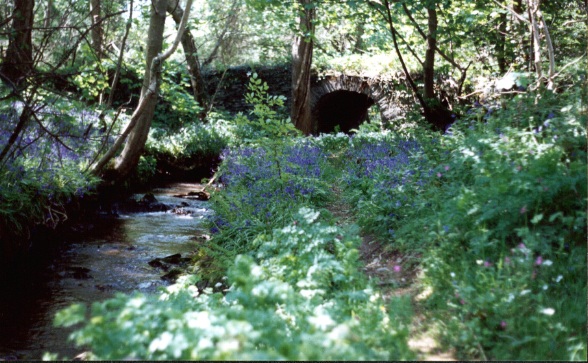
The Kewaigue (Oakhill) 'Fairy Bridge' in the Isle of Man. It was built off the main track by about 30 yards, and sits mysteriously among the trees...

The Kewaigue (Oakhill) ‘Fairy Bridge’ in the Isle of Man. It was built off the main track by about 30 yards, and sits mysteriously among the trees…

By the same logic, boundary walls (particularly those with ‘hallowed’ ground, such as burial grounds and churchyards) were considered another place where spirits were more likely to be concentrated and encountered. Likewise, certain boundary lines and walls between property gained similar attributions, sometimes depending upon the land use and ownership.

‘Fairy Holes’ and boundaries in the Isle of Man:

A ‘fairy hole’ was a hole in an earth or stone hedge where three property boundaries coalesced. Manx people who used to have a strong belief in fairies, would toss a stone (usually a quartz pebble) into one of these after spitting upon it, in the hope that the spirit world would take their illness or bad luck from them. The belief appears to have been based upon an idea that fairies travelled along walls and boundaries between land divisions.

3rd Report of the Manx Archaeological Survey – Andreas. Manx Natural History and Antiquarian Society, 1911:” … At a corner formed by the boundary fences of the three Quarterlands of Keeill Tushtag, Braust and Ballaquane, was a ” Fairy-hole, ” or hollow in the top of the earthen embankment, about 12 in. diam. We were told that “any one wanting a cure would put in a stone with a spit,” the object no doubt being to identify it more particularly with his own person, so that his own malady or affliction should pass into it. That this was so, and that the malady was capable of being conveyed to another, is made clear by the fact that our informant’s father had once taken one of the stones out of the Fairy Hole and become very ill ; he did not recover till he had returned it… “

This belief that fairies travelled along walls and other boundaries (such as streams and rivers) probably arose from the fact that in former times (possibly since the establishment of christianity), such boundaries were regularly walked and the property they enclosed blessed by the clergy in a ceremony known as rogation, designed to repel evil influences (demons etc) and promote fertility. Such boundaries were liminal places, existing ‘between’ such nebulous human ideas of ownership and supposed sanctity, in which spiritual entities might find a place to manifest. This idea appears slightly different to the Irish one previously mentioned in which fairies troop between their allotted hills and forts. However, this does not mean that the Manx people had, on the whole, radically different ideas about fairies to Irish or Scots people: Fairies were believed to have habitations and places of retreat between which they travelled. They were believed more mobile and active at certain times of day (dusk and nightime), and of the year (Samhain, Beltane). Encounters with them at these places risked the health and sanity of humans and their property, and ‘apotropaic’ measures would be taken to ameliorate any potential harm or fear.

The difference in what was considered a ‘fairy path’ was influenced as much by the customs and politics of land tenure and boundary definitions as by medieval religious customs and the arrangements of ancient manmade structures. Ancient trackways could become ‘fairy paths’, and in Ireland’s flat boglands, these would inevitably be constructed in straight lines between prominent areas of high ground, which unsurprisingly were associated with mysterious and ancient human structures. Tribal boundaries within the Gaelic world at the advent of Chrisitianity were based around the needs for transhumance pastoralism with central defensive positions coupled to more elevated retreats. In the Isle of Man, which (like parts of Ireland, the Hebrides and West Highlands of Scotland) experienced Norse settlement in the middle ages, land was traditionally divided into small estates based upon an allodial system of freeholds. These were increasingly incorporated into more extensive ‘feudal’ estates following the Norman conquests and expansion of continental monasticism. The impositions of English and British expansionism from the Early Modern period onwards further upset these traditional land boundaries and usages. The combination of these different historical and cultural boundary changes all had a deep influence upon the fairy beliefs associated with liminal and marginal places…


Beltane – Nature and the Secret Blacksmith

The implicit spiritual idea of blacksmiths in the pagan world was an expression of the reforging of nature each year as part of the annual cycle. In the temperate regions of Atlantic Europe this was so explicit that it became a core part of the religion and was celebrated through a cycle of annual festivals personifying this process. It was also an important part of the mythos of southern Europe and was also a key part of the mysteries of Eleusis, Orphism and the Dionysiac rites of ancient Greco-Roman religion. As with the southern forms of paganism, the northern forms portrayed the year as the life-cycle of a woman – the producer/guardian of developing life and human continuity. As each year progressed, so she aged – only to born again after each final ‘death’!

The Gaelic words ‘Caillin’ (Young Woman) and the name ‘Cuillin’ (a legendary ‘blacksmith’) have such an interesting concordance in Gaelic and Norse mythology that it is time for European pagans to start examining this in greater detail…

Who was she? I will leave this answer to a medieval Irish sage named Cormac:

BRIGIT i.e. a poetess, daughter of the Dagda. This is Brigit, the female sage, or woman of wisdom. i.e. Brigit the goddess whom poets adored because very great and very famous was her protecting care. It is therefore they call her goddess of poets, by this name. Whose sisters were Brigit the female physician, woman of leechcraft. Brigit the female smith, woman of smithwork, from whose names with all Irishmen, a goddess was called Brigit.

(p.23 of 1868 Whitley Stokes edition of John O’Donovan’s translation) 


Fairy Doctors, Sluagh Sidhe and Fianna

In the 5thC a crack commando unit was sent to purgatory by St Patrick for a crime they didn’t commit. These men promptly escaped from a maximum security stockade into the Gaeltacht underground. Today, still wanted by the church, they survive as soldiers of fortune. If you have a problem – if no one else can help – and if you can find them – maybe you can hire: The F-Team

The idea of a group of heroes who battle the monstrous, the fateful and the chaotic at the boundaries of safe everyday existence is a pervasive feature of European mythology, extending back for as long as stories have been recorded. In the Gaelic language zones, perhaps the most important representatives of this legendary theme are Fionn mac Cumhaill and his Fianna.Through their battles (and romantic encounters) with the magical denizens of legend, and their willingness to lay down their lives and suffer to do this, they become heroes who benefit the people, and their stories are marked by an enduring fondness.

What struck me as interesting about the aforementioned story of Aleisoun Pearsoun (put to death for witchcraft in Fife in 1588) was that her ‘story’ of how she acquired her powers seems to mirror and include aspects of that of the legendary Fianna:

1. She – like Fionn – joins a fairy band who take her on a wild adventure.

2. She ‘marries’ (has a sexual initiation) with a fairy she meets in the wilds. Fionn’s paramour was a woman in the form of a deer who he catches when hunting. Their magical son (poetry) is Oisin (‘Little Deer’).

3. She is tested with great adversity by the Otherworld denizens, who make her ill, but is given magical weapons with which to combat them.

4. She overcomes and returns with knowledge of its secrets, and becomes a warrior against the perils of the Otherworld (disease).

In fact, hers is not a dissimilar story to that of traditional Gaelic folk-healer characters such as Biddy Early (Ireland 19thC) and elsewhere besides. It is a feature pertinent to stories of ‘shamans’ and ‘medicine men’ etc from around the pre-modernised world.

The Fianna and the Sluagh Sidhe:

The fact that the ‘wild band’ or ‘fairy cavalcade’ in Gaelic folk-belief would have had something to do with Fionn and the Fianna often seems implicit, but it is quite rare to see this connection made explicitly in pre-20thC folklore accounts. Aleisoun Pearsoun’s fairy-band were apparently capable of both mirth and malice, which is a possibly a fair description of the legendary antics of the warlike Fianna. Nonetheless, apart from her kindred spirits who protect her, the cavalcade seem mostly harmful, and it is in understanding how to deal with this harm that she understands how to cure diseases. For this reason, we must turn our attention to the chaotic harmful fairy cavalcade, referred to in folklore as the Sluagh Sidhe or Sluagh Sith/Slieu Shee.

‘Sluagh Sidhe’ translates literally as ‘Fairy Host’ or ‘Fairy Army’. Robert Kirk (c.1690) provided one of the earliest accounts of the belief in these fairy hosts:

“… Moreover, this Life of ours being called a Warfair, and God’s saying that at last there will be no Peace to the Wicked, our bussie and silent Companions also being called Siths, or People at Rest and Quiet, in respect of us; and withall many Ghosts appearing to Men that want this Second Sight, in the very Shapes, and speaking the same Language, they did when incorporate and alive with us; a Matter that is of ane old imprescriptible Tradition, (our Highlanders making still a Distinction betwixt Sluagh Saoghalta and Sluagh Sith, averring that the Souls goe to the Sith when dislodged;)… “

As can be seen, Kirk gave two forms supernatural ‘Sluagh’, An Sluagh Saoghalta meaning, literally, ‘The Temporal/Earthly Host’. Kirk himself offers no translation to explain what he calls ‘Sluagh Saoghalta’ (‘Slooa Sheelta’) and uses the term only once. The implication from his fairy narrative is that one host is ‘spiritual’ and the other ‘of the mundane world’, probably meaning those ‘left behind’ due to sinfulness during their lives and more prone to the brutish acts that characterised a difficult existence. So far as I have been able to find out, there are few other references to ‘Sluagh Saoghalta’ from recorded folklore, it being more of a term used in Gaelic christian literature, so let us focus on the Sluagh Sidhe/Sith, a term which probably encompasses both ideas:

Source: Popular tales of the West Highlands, orally collected, Vol. 3 – John Francis Campbell, Pub: Edmonston and Douglas, 1862; pp.340-341

“….A doctor told this anecdote—

“Do you see that kind of shoulder on the hill? Well, a man told me that he was walking along there with another who used to “go with the fairies,” and he said to him—

“‘ I know that they are coming for me this night. If they come, I must go with them; and I shall see them come, and the first that come will make a bow to me, and pass on; and so I shall know that they are going to take me with them.’

“‘Well,’ said the man, ‘we had not gone far when the man called out, ‘Tha iad so air tighin.’ These are come. I see a number of ‘ sluagh’ the people; and now they are making bows to me. And now they are gone.’ And then he was quiet for a while. Then he began again; and at last he began to cry out to hold him, or that he would be off.

“Well,” said the doctor, “the man was a bold fellow, and he held on by the other, and he began to run, and leap, and at last (as the man told me) he was fairly lifted up by the ‘sluagh,’ and taken away from him, and he found him about a couple of miles further on, laid on the ground. He told him that they had carried him through the air, and dropped him there. And,” said the doctor, “that is a story that was told me as a fact, a very short time ago, by the man whom I was attending.”

Not far off I was told this in a house full of people, all of whom knew the story, and seemed to believe it implicitly.”

This account was corroborated by Alexander Carmichael (Carmina Gaedelica Volume 2, pp.3301-331) – as usual, my emphases:

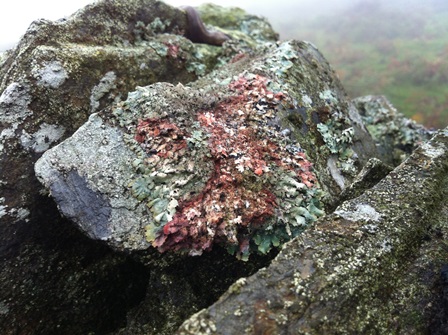
Sluagh – ‘Hosts’, the spirit world – the ‘hosts’ are the spirits of mortals who have died. The people have many curious stories on this subject. According to one informant, the spirits fly about “n’an sgrioslaich mhor, a sios agusa suas air uachdar an domhain mar na truidean’ – ‘In great clouds, up and down the face of the world like the starlings, and come back to the scenes of their earthly transgressions’. No soul of them is without the clouds of earth, dimming the brightness of the works of God, nor can any make heaven until satisfaction is made for the sins on earth. In bad nights, the hosts shelter themselves, ‘ fo gath chuiseaga bheaga ruadha agus bhua-ghallan bheaga bhuidhe’ ‘behind little russet docken stems and little yellow ragwort stalks’. They fight battles in the air as men do on the earth. They may be heard and seen on clear frosty nights, advancing and retreating, retreating and advancing, against one another. After a battle, as I was told in Barra, their crimson blood may be seen staining rocks and stones. ‘Fuil nan sluagh’, the blood of the hosts is the beautiful red ‘crotal’ of the rocks, melted by frost.

Crotal_Blood

These spirits used to kill cats and dogs, sheep and cattle, with their unerring venemous darts. They commanded men to follow them, and men obeyed, having no alternative.

It was these men of earth who slew and maimed at the bidding of their spirit-masters, who in return ill-treated them in a most pitiless manner. ‘Bhiodh iad ’gan loireadh agus ’gan loineadh agus ’gan luidreadh anus gach lod, lud agus lon’–They would be rolling and dragging and trouncing them in mud and mire and pools. ‘There is less faith now, and people see less, for seeing is of faith. God grant to thee and to me, my dear, the faith of the great Son of the lovely Mary.’ This is the substance of a graphic account of the ‘sluagh,’ given me in Uist by a bright old woman, endowed with many natural gifts and possessed of much old lore. There are men to whom the spirits are partial, and who have been carried off by them more than once. A man in Benbecula was taken up several times. His friends assured me that night became a terror to this man, and that ultimately he would on no account cross the threshold after dusk. He died, they said, from the extreme exhaustion consequent on these excursions. When the spirits flew past his house, the man would wince as if undergoing a great mental struggle, and fighting against forces unseen of those around him. A man in Lismore suffered under precisely similar conditions. More than once he disappeared mysteriously from the midst of his companions, and as mysteriously reappeared utterly exhausted and prostrate. He was under vows not to reveal what had occurred on these aerial travels.

I took down several stories of persons who went with the ‘hosts.’ Here is one of the stories of the ‘hosts’ summarised:–The beautiful daughter of a king of France was taken up by the ‘hosts,’ and carried about in the air, over lands and seas, continents and islands, till they came to the little island of Heistamal, behind Creagorry, in Benbecula, where they laid her down in such an injured state that she died from the hard treatment; not, however, till she had told about the lands to which she had been carried, and of the great hardships she had endured while travelling through space. The people of the island buried the princess where she was found.

The ‘sluagh’ are supposed to come from the west; and therefore, when a person is dying, the door and the windows on the west side of the house are secured to keep out the malicious spirits. In Ross-shire, the door and windows of a house in which a person is dying are opened, in order that the liberated soul may escape to heaven. In Killtarlity, when children are being brought into the world, locks of chests and of doors are opened, this being supposed, according to traditional belief, to facilitate childbirth.

These Hebridean and Highland accounts concur with records of similar beliefs from Ireland and the Isle of Man. The Sluagh Sidhe were dangerous, vengeful and often angry – they were represented (as Aleisoun Pearsoun was informed) by gusts of wind which marked their passing. These fairy ‘blasts’ might burn your skin with ignis sacer or boils or other visible cutaneous conditions. They strike you with fairy darts rendering you sick, or paralysed down one side (a ‘stroke’, the name still used in medicine today). They might also carry you away in a state of delirium to a place you had no intention of being – you would be ‘taken‘ by them, sometimes into their own fairy world!

The Sluagh Sidhe/Sith were – like the Fianna of ancient Ireland – bands of souls who roamed the world outside of the laws of settled everyday life. They were dangerous and liminal, yet potentially helpful and – in the fairy faith discussed by Kirk and other commentators – could redeem themselves, sometimes by sharing the knowledge of how to ‘heal’ the harm they cause, and from there could pass to a different place – in the west, beyond the sunset.

A Fairy Doctor was a specialist who understood these modes of harm caused by these Fairy Hosts. He or she also understood the ‘principle of inversion’ which governed how we and the otherworld interacted together, and was able to intervene or advise in redressing this balance.

St Latiaran of Cullen (Cuillinn)

Cullen or Cullin is a small village about four miles south of the Kerry border, near the town of Millstreet in the old Barony of Dulhallow, Co. Cork. It is home to an old ‘holy well’ dedicated to an Irish female saint known as ‘Latiaran’ or ‘Laitiaran’ (sometimes spelled ‘Lateerin’ in older english books), also known as ‘Laserian’. This last version has an interesting concordance with another supposed early male saint, associated with smithily-named St Gobban of Leighlin (Co. Carlow): This was his brother ‘St Molaise’ (St Molashog), also known as ‘St Laserian’. Whether hearking from Cullen or the bosom of Gobban, all of these saints have a curious set of accretions to do with blacksmiths. Latiaran herself is stranger still as she (and her sisters) do not seem to have an official place in Ireland’s various historic calendars of saints, and have all the trappings of Christianised aspects of a/the feminine triple-deity. 

The popular story about Laitiaran of Cullen, recorded by travellers there in the early 19thC was that the saint once lived in the village, from where she would regularly travel across the old bog-causeways to visit her two holy sisters. Such was her piety, she refused to keep her hearth-fire burning in continuity (a pagan custom/superstition), but would instead go daily to the blacksmith’s forge in the village to get a ‘seed’ for the fire, which she carried home in her apron or cloak, and which miraculously did not burn it. However, one day, she let her sanctity slip a little when the blacksmith complemented her on her shapely legs or feet, and a lapse into vanity caused her to take a peek and see if he was indeed right. The ember burned through her apron and singed her ankle, the result being that she cursed the smith, to the effect that ‘there never was a blacksmith in Cullin thereafter’.

This is yet another striking example of the christianisation of an important part of the original Gaelic pagan mythos. The name, Cuillin, is that of the legendary blacksmith from whom Cuchullain was named, and with whom I have suggested a strong etymological and legendary link to the Germanic character Weland/Wayland. The imposition of a female saint into such a tale involving this character is also seen at Slieve Gullion in Armagh. You might recall the the pagan Brighid was associated with ‘smithcraft’. But what more about ‘Lateerin’?

She is one of three regional sister-saints : Laiser, Inghean Buidhe and Latiaran, sometimes also given as Craobh/Crobh Dearg, Latiaran, and Gobnait. Assuming craobh dearg is the original meaning, ‘red branch’ – something the local legends of Cullen would disapprove of! Gobnait’s name is redolent of gobban (blacksmith), and her feast day in the Martyrology of Oengus is 11th February (Imbolc). This is really fascinating. The mystery deepens when we realise that Latiarin’s pattern day was/is held at the well on July 25th, or the nearest Sunday (or both!) corresponding to the pagan festival of Lughnasa, as detailed in Maire MacNeil‘s amazing book, ‘The Festival of Lughnasa’. The pattern of Ingean (or ‘Ineen’) Bhuidhe was (unsurprisingly) celebrated near the start of May at the local settlement at ‘Bull Ridge’ of Dromtariff, while that at the well of Cill Lasaer (who presumably is identical with Gobnait) was at the ‘start of spring’ (early February, Imbolc), and was held at Boherbue (Bóthar Buí = Yellow Road).  

The anglophone part of her name, ‘-teer-‘, appears to be from the Gaelic word saor/tsaoir, meaning ‘smith’ or ‘craftsman’, and ‘teerin’ could therefore quite conceivably signify the ‘smith’s daughter’. Laitiaran is the modern Irish orthographic spelling, which perhaps belies the name’s true origins as an attempt to obfuscate a piece of important Irish pagan lore… Astute readers might recognise that the names ‘Lasaer’ /’Lasair’ and ‘Lateer’ are pretty much the same, derived from the prefix ‘La-‘ and the Irish word for blacksmith – saor . Bui, is also a name of the Cailleach Bera in the famous ‘Lament’ poem, not to mention part of the name of Boherbue/Boherboy nearby.

This intrigued MacNeil deeply, although she did not make the linguistic association of ‘Latiaran’ with blacksmiths. She did however notice the possible connection between the triad of divine females and the passage from the Book of Leinster which describes Badb, Macha and Anand, from the last of whom it says the nearby Paps of Anu were named… She also wondered if the nearby Lughnasa hill of Taur might have been the lost ‘Tara’ of Munster, Teamhair Luachra. This theory is especially intriguing given the fire-kindling, Bealtaine associations of the other Royal Teamhair.

What are the other local links with blacksmiths and fire?

 The old Barony of Duhallow in northern Cork contains the aforementioned villages of Boherbue and Cullen, but is also notable for some of its other placenames such as Banteer, whose name contains an overt suggestion of ‘Female Smith’ (‘Bean tSaor’). In fact, County Cork itself has a fair share of legends regarding a famous hallowed Blacksmith-Builder-Craftsman, the Gobban Saor.  


Going with the fairies – Alesoun Peirsoun, Gaelic ‘shamanism’ and the Otherworld

In Robert Pitcairn’s ‘Ancient Criminal Trials in Scotland’ is a very interesting transcription of an assizes court record for May 1588 from Byrehill, Fife, of a woman named Allison Pearson (‘Alesoun Peirsoun’) who was accused of Sorcery and Witchcraft, for which she was subsequently executed by garrotting and burning.

The trial is interesting on two counts – firstly to historians of Elizabethan/Jacobean political and religious intrigue, as there was a scandalous connection between Allison and the deposed Bishop of St Andrews, Patrick Adamson. Alesoun’s trial was just two years before the famous North Berwick witch trials, presided over by King James himself, who interviewed the traditional healer Agnes Sampson – a character no doubt like Aleisoun in her beliefs. James VI showed an inordinate interest in witchcraft during the 1590’s – a period of great political suspicion and instability. Of the Peirsoun case, it is interesting that a polemic poem The Legend of the Bischop of St Androis Lyfe (supposed to have been written by William Sempill) appears to have been written mentioning the case and making a salubrious innuendo that Aleisoun was caught giving sexual favours to the Bishop in his chamber!

Secondly, and most relevant to us, because of the details it records about Pearson’s account of ‘going’ with the court of the fairy queen and dallying with her entourage, and how they taught her special knowledge of healing herbs. This was interpreted as ‘sorcery and witchcraft’ but the details of her confession as presented in the surviving court documents tell a tale of fairy belief, illumination from the otherworld and the frightening and terrifying regard in which these spirits were held…

The items of her conviction were detailed as follows … for those not up to reading Middle Scots and ‘yoghs'(3) etc, I provide my own translation:

Source: ‘Ancient Criminal Trials in Scotland, Compiled from the original records and mss, with Historical illustrations &c Volume 1, Part 3, 1584-1596’ by Robert Pitcairn; Pub. Edinburgh 1843 The Bannatyne Club. pp.161-165

“… VERDICT: The said Alesoune, being put to the knawledge of ane Assyis of the personis aboue writtin, wes conuict be thair delyuerance of the vsing of Sorcerie and Wichcraft, with the Inuocatioun of the spreitis of the Dewill, speciallie in the visioune and forme of ane Mr William Sympsoune, hir cousing and moder-brotheris sone, quha sche affermit wes ane grit scoller and doctor of medicin, that haillit hir of hir diseis in Lowtheane within the toun of Edinburghe, quhair scho reparit to him being twell 3eiris of aige, and thair cuming and ganging be the space of sewin 3eiris, quhen scho wes helpit of hir seiknes quhilk scho had quhan hir poistee and power wes tane fra hir hand and fute, continewing thairby in familiaritie with him be the space foirsaid, dealing with charmes and abusing of the commoun people thairwith be the said airt of Wichcraft thir diuers 3eiris bypast… ”

“… VERDICT: The said Alesoune, being put to the knowledge of an assize of the persons above written, was convicted by their deliberation of the using of Sorcery and Witchcraft, with the invocations of the sprites of the Devil, especially in the apparition and form of one ‘Mr William Sympsoune’, her cousin by her mother’s brother, who she affirmed was a great scholar and doctor of medicine, that healed her of all diseases in Lothian, within the town of Edinburgh, where she repaired to him at the age of twelve, and with whom she had dealings for seven years, and was finally cured of a paralysis affecting her hand and foot, continuing in familiarity with him in that time, and afterwards dealing in charms and abusing the common people with these for many years afterwards…”

The preamble is unusual as it states that William Sympsoun was both the devil and her cousin, suggesting that he might be a living person. Also, it states that Aleisoun was only 12 years of age when she arrived in Edinburgh. Things get more interesting as the record proceeds…

” … (2.) ITEM, for hanting and repairing with the gude nychtbouris and Quene of Elfame, thir diuers 3eiris bypast as scho had confest be hir depositiounis, declaring that scho could nocht say reddelie how lang scho wes with thame; and that scho had freindis in that court quhilk wes of hir awin blude, quha had gude acquentance of the Quene of Elphane, quhilk mycht helpit hir: bot scho wes quhyles weill and quhyles ewill, and ane quhyle with thame and ane vthir quhyle away; and that scho wald be in hir bed haill and feir, and wald nocht wit quhair scho wald be or the morne: And that scho saw nocht the Quene thir sewin 3eir: And that scho had mony guid freindis in that court bot wer all away now; And that scho wes sewin 3eir ewill handlit in the Court of Elfane, and had kynd freindis their, bot had na will to vifleit thame eftir the end: And that itt wes thay3 guid nychtbouris that haillit hir vnder God; And that scho wes cuming and gangand to Sanct Androus in hailling folkis thir saxtene 3eiris bypast … “

“… (2.) ITEM, for associating and staying with the ‘good neighbours’ (fairies) and the Queen of Elfland during many years past, as she has confessed in her disposition, albeit that she cannot recall for how long she was with them; And that she had friends in the Fairy Court who were relatives of hers, who were also on good terms with the Fairy Queen, and offered her assistance. She realised that while she was with them she was well, but when away from them she was sick; Although she would retire to bed in good form, she might wake the next morning and not know where she was. During this period of seven years she did not see the Queen herself, but encountered many dead friends, although eventually grew tired of visiting with them. And, that it was these ‘good neighbours’ who healed her by God’s will, and for the past 16 years, she has been coming and going to St Andrews to heal people… “

That some of these ‘good neighbours’ were known to Aleisoun as family members, who offered her help is an important aspect to the Gaelic fairy mythology. As we shall see, Aleisoun found sympathy from these members of the Seelie Court, but those who were not her relatives were of a more sinister nature in their behaviour to her. The court deposition further details the family member she alleged to have met.

“(3.) ITEM Conuict of the said airt of Wiche craft, in sa far as be hir Depositioune, scho confest that the said Mr Sympsoun quha wes hir guidschire sone, borne in Striuiling, his fader wes Kingis smyth, lernit hir craft; quha wes tane away fra his fader be ane mann Egypt, ane gyant, being bot ane barne, quha had him away to Egypt with him, quhair he remanit to the space of tuell 3eiris, or he come haine agane and that his fader deit in the meane tyme for opining of ane preist buik and luking vponne it. And that the said Mr Williame haillit hir sone eftir his hame cumming…”

“(3.) ITEM Convicted of the said art of Witchcraft by her own deposition, she confessed that the said Mr Sympsoun, who was her godfather’s son, born in Sterling where his father was the King’s blacksmith, taught her the craft; He was taken away from his father by a man of Egypt (AR: ‘gypsy’), a giant, when he was but a child, who had him away to Egypt with him, where he remained for the space of 12 years, before coming home again after his father was killed for professing his Catholic faith. And that the said Mt William healed her after his homecoming….”

The theme of being ‘stolen away by gypsies’ (the word gypsy means ‘egyptian’) was a common motif in medieval and early-modern folklore. ‘Gypsies’ – like ‘fairies’ – were often used as an explanation for both abduction and the learning of hidden knowledge. Another ‘out-group’ with a similar reputation who might be blamed were Jews, and in Elizabethan/Jacobean England and Scotland – Clansmen and their Romish kind... Here, we see the court explaining Simpson as ‘gypsy-taught’, although his disappearance might have had as much to with the political fallout and murders around the time of the death of Mary, Queen of Scots. His father was royal armourer – a high status individual. This would make Aleisoun herself of reasonably high status too, perhaps explaining why she ended up at the Bishop’s court…

In Item 4, she admits – at around the age of 12 – to having had what sounds like a possibly sexual encounter with fairies (although they might possibly have been humans). The jolly man dressed in green is a coded way of describinging a man from the fairy world in medieval and later folklore.

“…(4.) ITEM that scho being in Grange-mure with the folkis that past to the Mure, scho lay doun seik alane and thair come ane man to hir cled in grene clathis quha said to hir, ‘Gif scho wald be faithfull he wald do hir guid’; and that scho seing him cryit for help bot nane hard hir; and thane scho chargeit him, ‘In Godis name and the low he leuit one’, that if he come in Godis name and for the weill of hir saull, he sould tell; Bot he gaid away thane and apperit to hir att ane vther tyme, ane lustie mane, with mony mene and wemen with him: And that scho sanit hir and prayit, and past with thame fordir nor scho could tell; and saw with thame pypeing and mirrynes and gude scheir, and wes careit to Lowtheane, and saw wyne punchounis with tassis with thame: And quhene scho tellis of thir thingis, declarit scho wes sairlie tormentit with thame. And that scho gatt ane fair straik the fyrst tyme scho gaid with thame, fra ane of thame quhilk tuke all the poistie of hir car syde fra hir, the mark quhairof wes blae and ewill faurrit; quhilk mark scho felt nocht and that hir syd wes far war…”

“…(4.) ITEM that she being in Grangemuir with the people that held that estate, she lay down sick by herself, when a man dressed in green came to her and said that ‘if she would be with him, he would offer her boons’, and that on seeing him she cried for help, but no-one heard her; and then she confronted him, (saying) ‘In the name of God and the Law he lives under’, that if he came in God’s name and for the good of her soul, he should tell. He went away then, but appeared to her another time, a merry man in the company of many men and women. She sained herself and prayed, and accompanied them, losing track of time; They were playing pipes and tambourines and making merry, and she was swept along to Lothian, when they took out wine puncheons and began to (?)make (sexual) teases. And when she told of their actions, declared she was sorely tormented by them. And, that she was struck hard the first time she went with them, for one of them caused her to lose power down her left side, causing a bruise of ill-disposition, yet which did not hurt and it was her paralysis which concerned her more…”

The initial encounter sees Aleisoun feeling sick and then lying down, when she encounters a green-clad man who makes her feel uneasy and vulnerable. She eventually follows him and an entourage on a number of gallivants, culminating in the arrival in Lothian when a dangerous encounter follows: The phrase ‘and saw wyne punchounis with tassis with thame’seems to suggest the party plied Aleisoun with wine and began ‘teases’ (tasses) which might imply sexual molestation or interaction of some sort. Whatever happened, these ‘people’ who were subsequently violent with her and made threats, and she suffered the condition known as ‘fairy stroke’ – unilateral paralysis. A relationship of secret trust had been established, perhaps initiated with the sexual encounter, from which she was to gain some powers, albeit under the threat of harm for breaking their trust. Subsequent to these ongoing encounters and a sickness they engender, she begins to learn the healing arts from them, assuming the sequence of the indictment reflects her own confession:

(5.) ITEM, that scho saw the guid nychtbouris mak thair sawis with panis and fyris, and that thay gadderit thair herbis before the sone rising, as scho did. And that thay come verry feirfull sumtymes and fleit hir verry sair, and scho cryit quhene thay come. And that thay come quhyles anis in the aucht dayes, and quhene scho tauld last of it thay come to hir and boistit hir, saying scho sould be war handlit nor of befoir; and that thaireftir thay tuke the haill poistie of hir syde in sie soirt, that scho lay tuentie oulkis thaireftir. And that oft tymes thay wald cum and sitt besyde hir and promesit that scho sould newir want gif scho wald be faithfull and keip promeis, bot gif scho wald speik and tell of thame and thair doingis thay sould martir hir. And that Mr Williame Sympsoun is with thame quha haillit hir and teichit hir all thingis, and speikis and wairnis hir of thair cuming and saulfis hir and that he was ane 3oung man nocht sax 3eiris eldar nor hirselff, and that scho wald feir quhene scho saw him, and that he will appeir to hir selff allane before the Court cum, and that he before tauld hir how he wes careit away with thame out of middil eird. And quhene we heir the quhirll wind blaw in the sey, thay wilbe commounelie with itt or cumand sone thaireftir, than Mr Williame will cum before and tell hir and bid hir keip hir and sane hir, that scho be nocht tane away with thame agane for the teynd of thame gais ewerie 3eir to hell…”

(5.) ITEM, that she saw the ‘good neighbours’ make their salves with pans and fires, and that they gathered their herbs before sunrise, as was now her practice. At times they would appear to her in a frightening way and scare her badly, causing her to cry when they came.   And they came until once, at the Octave (?of Easter or Pentecost), she decided to tell people about it, and they then came to her and scolded her, threatening that they would handle her more roughly than before, and this time they left her completely paralysed down her side, causing her to be sick in bed for 20 weeks. Often during this period, they would come and sit beside her, telling her she would want for nothing so long as she kept their trust, but that if she would speak and tell of them and their doings, they would murder her. And that Mr William Simpson came to her during this time and was the one who healed her and taught her all things, and speaks and warns her of their coming, and makes her safe; and that he was a young man not six years older than her, and that she overcame her fear when she saw him, and that he would appear to her alone just before the (Fairy) Court appeared, and he told her that he himself had been carried away from the land of the living. And when we hear the whirlwind blowing across the sea, this is made by them, and they will be coming soon after; then William will come before and warn her, and bid her and keep her and sain her, so that she not be taken away with them again, for the tithe/tenth of them goes every year to hell…

The account of her ‘rescue’ from the tormenting fairy mob by William is at once touching, tender and romantic. Remember, she was only 12 years old when this started and claimed that she was ‘away’ 7 years suffering her fairy illness. During this time, William (who had been abducted from middle eird – middle earth – by the fairy cavalcade – by which she means dead in this world) teaches her and heals her and makes her whole again before apparently eventually tasking her with the healing of Bishop Adamson.

“…(6.) ITEM of hir confeffioune maid: That the said Mr Williame tauld hir of ewerie seiknes and quhat herbis scho sould tak to haill thame, and how scho sould vse thame, and gewis hir his directioune att all tymes. And in speciall scho said that he tauld hir that the Bischopof Sanct Androus had mony seikneffis, as the trimbling fewer, the palp, the rippillis and the flexus, and baid hir mak ane saw, and rub it on his cheikis, his craig, his breast, stommak and sydis. And siclyke gaif her directiounis to vse the 3ow mylk, or waidraue, with the herbis, claret wyne and with sume vther thingis; scho gaif him ane sottin fowll and that scho maid ane quart att anis quhilk he drank att twa drachtis twa sindrie dyetis…”

“… (6.) ITEM of her confession made: That the said Mr William told her of every sickness and what herbs she should use to heal them, and how she should use them, and gives her his direction at all times. And escpecially, that he told her that the Bishop of St Andrews had many sicknesses, such as the trembling-fever, palpitations, rigors and gastroenteritis, and bade her make a salve and to rub it on his cheeks, chin, chest, abdomen and loins. And suchlike gave her directions to use the milk of a ewe and Woodruff, to give him claret wine with the herbs and some other things; she ?made a drunken fool of him, giving him a quart to drink in two draughts, between each of his assembly sessions…”


The story of what we know of her life appears to end sadly, mired in the vicious intrigues and politics of late 16thC Scotland and England, when she apparently provides a cure for a malady (?an ague) suffered by the controversial Bishop of St Andrews, Patrick Adamson, for whom she was presumably in service by the time of her prosecution. The fact that the bishop had many enemies (for reasons tied up in the battles for episcopal conformity and regnal politics) was probably a factor in selecting Allesoun for prosecution.

Allison’s own culture-normative accounts of how she acquired healing abilities (as well as her sexuality) were ultimately to damn her to death, convincing the court she had indeed consorted with devils (sorcery) and therefore committed witchcraft. Unfortunately, the court had no insight into her fairy beliefs, and her claim that the fairies taught her because God allowed it fell on unsympathetic ears. They had secured ‘evidence’ that she had made a pact with the devil (with requisite quasi-sexual aspects) and was carrying out magic taught her by devils, even though a ‘rational’ modern reading might suggest evidence of a bout of mental illness, perhaps bought about through rape and abuse. A multitude of factors might have informed her interpretation of events in her life:

Firstly, hers is a typical origin story common to many forms of exceptional or occult knowledge in the ‘Gaelic’ world. The abduction followed by a return after seven years bearing wealth or knowledge is a standard motif of fairy-encounters, and occurs frequently in the folklore and medieval mythological literature of Atlantic Europe. Her physical (and possibly sexual) maltreatment is another feature of Gaelic fairy lore, explaining both bodily marks and disease itself – pinches, strikes and blasts. Nonetheless, she gains from her disquieting association with the Otherworld denizens a higher form of knowledge. Exceptional poets, musicians and craftsmen might have a similar tale ascribed to the acquisition of their skill, and in Allison’s case the supernatural acquisition of powers would have been a useful ‘marketing tool’ to confirm her legitimacy as a traditional fairy doctor by the time of her arrest.

Her ‘illness’ appears to have been a combination of paralysis and delirium which, in the case of a young girl of 12 years of age, could be explained by the possibility of either psychological and emotional disturbances precipitated by an act of rape, or the deleterious effects upon the nervous system of Syphilis contracted from her possible attackers. Other possibilities include transverse myelitis and polio, TB abscesses of the spine etc.

The aspects of possible rape may be overplayed, and her tales to the court of fairy abuse, followed by ‘rescue’ by a young and handsome daoine sith lover who teaches her secrets might just represent aspects of a budding and romantic teenage sexuality frustrated by illness.  Allison was, according to the indictment, only 12 at the time of the start of her formative ‘otherworld’ experiences and illnesses, and these supposedly continued for 7 more years.

The fact that Aleisoun could have been mentally ill is another factor that needs to be examined. She could well have been experienced a transient delusional mental illness (with beliefs congruent on normative ideas in late 16thC Scotland) during a period of physical, psychological and emotional recovery following a traumatic experience of rape or even possibly being orphaned. Indeed, by her own confession she was ill during her seven years stay in Elfhame, and claimed that the fairies (her relative William in particular) made her better, just as they had made her sick in the first place. However, this story may just be her justificatory narrative to explain her supposed curative powers that she was using at the time of her arrest, some time in early adulthood by which time she was apparently confident enough following her childhood traumas, to find time to massage healing oils into the chest and abdomen of one of Scotland’s most prominent clergymen while plying him with wine!

To quote the words of the poem The Legend of the Bischop of St Androis Lyfe:

Scho being in the bischopis cure,

And kepit in his castell sure,

Without respect of warldlie glamer,

He past into the witchis chalmer,

Closing the dure behind his bak,

And quyetlie to hir he spak,

And said, his work lome was not worthe,

Lowsing his poyntis, he laid it furth.

Scho sayned it with hir halie hand ;

The pure pith of the pryoris wand :

To help that raipfull scho hes rest him,

Whairfore, ye say, my ladie left him.

For scho had sayned it tuyss or thrise,

His rubigo began to ryiss :

Then said the bischop to Jhone Bell,

Goe, tak the first seye of hir yor sell.

The witche to him her weschell gave,

The Bischops blissing to resave.

What dayis of pardone then scho want

The relicques of that holie man

Micht save her saule from purgatorie.

His wyfe, coceiving jelowsie,

Cryed out his deid, when it was done,

Ran through the tovn, and tauld it sone.

I will leave the Scots translation to you, but needless to say it contains an indicator of why Aleisoun was probably bought to trial. The Bishop’s enemies would not fail to see the simile between the ‘adoration’ by this young woman of the Bishop’s body and draw a parallel with the body of Satan, with whom witches were supposed by the Christian doctrines of the day to have sexual relations… Aleisoun appears to be the confident aggressor in this matter (at least in the poem) and both the poem and the court transcript seem to suggest she was a well-established local traditional healer, so she cannot be portrayed as a weak and feeble-minded victim. She was a strong character!

Perhaps the most interesting part of Allison’s confession, apart from the suggestion of sexual initiation with fairies, is that she met her dead ancestors while in fairy land! This feature of fairies as departed ancestors was later hinted at in Robert Kirk’s ‘Secret Commonwealth’, although he evades expressing it as a creed directly, not in the least because he was a ‘bright young thing’ on the evangelical clerical scene of his day. Kirk mentions the ‘spirit-doubles’ and ‘ghosts’ of the living and dead (seen by those with second sight) as if in continuity with descriptions of otherworld experiences with the ‘Sith’, and further discusses fairies as fore-runners who once farmed the hilltops where men no longer can, but he stops short of equating them with ancestors. I refer you to read this document yourself (follow the links!).

After the Jacobite rebellions and subsequent land-clearances of the 18thC, the Gaelic-speaking Highlanders’ rapidly-disappearing traditional lifestyles and beliefs became a thing of interest to scholars and authors seeking to capitalise on the popularity of James MacPherson and Walter Scott. James Browne had this to say about their fairy beliefs in the early part of the 19thC:

“…According to the traditionary legends of the Highlanders, the Shi’ichs (AR: Sheogues) are believed to be of both sexes, and it is the general opinion among the Highlanders that men have sometimes cohabited with females of the Shi’ich race, who are in consequence called Leannan-Shi. These mistresses are believed to be very kind to their mortal paramours, by revealing to them the knowledge of many things both present and future which were concealed from the rest of mankind. The knowledge of the medicinal virtues of many herbs it is related has been obtained in this way from the Leannan-Shi. The Daoine Shi of the other sex are said in their turn to have sometimes held intercourse with mistresses of mortal race…”

From: p.112 “History of the Highlands & of the Highland Clans, Volume 1, Part 1” By James Browne (Pub. Glasgow, A. Fullarton & Co 1834)

This opinion seems to concur with the court account of Allison Pearson who apparently gained magical healing powers after a sexual encounter with men of the Otherworld. The contra-sexual aspect of tutelary human-fairy relationships is another example of the otherworld-inversion principle. It might also be noted that in the Gaelic world, a healing charm/piseog/pishag/ortha was often supposed to inherited from woman to man and vice versa.

That Pearson believed she had met dead ancestors in the Seelie Court may be an aspect of a phenomenon commented on by James Browne’s contemporary, Donald MacPherson (of the (in)famous Gaelicist MacPhersons), who discussed the Highland beliefs in the migration of souls into hills after death:

‘Melodies from the Gaelic, and original poems: with notes on the superstitions of the highlanders &c’ By Donald Macpherson. Pub. London 1824, Tomas and George Underwood)

pp. 200-202

OPINIONS RESPECTING THE STATE OF DEPARTED SPIRITS

…The admixture of Christianity with the ancient religion of the Gael created infinite confusion of ideas with respect to the state of departed souls. Heaven and Hell were sometimes mentioned from the pulpit, but the nurse spoke daily of Flath inis, and the Hills of their departed kindred to the children at her knee, and ancient tales of those who had been favoured with visions of the state of the dead prevented the Christian idea of heaven and hell from ever being properly established. It was supposed that only the souls of the supremely good and brave were received into Flath inis and those only of the very base and wicked were condemned to the torments of Ifrin. The Hills of their fathers were in an intermediate state, into which the common run of mankind were received after death. They had no notion of an immaterial being, but supposed that each spirit on departing from this mortal habitation received a body subject to no decay, and that men in a future state enjoyed such pleasures as had been most congenial to their minds in this, without being subject to any of the evils that flesh is heir to. The belief in the Hills of Spirits began in general to give way soon after the reformation and in some parts of the Highlands it soon disappeared altogether. Others however proved more tenacious of it, and among some clans and branches of clans it lingered until very lately. The Orc, a high conical hill in Inverness-shire, was regarded by the House of Crubin, of the clan Macpherson, as their future inheritance, and the House of Garva of the same race believed that their spirits should inhabit Tom mor. On the entrance of every new inhabitant, those hills were seen by persons at a certain distance in a state of illumination. Tom mor was seen on fire for the last time, I believe, about thirty years ago and it was confidently asserted that some member of the house of Garva was passing from this into a better state of existence. But no death being heard of in the neighbourhood for some days an opinion already on the decline was on the eve of being consigned to utter contempt when to the confusion of the sceptics news arrived that the daughter of a gentleman of the house of Garva had expired at Glasgow at the very moment Tom mor had been seen on a blaze. But into whatever state the departed spirit passed it had for a time to return to perform a sacred duty on earth. This was – FAIRE CHLOIDH – the grave watch It was the duty of the spirit of the last person interred to stand sentry at the grave yard gate, from sun set until the crowing of the cock every night, until regularly relieved. This sometimes in thinly inhabited parts of the country happened to be a tedious and severe duty and the duration of the Faire Chloidh gave the deceased’s surviving friends sometimes much uneasiness…


Both MacPherson and Browne would have been well aware of Robert Kirk’s recovered manuscript (first published in 1815 by Walter Scott and friends), and were influenced by the writings of (and Donald’s case, family connection to) James MacPherson (he of ‘Ossian’ fame). MacPherson’s description appears to be saying that ‘fairy hills’ might be the ancestral hill of a highland clan. Although unsaid, Peirsoun’s account of the boon given her by her departed relative seems akin to MacPherson’s ‘Faire Chloidh’, which was also known in the Isle of Man as the Keymagh (‘stile guardian’).

Even though Pearson’s account of herself retold at her trial is from a lowland source, it appears to have been bathed in the same legendary lore as the accounts of Kirk, Martin, Browne, MacPherson and from records of more ancient provenance elsewhere in the Gaelic-Atlantic world. That her reports of going with fairies to learn secret knowledge were repeated by others both before and after her are testament to a tradition shared by those persons who would become known as Fairy Doctors.
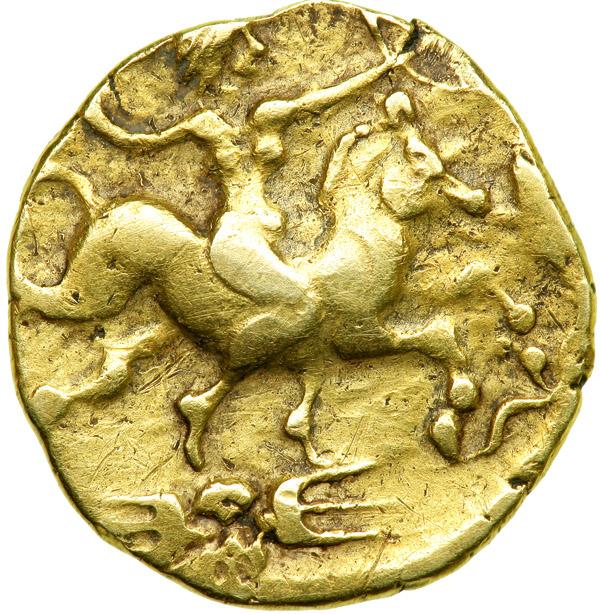
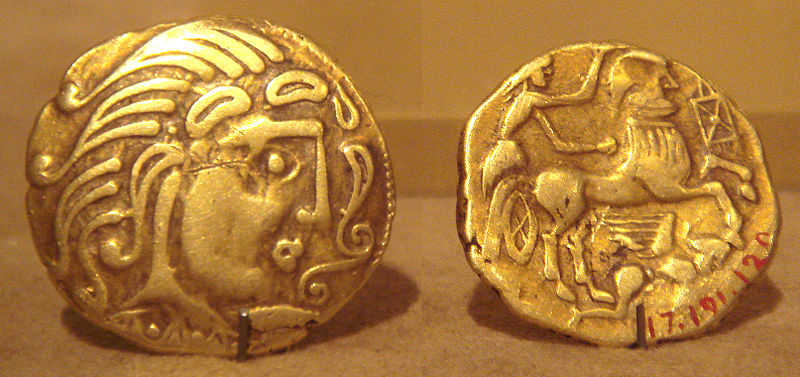
Fairies at Beltane – friend or foe?

Continuing my Beltane theme, I aim in this post to examine the role ascribed in pre-modern folklore to fairies and witches during these festivities.

Beltane (Bealtaine, Beltain, Bealtuinn, Boaldyn etc) was another period in the annual cycle of the Atlantic peoples when the spirit world was supposed to be closer to our own (another was Samhain/Sauin), and for this reason certain rituals and customs were observed in regard to these spirits.

The power of vegetative growth and movement of animals is potently evident during this festival and many of the Beltane rituals, as well as being a celebration of this fertility, were designed to sain and protect it from antagonistic forces. The three spiritual forces defined by folklore as posing a potential threat at Beltane were fairies, witches and the Evil Eye, although the second and third may be considered similar. These might prove harmful in different ways:

Protection from Fairies?

Fairies were considered a threat in that they were deemed to be jealous of human abundance (see my commentary on Robert Kirk’s essay for a discussion of this), easy to anger/offend by the ignorant and particularly pervasive at Beltane, as at the other Gaelic (cross-)’quarter days’. Kirk, writing in the late 17thC in the Scottish highlands, expressed the reason why people might fear fairies in a time of abundance with the following succinct explanation:

“…When we have plenty, they have scarcity, and on the contrarie…”

Thomist (after medieval philosopher Thomas of Aquino) views on spirits underpinned much of the theological worldview of Christian Europe after the 13thC. These defined the sins of envy (invidia) and pride (superbia) as spiritual and therefore the only ones incorporal spirits were capable of. This neatly encapsulated the Christian bibilical narrative of the ‘fall’ of proud satan, who envied god. The agents of evil in the Christian worldview were the demons who conducted the will of higher (or lower!) spiritual agents; As ‘fallen angels’ they shared the sins of ‘Lucifer’. This concordance with fairies is obvious, and folk-narratives often reinforce it by claiming fairies and elves to be ‘fallen angels’ in line with Christian doctrine.


Maintaining the ‘otherworld balance’ was a core aspect of traditional Gaelic and Atlantic European culture – modesty was the watchword for a happy life: Attain too much and the otherworld will take it; You would speak with guarded modesty about things you admire, and be cautious with praise lest it invites alarm that you might ‘attract’ forces from the otherworld… Such customs persist among the Gaels to this day, and in other traditional peoples such as the Scandinavians. The Swedes and Norwegians entertain the concept of lagom, for instance, which translates roughly as ‘modest sufficiency’ or ‘just enough’. The Danes have ‘hygge‘ – a term expressing the comfort of the ‘middle way’. Similar concepts pervade other Atlantic cultures.


Witches’ (persons practicing magic designed to steal/transfer vital force) appear to have been a human conception of the same idea. It is often unclear in Gaelic folklore if there is any specific distinction made between the two forces. Why was this so? The strong presence of the Cailleach/Fairy Queen in Gaelic folk-myths placed the personification of the ‘magical hag’ in a context of fairytales and allegory rather than immanent threat.This was coupled with the failure of a judicial witch-panic to take hold in any degree in Gaelic heartlands between the 16th and 18th centuries. Added to this, in the Gaelic world, the process of ‘bewitching’ was more likely to be seen as a passive process anyone might be capable of, on account of the prevalent belief that a jealous eye (an droch shùil) could abstract vigour and fertility from people, animals, property and land. This seen more as a human foible, rather than as an act of service to the devil, and in areas with a stronger conservative and traditional view of religion, the social opinion was that it was a spiritual crime, deserving a spiritual punishment. ‘Witchcraft’ – either by a jealous eye or by abstracting magic – was just another method people used to try and survive: It – like fairies – was a fact of life that informed the apotropaic customs associated with the liminal festivals of the Celtic year.


So… more properly, it is best to see Beltane as a time when it was considered prudent to protect oneself, one’s household and one’s possessions from abstracting forces.


I have mentioned that yellow flowers were said to have been scattered outside houses to protect against fairies at Beltane. However, the decoration of thresholds with specific plants also has other connotations – to distract a jealous eye or as a form of welcome to spirits.

This ‘diversionary’ strategy is a widespread tactic employed in dealing with the ‘evil eye’, as anyone who has looked at fishing boats or doorways in many Mediterranean countries, where symbols are used for this purpose. Floral decorations would be equally effective in the Gaelic conception of distracting the Evil Eye and therefore witchcraft. In fact, fairies being notoriously jealous creatures, the flowers may work upon them the same way, rather than acting as garlic does to vampires…

Roman era mosaic of a happy Lare protected from sharp and venomous things by the apotropaic Eye symbol

Roman era mosaic of a happy household spirit (Lare) protected from sharp and venomous things by the apotropaic Eye symbol

Flowers have the appearance of the eye, which would allow them to function in such a manner…

Welcoming fairies:

There is, however, yet another aspect to the flower-strewing customs that mark the Beltane season, which as I have previously commented, shares a kinship and plasticity with the festivities of Easter and Midsummer/St John’s day. The traditions of strewing greenery have a distinct air of welcoming to them also, particularly where (as in the Isle of Man) rushes and Yellow Flag Irises were sometimes strewn in doorways (See: ‘Manx Reminiscences’ John Clague). One late-19thC  Manx poet, Edward Faragher of Cregneish, expressed this positive opinion of the fairies as follows (From ‘Manx Notes and Queries’ by Charles Roeder, for whom Faragher acted as collector of local folklore):

The Fairy Queen—the old folk said—
Was going round on old May-night
When all mankind was gone to bed,
And in the flowers did delight.

She kindly blessed each little cot,
Where yellow flowers did appear:
If there were none – she blessed them not
But gave bad luck through all the year.

I still remember on May-day,
Those flowers scatter’d in Cregnaish,
But since the Queen is gone away
No flowers at the door we place.

Faragher’s reference to a ‘grace and favour’ visit by the Fairy Queen on May Eve has few other direct corroborations in Manx folklore, however. Certainly, the island’s Fairy King, Manannan, was (and is still) celebrated at midsummer (the Germanic Walpurgisnacht) and welcomed with green rushes and sprigs of Artemesia vulgaris (Mugwort, Bollan Bane, Bollan-Feaill-Eoin), but as with much of the post-Christian world, the feminine seems to have been suppressed, or at least to have followed the Island’s tendency to amonarchial feudal republicanism.

Nevertheless, the association of Beltane Eve with potential visitations by potent females (human or fairy, royal or otherwise) was a consistent feature of concern in folklore, also a feature of Imbolc/Candlemass/St Brigit’s Eve and Samhain/Hallowe’en/Holllantide/Sauin/Hop-tu-naa. 

A good example of the May greenery persisting as a ‘welcoming’ rather than apotropaic tradition is seen in the relaxed and joyous collecting and parading of May-crowns/May-bushes and the well-dressing and rush-bearing ceremonies that were once in evidence across the north-western counties of England – many similar to those found in the Gaelic world, it would seem. These seem distinctly redolent of the happy customs once seen at the Lughnasa/Luanys/Lammas festivity harvest-homes. The happy and optimistic nature of Beltane seems to preclude it as a time of fearful apotropaic activity, although it was certainly considered a time of vulnerability. The same can be said about the birth of a new child, when extra care is taken…