Beara

The Cailleach is often referred to by other secondary epithets, most commonly a variant of ‘Beara’:

Beara

Bheara

Beare

Bheur

Beira

Vear

Vera

Berri

Berrey

Berry

mBoire

Biróg

Birogue

Bearthach

Is this a proper name or a title? A title seems likely, much in the way ‘Cailleach’ is a title:

The existence of the Cailleach legend is so widespread throughout the region that a commonly-proposed connection or origin in the Beare peninsula is highly unlikely. The Gaelic word Bior (and its variant forms bir and beara) have connotations of water, springs and marshes (biorra) as well as things that are ‘pointed’, piercing or sharp (biorán), or grow in a stalky fashion from water (biorrach = reeds and rushes, Manannan’s traditional ‘gift’ at midsummer in the Isle of Man). The elements Bio- or Bea- occur in Gaelic words to do with health, womanhood, mountains, sweetness and life, as well as the aforementioned springs, marshes and pointed sharp things. This provides us with a reasonable derivation of the name from a stem-word indicating the ‘growth or springing of things from apparent barrenness’, which sums up the function of the goddess archetype quite succinctly:

Reading between all of these Gaelic language etymologies we find the attributes of the Atlantic Goddess: As creatrix of floods, as herdswoman of the mountains, as haunter of headlands and hilltops, as cutter of plants (in winter) and as promoter of life (in spring and summer). Also described as giver of poetic inspiration, the ‘Fairy Woman’  or ‘Fairy Queen’ might therefore be seen as a mnemonic ‘hub’ for linguistic concepts related to the religio-philosophical ideas that underpinned the universal worldview of the ancient Atlantic peoples. Maybe a core part of the secrets of original ‘druidism’ and ‘bardism’? I will go on to examine this in due course.

The names of the Cailleach

Her trails through the dust of Atlantic European folklore are as subtle as they are vast, almost erased by centuries of exposure to alien religious philosophies. She is called by a title:

Cailleach

Caillagh

Calliagh

Caillech

Calligh

Callighe

Coillagh

Killyogh

Galliach/Galliagh

Cally

Caille

Caillean

Callin

Callan

Cuillean

Gullion

Ceithleann

Cathaleen

Killen

Gwyllion

Carlin

Carline

All the names appear slightly different when written, but phonetically they are linked – linked to a time before christianity and the empires of men bought the written word…

Dictionaries and literature of the Gaelic languages provide us with a number of etymologies for the word ‘Cailleach’: Caill means not only a veil or covering (the English equivalent is cowl) but also ‘injury’ or ‘damage’. Cailleach can also mean ‘Cockerel’ (think Kellogg’s Cornflakes) or ‘Hen’, and there are several birds bearing the Gaelic name ‘Cailleach’ (the owl is Cailleach Oidche (Sc.G) for instance). Cailleach is an ‘old woman’ or ‘nun’, whereas Caillin is a young girl. Caillean (Sc.G) also means ‘seed’ or ‘husk of grain’. Caillte means ‘lost, ruined, damned’ (Armstrong). All of these terms evoke aspects of the Cailleach legends – that she destroys, that she takes a bird form, that she carelessly lost things she carried to form the landscape, that she veils the mountains in cloud and the land in snow…

More modern onomastics often use the word cailleach (or its variants) in the context of post-Dissolution explanations of placenames in Ireland, Scotland and the Isle of Man, to mean ‘Nun’. This is perhaps based on the tradition of women wearing veils which was common until the early modern period. However, Gaelic placenames with supposed ‘Nun’ associations are often based upon oral traditions that lack archaeological or historic evidence to back them up. Where there is evidence of nunneries giving places ‘Cailleach’ placenames, then there is always the consideration that these monastic establishments (as was so often the case) were set to ‘guard over’ former pagan sites and provide a Christian interpretation which eventually worked its way into the local oral culture replacing paganism.

Idol stones? ‘Celtic’ crosses?

With this stewardship of paganism in mind, another etymology of ‘Cailleach’ can be derived from splitting the word in two: Cail- and -leach, the second part of which can mean ‘a stone’ (leach or liagh) as in ‘standing stone’ or ‘pillar’. The word ‘Cailleach’ might therefore even refer to an idol stone, possibly one what was once given a covering to wear (as on Inniskea, and in the ‘Lament of the Sentuinne Berri‘). The often bizarre ‘early christian’ crosses of Ireland, Scotland, Wales and the Isle of Man might be a little older than supposed… have you ever wondered at how their shape relates to the ‘Celtic’ seasons and model of the renewing year?

Boand – Water Goddess of the Boyne

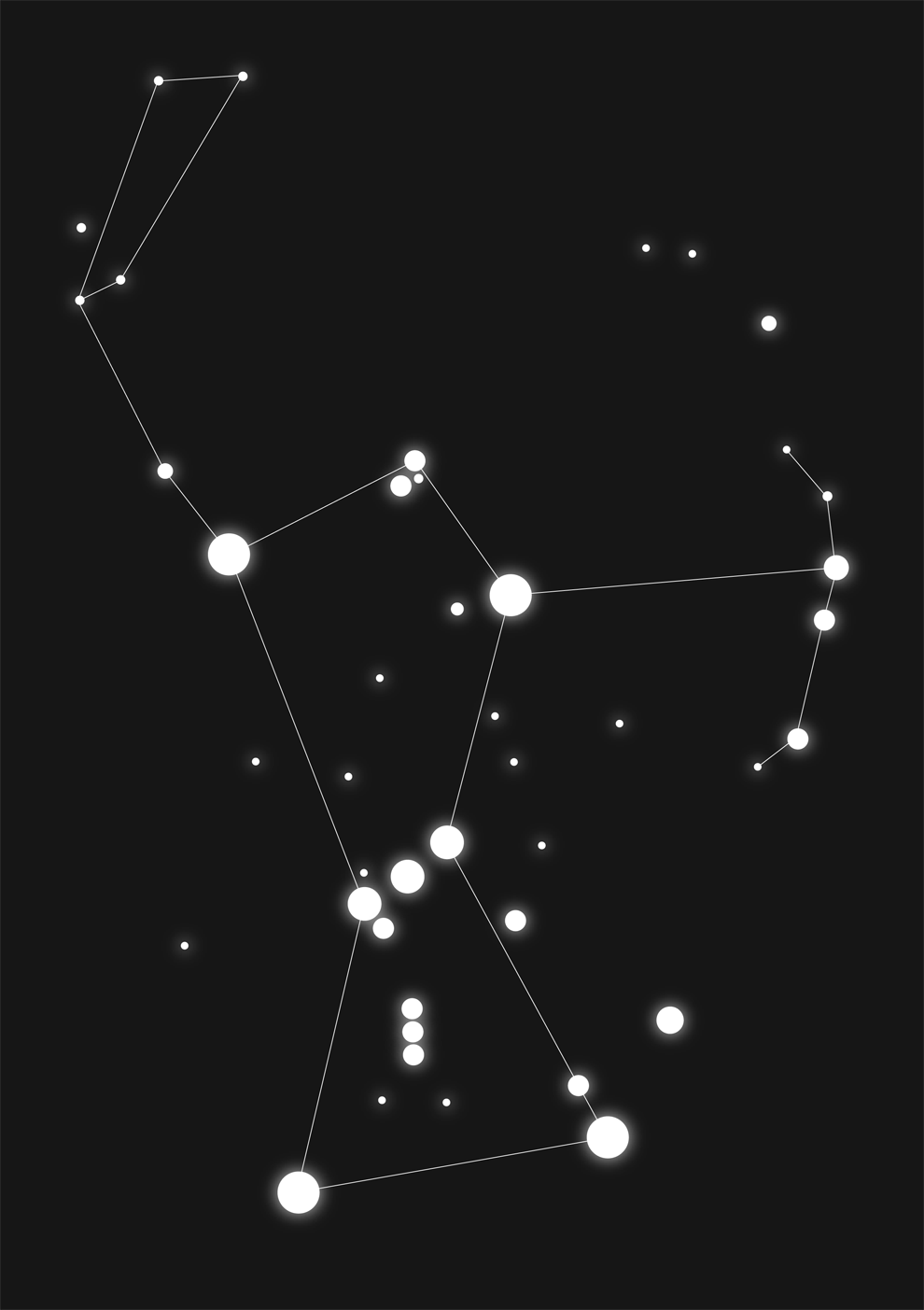
I have already mentioned in recent posts that there were legendary connections between the Atlantic Goddess and water: For starters she is represented in the constellation Orion, standing on the banks of the great white river of the Milky Way as it arches across the winter sky. As ‘Tehi Tegi‘ in the Isle of Man, she conveyed the souls of the dead across the land until they reached the rivers or the sea and were able to enter the realm of the Otherworld. The Cailleach traditions of Ireland, Scotland and Wales tell of her role in creating Lochs and other floods by neglecting to close off springs, and as the Bean Nighe she sat near water washing the garments and effects of the dead.. In Brittany she is represented by the oceanic fairy queen known as the ‘Gro’ach‘ and as a Moura Encantada in Portugal and Gallicia she is a guardian of springs. Archaeologists across Atlantic Europe recognise the association of springs with pagan goddess-worship.

It is perhaps unsurprising that the rivers of Ireland have associations with pagan female entities preserved in their legendary lore. A good example of such stories are from the onomastic explanations of placenames found in medieval literature, often produced by Christian monks. These texts – published in compiled form in the early 20thC as the ‘Metrical Dindshenchas‘ (taken from the mss. the Book of the Dun Cow, the Book of Leinster, the Rennes Manuscript, the Book of Ballymote, the Great Book of Lecan and the Yellow Book of Lecan) – has the following (from Vol.3)  to say about the origin of the River Boyne (under ‘Boand 1’), the most prominent river of the Irish midlands, and one associated with a rich mythology and archaeology:

Sid Nechtain is the name that is on the mountain here,

the grave of the full-keen son of Labraid,

from which flows the stainless river

whose name is Boand ever-full.

Fifteen names, certainty of disputes,

given to this stream we enumerate,

from Sid Nechtain away

till it reaches the paradise of Adam.

Segais was her name in the Sid

to be sung by thee in every land:

River of Segais is her name from that point

to the pool of Mochua the cleric.

From the well of righteous Mochua

to the bounds of Meath’s wide plain,

the Arm of Nuadu’s Wife and her Leg are

the two noble and exalted names.

From the bounds of goodly Meath

till she reaches the sea’s green floor

she is called the Great Silver Yoke

and the White Marrow of Fedlimid.

Stormy Wave

from thence onward

unto branchy Cualnge;

River of the White Hazel

from stern Cualnge

to the lough of Eochu Red-Brows.

Banna is her name from faultless Lough Neagh:

Roof of the Ocean as far as Scotland:

Lunnand she is in blameless Scotland —

or its name is Torrand according to its meaning.

Severn is she called through the land of the sound Saxons,

Tiber in the Romans’ keep:

River Jordan thereafter in the east

and vast River Euphrates.

River Tigris

in enduring paradise,

long is she in the east, a time of wandering

from paradise back again hither

to the streams of this Sid.

Boand is her general pleasant name

from the Sid to the sea-wall;

The poet who wrote this account is effusive in his descriptions of the great river, comparing it (or perhaps more accurately actually identifying it) with the other great rivers of the known world, including the River Severn, the Tiber, the Tigris and Euphrates, the Jordan etc. It was believed that the oceans were made up of all the world’s rivers in the era of authorship – an idea born of classical antiquity and beyond. What is more important is the author implies that the river actually runs from Sid Nechtain to the ‘paradise of Adam’, being a direct allusion to a christianised  telling of the pagan Irish belief in an Otherworld at the Ocean’s End, and to the Garden of Eden, where Christians believe life begins! This almost tells of a former belief in rebirth… The passage also implies that the river is regenerated from the East and returns to Sid Nechtain to flow again by some unspecified route.

Quite amazing.

The compiled texts go on to describe the mythological origin of the River of Boand:

I remember the cause whence is named

the water of the wife of Labraid’s son.

Nechtain son of bold Labraid whose wife was Boand, I aver;

a secret well there was in his stead,

from which gushed forth every kind of mysterious evil.

There was none that would look to its bottom

but his two bright eyes would burst:

if he should move to left or right,

he would not come from it without blemish.

Therefore none of them dared approach it

save Nechtain and his cup-bearers: —

these are their names, famed for brilliant deed,

Flesc and Lam and Luam.

Hither came on a day white Boand (her noble pride uplifted her),

to the well, without being thirsty to make trial of its power.

As thrice she walked round about the well heedlessly,

three waves burst from it, whence came the death of Boand.

They came each wave of them against a limb,

they disfigured the soft-blooming woman;

a wave against her foot, a wave against her perfect eye,

the third wave shatters one hand.

She rushed to the sea (it was better for her) to escape her blemish,

so that none might see her mutilation;

The authors relate a typical Irish Christian rescension of the pagan tale of the woman and the water. The passage also tells of the practice of circling a well or spring three times, which any folklorist who has studied Celtic traditions will recognise. The tale of Boand therefore acts on a number of levels: Firstly as a poetic figurative description of the river as a woman, secondly as descriptive account of the Boyne replete with onomastic and pseudo-historical details, and thirdly it seems to contain a warning to the ungodly of the fate which will meet them if they emulate the legendary magical female… Of particular interest is the manner in which the water harms Boand: It causes the ‘wounds’ of the Cailleach – the ‘fairy stroke’ of withering in one eye, one arm, one leg. Such ‘wounds’ are given to other magical females at rivers or fords or shorelines in other Irish myths from medieval works, including that of the Christian ‘St Brighid‘…

Medieval Irish tales with pagan themes usually contain a Christian footnote in their third part…
The ‘wand’ or ‘club’ of the Cailleach

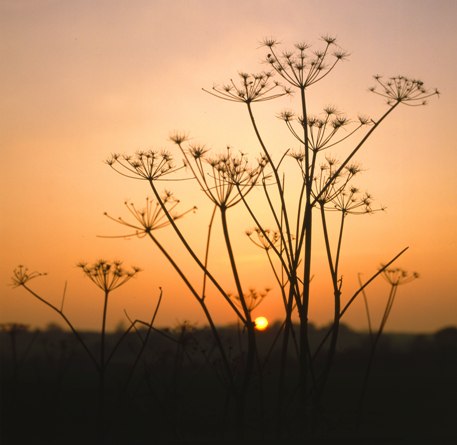
The ‘club’ of the Cailleach was an interesting metaphorical tool that seems to have informed many Atlantic pagan seasonal traditions… In summer (from Beltain to Lúnasa – the season of the constellations Virgo and Taurus) it represented either a ‘sprouting branch’ (traditionally held by the character depicted in Virgo), the drover’s ‘cow-switch’ or the shepherd’s ‘crook’. The ancient Irish word for a cowherd – búachaill – is very similar to that in other Celtic and Indo-European languages (eg – Greek = βουκόλος = boukolos). It is also used adjectivally (as buachalan) to mean ‘cow-switch’ or in modern times, as a class-word for any useful tool. It also became a class-word for stalky plant species: Buachalan Bui is the Ragwort (Senecio Jacobea) and Buachalan Ban (Manx: Bollan Bane) was used for Mugwort (Artemisia Vulgaris): Both make excellent cattle-switches as it happens, and it is desirable to pull up the former from pastures as it harms cattle. The Manx Bollan Bane is the traditional herb associated with the Julian Calendar midsummer celebration of Tynwald Day in the Isle of Man: Old English herbals refer to it as ‘Motherwort’ and it was used as a protective charm against miscarriage (nature’s womb is ripening at midsummer when the Artemisia flowers). Stalky plants (cuiseόg – ‘fairy dogs’?) of this type are notable as they leave their ‘bones’ or ‘ghosts’ standing dry in the winter landscape, whereas more tender vegetation tends to compost. The Artemisia, the Senecio and other plants of the Gaelic cuiseόg class (including the umbilliferae including Hemlock, Cow Parsley etc) were given superstitious associations with fairies and ‘witches’ in folklore.

'Vervain and Dill hinder witches of their will' (English tradition quoted by early folklorist John Aubrey, 1721)

‘Vervain and Dill hinder witches of their will’ (English tradition quoted by early folklorist John Aubrey, 1721) – the stalky plants whose shapes survive in the winter landscape (in spite of a ‘beating’ by the ‘goddess’) often had a superstitious reputation in folklore.

In harvest the ‘club’ might represent the reaping sickle or threshing flail. In fact, harvest is the start of autumn and plants are usually spent of their generative power when they have fruited. They give life and seem to die back – so it is perhaps no surprise that the Cailleach theology gave her a ‘club’ by which she might beat vegetation back and give new life simultaneously.

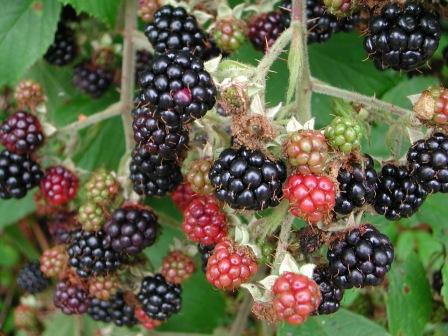
Children in the Isle of Man used to be told not to pick and eat blackberries after 1st October as the 'Devil' was supposed to have touched them with his 'club'.

Children in the Isle of Man (and elsewhere) used to be told not to pick and eat blackberries after 10th October (Old Michaelmas by the Julian calendar) as the ‘Devil’ was supposed to have touched them with his ‘club’ and turned them sour.

In summer the Cailleach’s functioned as a ‘cattle-switch’, but its use is now turned to a more destructive cause. There is a subtle juxtasposition of violence and new life inherent in this, which shows through in a number of ancient Atlantic traditions with pagan associations:

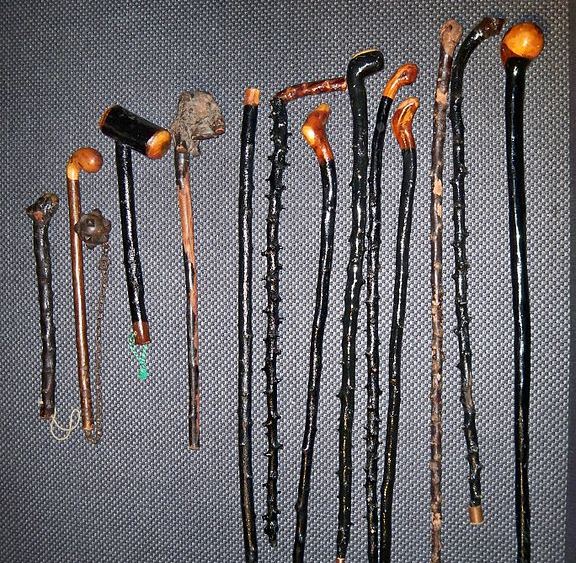
Shillelaghs - cut from the hardwood of Blackthorn or Oak, they make formidable weapons ... or Hurling sticks!

Shillelaghs – cut from the hardwood of Blackthorn or Oak, they make formidable weapons … or Hurling sticks!

In the wren-hunts (Isle of Man, Ireland etc), a stave was the weapon of choice used to hunt and kill this hapless tiny avian – apparently a representation of the Goddess. Once dead, its body was typically hoisted up on a pole, festooned in ribbons and greenery (sometimes even crucified) and paraded about… A simple club-stick with a crook or hook on the end was the original weapon of the related ancient traditional combative mid-winter stick-and-ball games played in the Gaelic lands: Shinty (Scots Gaelic: Camanachd, iomain),  Cammag (the Manx version) and Hurling (Irish: Iománaíocht/Iomáint, played with a stick called a camán). These rough games were often held in conjunction with the wren-hunts in times gone by, and there is another interesting link to the Cailleach (who was depicted as one-eyed, crooked and ancient): The Gaelic word Cam’ means ‘crooked’, ‘twisted’ or ‘deformed’ as well as being formerly applied as a description of a person as ‘one-eyed’

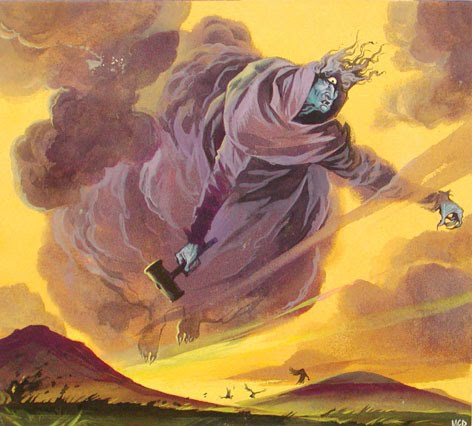
A modern depiction of the Cailleach Bheur ('Hag of Winter') of Scottish Highland legend

A modern depiction of the Cailleach Bheur (‘Hag of Winter’) of Scottish Highland legend. She carried a hammer or staff to beat the vegetation back into the ground in the cold months.

At some of the Lúnasa/Lughnasadh fairs and hilltop gatherings in Ireland, sticks used to be the weapon of choice in traditional faction fights, and it is of note that a long shillelagh might easily double up as a cáman for Hurling or one of its related cousins. The mythological Irish warrior Cúchulainn is described as playing at hurling in the Táin Bó Cúailnge, and is even said in some versions to have killed the hound of ‘Chulainn the Smith’ (possibly a deliberate corruption of Caillean/Cailleach!) with a hurling-ball (sliotar) providing an etymology for his name! The theme of combat and the Morrigan underpins the whole of the Tain, many of the battles of which occur at river fords – bringing to mind the image of Orion standing next to the Milky Way, near Taurus, the ‘Dog Star’ and Canis Minor, not far from the wren-like twinkling stars of the Pleiades or ‘Seven Sisters’… Winter-constellations-decline-1024x722

Orion, the Milky Way and the Winter Goddess

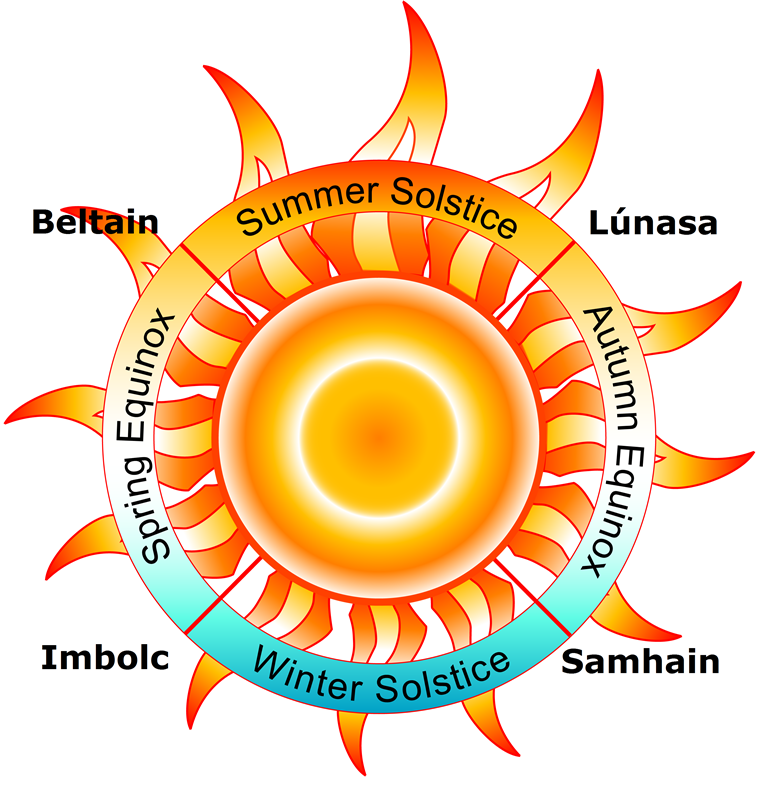
I have already mentioned in passing that the identity of the ancient Atlantic pagan Goddess is tied up in the identity of the seasons: Born at Imbolc, sexually mature (flowering) at Beltain, pregnant (developing fruit and seeds) at midsummer, birthed (harvested) by Samhain, and old and withered between Samhain and Imbolc – she followed the seasons as well as the 9-month cycle of human gestation. The development of her mythos was a perfect analogy of the vegetation and seasonal cycle upon which Atlantic Europeans depended to survive.

This mythos required a rationalisation of the autumn die-back following harvest and this was developed in the British and Irish archipelago into the characterisation of the Cailleach Beara/Bheur/Berry of Irish, Scottish and Manx mythology. There is good evidence that this characterisation once had a much wider reach, but Christianisation and demonization appear to have somewhat altered the folklore of the matter and substituted tales of an explicitly pagan origin with demonic or ‘saintly’ themes.

This ‘Cailleach’ (named possibly from the traditional ‘veil’ of old age – a metaphor for the winter landscape) was attributed with a number of active and historic functions in certain remaining legends about her. Of the active functions, she was a guardian of herds and flocks of nature, guardian of stores of food*, she flew through the air stirring up the winter weather, and she had a stave or stick with which she beat back the vegetation in autumn and winter. Her historic functions were the formation of the physical landscape and the genesis/invention of things.

In the notes to his 1804 book ‘The Grampians Desolate: A Poem’ (Pub. J.Moir, Edinburgh), Alexander Campbell describes on pages 262-263 the classes of Highland dances and gives the following example of a solitary ‘character’ dance:

A dance performed by one person, is, strictly considered, a sort of character, of consequence, in some measure dramatic. If a female, the character assumed is a’ Cailleach, or old wife; and the person who dances is dressed in a very grotesque stile, having a huge bunch of keys hanging by her apron-string, and a staff to support her, for she affects to be very stiff, and lame of one leg. When the tune strikes up, she appears hardly able to hobble on the floor ; by degrees, however, she gets on a bit, and as she begins to warm, she feels new animation, and capers away at a great rate, striking her pockets, and making her keys rattle; then affecting great importance as keeper of the good things of the store-room, ambry (AP ed: a storage recess for important items), and dairy. Meanwhile some of the company present join the person who plays the tune, and sing words suitable to the character the dancer assumes—generally some nonsense of a comic cast with which the matron, or Cailleach seems wonderfully delighted. The names of the tunes and words that I have heard played and sung to this dance, are: A’ Sean Rong mhor, Cailleach an Durdan, Cailleach a’ Stopan-falaimh, and several others that I do not at present recollect.

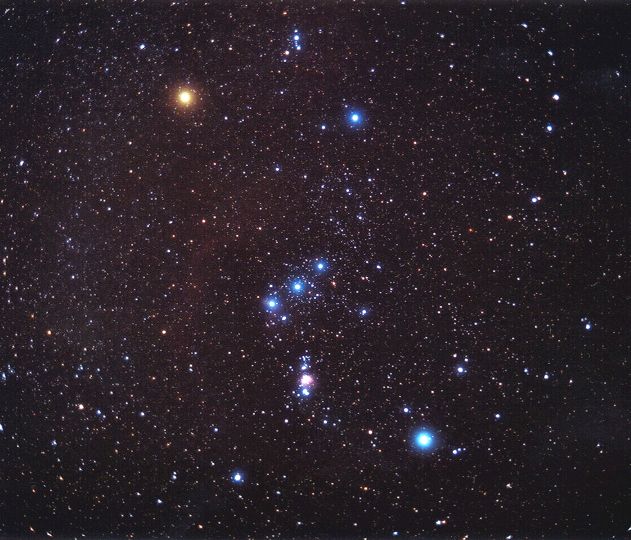
Campbell’s description of the Cailleach character dance is quite striking, and is one of the sole sources still existing that explicitly describes her as a protector of store-rooms. More importantly, he is describing in this dramatic image of the Cailleach a representation of the asterism of Orion: one of the most important to occupy the winter skies of Atlantic Europe, and usually portrayed as a belted warrior with a sword or staff raised aloft, and items dangling from his ‘belt’. Orion is significant in that it sits on the banks of the great Milky Way, associated with the star Sirius (known as the ‘Dog Star’) and the constellations and asterisms of Canis Minor, Taurus, Auriga and the Pleiades. Those becoming familiar with Cailleach myths will recognise certain features in these stars and constellations that have echoes of Cailleach legends, and for a good reason! Those familiar with Norse mythology might know that Orion was named after Freyja and the item on her ‘belt’ was known as ‘Freyja’s Distaff’. The Pleiades are portrayed as a little flock of birds. The Cailleach is associated with Bulls (the Tain), flocks and in Irish tales with a dog, sometimes a beetle and other specific creatures.

Orion - the winter Cailleach...

Orion – the winter Cailleach…

In his 200 year old description of the ‘Cailleach’ dance, Campbell makes it clear that the character has a stave, a bunch of keys, and is lame on one side. It is clear that ‘she’ (the character is danced by a man) has the attributes typical of the ancient Cailleach or ‘witch’ archetype of myth and legend, and what is more the dance emphasises her transition from old and lame back to sprightly and young – a metaphor for regeneration that is strongly seasonal.

tbc

The meaning of Samhain

Samhain is the quarter-day festival that starts the Celtic year, marking the start of Winter and the end of harvests. It commences at nightfall on October 31st (new style Gregorian calendar) or the 11th November (old-style Julian Calendar) and goes by a number of different English names including Hollantide, All-Hallows Eve, Hallowe’en and All Saint’s Eve. In Scots and Manx Gaelic the name is the same, although written differently: Samhuinn and Sauin, respectively. The pronunciation is ‘Sow-in’ (rhymes with ‘cow-in’). There are a number of other more archaic names, which I will go on to discuss in due course.

It is a festival that symbolizes death – the transitional phase of the seasons when Atlantic Europe’s foliage dies back, and animal life dwindles. The evenings darken rapidly and the first frosts begin to touch the land. Crows and flocks of migratory wading birds throng the skies in great clouds cawing, whistling and chattering. The constellation of Orion begins to dominate the night skies… The spirit which enlivened nature in the summer months has gone from visible reality to the state of an intangible but certain potential for the coming year. In an ancient religious system that viewed life as a continuous oscillation between the tangible living state and a spiritual state awaiting rebirth in the next cycle, Samhain was therefore also the Festival of the Dead. 

It was Julius Caesar who first noted (in Commentarii de Bello Gallico) that the Gauls held that days started with nightfall, and celebrated the commencement of their important days with the falling of night. The same is true of the other Atlantic peoples, and in Ireland, Scotland and the Isle of Man in particular this continued down to modern times. The festival of Samhain was therefore called Oidhche Samhna – ‘Night of Samhain’ – in Irish, and Oie Hauiney or Houney in Manx. Both would be pronounced pronounced something close to ‘Ee ouna’ allowing for the usual lenitions and aspirations of spoken Gaelic.

The Manx had another name yet for the festival – ‘Hop tu naa‘ (pronounced ‘hop the nay’ or as the more modern ‘hop tyoo nay’) – which is of uncertain meaning and sounds curiously close to the Scots name for New Year: Hogmanay. In fact, Samhain was the Celtic New Year – just as days started with a nightfall, so the years started with the dark part also. It is uncertain when the Scots started to use ‘Hogmanay’ as the term for the 31st of December New Year, or for that matter if the term was ever used for Samhain. It seems that folk traditions of the Atlantic European world show quite a degree of transferability across the period between Samhain and the January New Year – customs including guising, playing pranks, gifting and house-visiting were just as likely at Christmas and New Year as they were around the 1st of November. Whether this represents a natural tendency to transfer celebrations that brighten the dull winter months or a concerted religious effort to dissipate or transform wholly pagan festivities remains unclear, but a combination of factors is likely.

There has always been a strong association of the festival with a ‘witch’ or ‘witches’ that has continued right down to the Halloween celebrations of modern times. The Celtic peoples never really had much time for the idea of ‘witches’ in the 16th/17thC judicial and religious sense of a person who worships the Christian Satan and does magic to harm their neighbours. The ‘witch’ referred to in Celtic areas is generally best interpreted as a Christian opinion of the old Goddess herself, rather than a human individual at the margins of society. She seems to be represented by the folklore character referred to as the Cailleach – a monstrous ancient female supposed to have created the landscape and unloosed the rivers, and supposed in some traditions to be responsible for winter. 

To the Celtic peoples of Ireland, Scotland and the Isle of Man ‘The Witch‘ was a figurative legendary character representing Christian opinion of the ancient Goddess, rather than a clear and present social threat posed by ‘a witch’. For this reason, there were hardly any executions of suspected ‘witches’ in Celtic cultural zones.

'Jinny the Witch jumped over the house to fetch a stick to lather the mouse'  (Old Anglo-Manx Samhain song)

‘Jinny the Witch jumped over the house to fetch a stick to hit the mouse’ (line from an old Anglo-Manx Samhain guising-song) – the constellation of Orion presides over the winter skies between Samhain and Imbolc (1st February).

Irish legends and medieval manuscripts contain a number of references to Samhain, and one in particular to a ‘witch’ associated with the festival. The ‘witch’ was Mongfionn/Mongfind – ‘White Hair’ or ‘Fair Hair’ – supposed at least (euhemerisation agains!) to have been sister of Crimthann mac Fidaig, a king of Munster, and mother of Ailill, Brión and Fiachra, the traditional ancestors of the medieval Connachta, by a High King called Eochaid Mugmedon. The Connachta were the opponents of the Ulaid (Ulstermen) in the Tain. She is supposed by to have been a sorceress responsible for poisoning her brother in order to allow her children to succeed the kingship, but who died after tasting her own poison while trying to convince her brother’s children it was safe. It is the old ‘evil fostermother’ tale from folklore, also related in the story of the ‘Children of Lir’. This murder and her death happened at Samhain and the Book of Ballymote (folio 144, b.1) claims that Mongfind was thereafter worshipped at Samhain by the peasantry who called it the ‘Festival of Mongfind’ – Feil Moing! There is a hill called Ard na Ríoghraidhe (Height of the Kingfolk?) or ‘Cnoc Samhna’ (Hill of Samhain) in Co. Limerick that is associated with her. The details of the kingship-oriented stories involving Mongfind are probably an obfuscation of the facts, and the ‘White Haired One’ is likely to have been the aged Cailleach who represented winter and rebirth in the coming year. Perhaps the Milky Way was her hair? The path to renewal…

Cnoc Tlachtga (now also called ‘The Hill of Ward’) near Athboy, Co. Meath was also a place legendarily or historically associated with Irish Samhain festivities, including the lighting of a bonfire. This Hill was supposedly eponymously named from a magical female of the same name, the daughter of a magician-druid called Mug Roith/Mog Ruith who was suppose to have given birth to triplets on the hill before dying. Another site associated with paganism, death and Samhain was, of course, Magh Slécht (Mag Senaig) in Co. Cavan, supposed to have been the site where ‘Tigernmas’, an ahistorical pagan High King of Ireland died along with many of his followers while worshipping an idol called Crom Cruaich at Samhain. This idol was supposed to have later been broken by Patrick. There are many other traditions besides, including the tale of the Ulster Cycle called Serglige Con Culainn (The Wasting Sickness of Cúchulainn) were the Ulster hero is attacked and seduced by the Queen of the Otherworld – Fand, wife of Manannan – during the course of Samhain celebrations of the Ulaid.

Irish legend also place the start of the Second Battle of Maigh Turead at Samhain, and it commences after a sexual coupling of the Dagda with the Morrigan. Likewise, the cattle raid of the Tain Bo Culainge commences at Samhain, and the tales of this also feature the Morrigan, who I have earlier identified with the Cailleach. The medieval tale The Boyhood Deeds of Fionn claimed that the Fairy Hills (Sid) were open at Samhain. You can tell from ancient Irish literature that Samhain had a particular association with death and the otherworld, and with potent magical female characters!

The themes of conflict and death at Samhain follow on from the Harvest, and then the very visible Atlantic autumn die-back of nature – replete with withering, decay, storms and darkness. These processes are set in motion from the festival of Lunasa (Lughnasadh) onwards. The die-back to pagans was simply a part of the renewal-cycle and therefore did not have the confused connotations of ‘evil’ or ‘uncleanliness’ that was imported with the somewhat ectopic Judaic religions during the 1st millennium.


‘Mary’ the Goddess

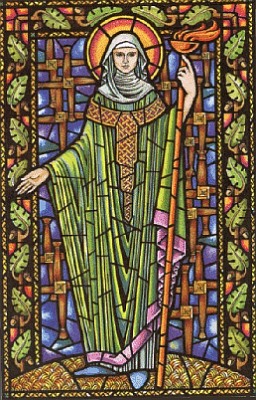
The curious tale of ‘Saint’ Brighid (Bride, Brigit etc) of Ireland is one of the most striking examples of the conversion of a Pagan Goddess into a Christian Saint. What is more curious still is the efforts of her early monkish hagiographers to identify her with Mary, mother of Jesus, as ‘Mary of the Gael’ according to one of her medieval hagiographies.

stbrigid2

Vita sanctae Brigidae (Bethu Brigte) is the oldest hagiographic Life of Brigid (circa 800CE). In Chapter 11, Brigid is introduced to the assembled saints of Leinster by ‘Bishop Ibor’ who tells them he has had a vision that Brigid is to be the Mary of Ireland. This story is repeated in the later Leabhar Breac account of her life.

Subsequently, the tradition and portrayal of ‘Mary of the Gael’ has stuck. Alexander Carmichael recorded the Hebridean tradition of Bride as ‘Foster Mother of Christ’ as late as the 19th century. The reason why this should be so, is less than clear, and needs to be examined:

Brighid herself was undoubtedly originally a pagan goddess looking for a Christian identity, and it is possible that giving her the well-understood mantle of the christian Mary provided this identity. However, the names of the Gallician and Basque ‘fairy’ goddesses – Moura and Mari – force us to consider the question of identity in greater depth. For starters, it is unlikely that these Hispanic pagan ‘Maries’ were named after the Christian character. In which case, we have to speculate which pagan Irish character was the ‘Mary’ that Saint Brighid was to replace? From the pagan-flavoured Irish legends left to us by monks, one possible character comes to mind – the magical female referred to by a number of names, including Morrígan, Mórrígan and Morrígu, also in the plural as Morrígna.

As examined previously, the Morrigan was represented in some of the old tales as part of a triplicate combination: Badb-Morrigan-Macha, and there was a medieval Christian tradition of ‘Three Maries’ who went to find the body of Jesus after he was presumed dead. With this in mind, we must turn to a fragment of evidence from (again) the Isle of Man, to a reference to a ‘Triple-Morrigan’ in the text of a charm recorded in ecclesiastical court documents from the island during the 18th century: This is known to Manx folklorists as ‘Daniel Kneale’s charm to staunch a horse’s blood’, and runs as follows (copied from Kirk St Anne parish registers for 2nd September 1722):

Tree Moiraghyn hie d’yn Raue,

Kemy, Cughty, Peddyr, as Paul,

Doort Moirrey jeu, Shass,

Doort Mooirey jeu, Shooyl,

Doort Moirrey elley, Dy gast

yn’Uill shoh, myr chast yn’Uill,

haink as Lottyn Chreest:

Mish dy ghra eh, as Mac Voirrey

Dy chooilleeney oh.

My translation:

‘Three Marys/Mothers/Morrigans went to Rome

Boundary Fairies, Cliff Fairies, Peter and Paul.

Mary said to ‘Stand’

Mary said to you ‘Walk

Mary said ‘Go Quickly’ this blood,

like to stop the blood,

Did come by Christ:

Me to say it and the Son of Mary

To fulfil it.’

Curious indeed! The Manx word Moiraghyn is almost exactly like Morrígan – its meaning is can be interpreted as a plural of Mary (‘Maries’) but it also means ‘Mothers’ in its own right, and more importantly the word Muiraghan is given in John Kelly’s 19thC Manx Dictionary as a word for Mermaid. The reference to ‘Kemy’ and ‘Cughty’ is to ‘Keymagh’ and ‘Cughtagh’ – these are Manx terms for local types of spirits, and I have translated these as best I can given current evidence. Kelly’s dictionary has  this translation for Cughtagh: “Cughtagh s. pl Cughtee – a fairy, a sprite, a spirit of the houghs; some say ny keymee as ny cughtee…”. He also gives the related word Guight to mean the same. This is evidently the same word as the English/Germanic word ‘Wight’ (from OE/OHG wiht), meaning a sentient being – the Manx, like the Irish, typically added a guttural sound to words beginning with ‘W’. A Keymagh was a spirit believed to haunt the styles and boundaries of churchyards – possibly the same as the revenant of the last-buried who guarded the same in Scottish and Hebridean folklore. The name itself (allowing for m-w sound transformation) would be pronounced the same as the Scots Gaelic Ciuthach (‘kewach’) – a spirit that lived within rocks. It is therefore also possibly cognate with the Breton death spirit Ankou. The charm provides a fascinating insight into the persistence of pagan ideas in a syncretic form with christianity, as well as giving a new insight into the possible identity of the Morrígan of Irish myth.

All this might be a bit much to take in, but it is only a small part of the picture of these ‘Pagan Maries’ of the Celtic world… Loch Maree (traditionally linked in Christian history to a saint called Máel Ruba) in Wester Ross in the NW Scottish Highlands is associated with a late description (recorded in the records of the Presbytery of Dingwall from 1695) of the apparently pagan sacrifice of cattle to a god called ‘Mourie’ on one of its islands. The town of Tobermory on Mull takes its name from the Gaelic for ‘Mory’s Well’, there being no Christian history of a well dedicated to the Christian Mary! Carmichael notes some Gaelic names for the month of May in Carmina Gaedelica Volume 2 as ‘mi Moire‘, ‘mios Moire‘ (‘month of Mary’) and ‘Bochuin Moire’ (‘Swelling of Mary’) suggesting a connection between the month of exploding fecundity and ‘Mary’. The pagan goddess was, after all, a representation of the year and her different aspects (and names) represented the seasons. Port St Mary in the Isle of Man was and is known to locals as ‘Purt le Murra’. There is a place near it on Meayll (Mull) Hill called Lag ny mBoire, pronounced ‘Lag na Murra’, suggesting a possible link between the names Beara/Berry (ie – the Cailleach) and ‘Mary’.

The question as to the meaning of Mourie, Murra, Mary, Mari, Moura or whatever the original derivation is now arises. There are several possibilities: The first (most likely) is that the word derives from the Latin word for the sea: Mare and its various regional derivations, such as the Germanic Mere, Irish Muir, Welsh Môr, Manx Muir and Moor etc. This is quite in line with the doctrines of the Atlantic Religion I have so far been discussing. The second (less likely) is the Celtic word for ‘big’ – Mór – although the fact that the vastest thing in the experience of Atlantic peoples has always been the sea itself must at least be considered in passing. The Irish version of ‘Mary’ is ‘Muire’. As already mentioned, there is a possibility that there has been a linguistic mutation involving the labial sounds ‘M’ and ‘B’ meaning that the name of the Cailleach – Beara – was originally mBeara – ‘Meara’ or ‘Murra’. A fourth derivation might be from the Greek Moirae, or Fates. A fifth might be the Germanic ‘Mara’ – a spirit that caused nightmares, and from which we derive that word.

Moura Encantada and Mari

The southernmost Atlantean provinces (NW Spain, Portugal, the Basque Country and former Aquitania as well as part of Occitania) have a history and folklore rich in the traditions of the Atlantean Religion, and remember the Goddess in folk tradition as the ‘Moura Encantada’ in Portugal, Gallicia and Asturia, and as ‘Mari’ in the Basque Country. The Basques were late nominal converts to Christianity, probably being changed during the 10th and 11th centuries – the same time as the Scandinavians.

The Moura is remembered as the most prominent member of a race of ‘Mouros’ – equivalent to the fairy folk of the northern Atlanteans, said to inhabit the old Castros, barrows and megalithic structures of the region, as well as being associated with caves and springs – typical sites of veneration for pagans. She (Moura) is often portrayed as a frighteningly seductive fairy, who like her northern European counterparts is able to shape-shift. She is sometimes portrayed as being trapped in her haunts by a spell, and beseeches humans to free her in return for promises of treasure etc. She might sometimes show herself as a serpent, a horse, a goat or as a cat or dog. Traditional activities of the Moura include those also typical of (fairy) women in the northern Atlantean provinces – brushing her lovely hair, spinning and washing in particular. Although usually appearing as a young woman, some older tales portray her as elderly. In short, she has all of the attributes of an Irish, Scots, Welsh, Breton or Manx fairy woman and can be considered as representative of an identical idea – the Goddess.

In a 1998 paper, Gallician scholar Fernando Alonso Romero (University of Santiago de Compostella) wrote an account of the Moura (sometimes also called Orcabella at Fisterra) and her activities. He noted that local legends generally suggested that Dolmens and Standing stones as well as landscape features were deposited by the Moura, suggesting she was analogous to the Cailleach in Ireland,  Mann and Scotland as well as legendary giants of the atlantic coasts of France and England/Wales. Romero also noted that as well as carrying stones on their heads, Mouras (?Moirae?) carried a distaff for spinning – redolent of the Isle of Man’s mountainous ‘Red Woman’ (Ben Jiarg).  Sites Romero mentions include: Arca de Ogas, the Casa de Vella Troiriz, Casia de Arquela and Casa da Moura among others.

Mari, in the Basque country, is a similar character more often associated with particular caves and is said to travel periodically between different abodes in these caves in the mountains, for example between Anboto and Oiz. She is believed (like Manannan in the Isle of Man) to be responsible for weather phenomena. Like the Moura, she is sometimes linked to a tribe of beings whose collective name seems derived from hers – the Mairu – a name usually used in reference to the Lamia or Laminak*. Unlike Moura, she is sometimes associated in legend with a masculine consort figure or aspect – known s Sugaar or Maju, who has snake/dragon connotations. In this regard she shares legendary characteristics typical of ‘giants’ in other Atlantean districts – mountainous, cave-dwelling and chthonic, a controller of the weather, and often paired with a partner. In spite of this, she is still a representation of the Goddess – the form of her legends is simply typical of the geography and geology of the landscape where her tales were told. Although considered a separate entity to the other magical female species of the Basque country – the *Laminak – it is worth noting that Laminak bear a more specific resemblance to the Portuguese and Gallician Moura. They are considered more of a plural species, whereas ‘Mari’ is considered a more singular deity or ‘legendary place-holder’, but are probably representations of the same Goddess.


Sirens

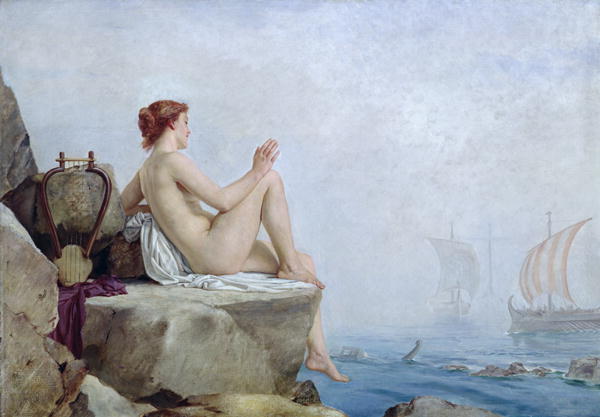
Themes of seduction and the sea are an ancient part of pagan metaphor

Themes of seduction, death and the sea are an ancient part of pagan metaphor

“…Pay attention to what I am about to tell you – heaven itself, indeed, will  recall it to your recollection. First you will come to the Sirens who enchant  all who come near them. If any one unwarily draws in too close and hears  the singing of the Sirens, his wife and children will never welcome him  home again, for they sit in a green field and warble him to death with  the sweetness of their song. There is a great heap of dead men’s bones  lying all around, with the flesh still rotting off them. Therefore pass  these Sirens by, and stop your men’s ears with wax that none of them may  hear; but if you like you can listen yourself, for you may get the men  to bind you as you stand upright on a cross-piece half way up the mast,  and they must lash the rope’s ends to the mast itself, that you may have  the pleasure of listening. If you beg and pray the men to unloose you,  then they must bind you faster…”

Circe to Oddyseus in Homer’s “Odyssey”